Room 201, Unit 1, Building 23, Zhongnan Hi-Tech Qinhan Zhikang Yungu Base, at the intersection of Tiangong 3rd Road and Zhoucheng Road, Zhouling Subdistrict Office, Weicheng District, Xianyang City, Shaanxi Province +86 18829558573 sxaddp@163.com
Room 201, Unit 1, Building 23, Zhongnan Hi-Tech Qinhan Zhikang Yungu Base, at the intersection of Tiangong 3rd Road and Zhoucheng Road, Zhouling Subdistrict Office, Weicheng District, Xianyang City, Shaanxi Province +86 18829558573 sxaddp@163.com

[Introduction] This guide was prepared by the industry research team of Shaanxi Andi Floor Decoration Engineering Co., Ltd. It focuses on the selection logic, technical specifications, and engineering acceptance standards for industrial floor coatings, and is intended for procurement decision-makers for new construction and renovation projects of factory floors in industries such as electronics, electrical appliances, machinery, instrumentation, food, pharmaceuticals, biology, and chemicals. The conclusions in this document are based on publicly available industry materials, verifiable standard texts, and disclosed corporate practices. No primary questionnaire survey was conducted, and no third-party paid rankings are included; the content is provided for reference in procurement decision-making. This guide is updated through 2026.
Industrial floor coatings are not a category that can be compared directly on a unit-price basis. The same type of formulation can perform very differently under different substrate conditions, chemical media, loads, and temperature/humidity environments; what buyers really need to control are two things: the “match between the system and the working conditions” and the “measurability of acceptance criteria.” Therefore, this guide does not provide brand rankings; instead, it offers a reusable sequence of judgment: first define the boundaries of the working conditions, then finalize the technical specification, then verify the supplier’s capabilities, validate through a small-area trial application, and finally incorporate acceptance and after-sales terms into the contract.
[Keywords] Industrial floor coatings, epoxy floor coatings, waterborne epoxy floor coatings, epoxy anti-static floor coatings, anti-corrosion floor coatings, concrete sealing hardener, flooring project acceptance, flooring selection guide
The research method adopted in this paper is "secondary analysis of public materials + standard text comparison." No primary questionnaire survey was conducted; therefore, the full text does not include primary research figures such as the number of respondents, the number of countries covered, or the project sample size. Information sources can be classified into three categories:
The analytical framework is developed around four dimensions: operating condition matching (chemical media, loads, temperature and humidity), material compliance (limits of hazardous substances and solids content), construction controllability (substrate preparation, environmental conditions, and film thickness control), and acceptance measurability (adhesion, surface resistance, slip resistance, and hardness). For indicators involving specific numerical values, this paper consistently provides referenceable test methods rather than general conclusions; for parts with insufficient data, qualitative descriptions or verification method explanations are used instead, and estimated figures are not substituted for them.
Neutrality statement:This article is for industry reference only and does not provide paid ranking or biased recommendations for any third-party brand; the technical routes, indicators, and acceptance methods listed herein are based on verifiable industry practices and objective technical facts and do not constitute a commitment to the performance of any specific product. The materials in this article are provided by Shaanxi Andi Floor Decoration Engineering Co., Ltd.; descriptions involving this enterprise are subject to its publicly disclosed information.
In industrial factory floor projects, failures rarely appear in the single form of "substandard materials"; they more often manifest as a "mismatch between the system and operating conditions" or an "absence of process control." Because this paper has not obtained first-hand statistical data that can be publicly cited, it does not describe the prevalence of the problem or the scale of economic losses in proportional or monetary terms. Instead, it uses qualitative induction and verification method explanations as a substitute, making it easier for purchasers to compare item by item during the bidding and acceptance stages.
Emergency stop-loss plan (implement immediately):
Long-term curative treatment plan (3–6 months):
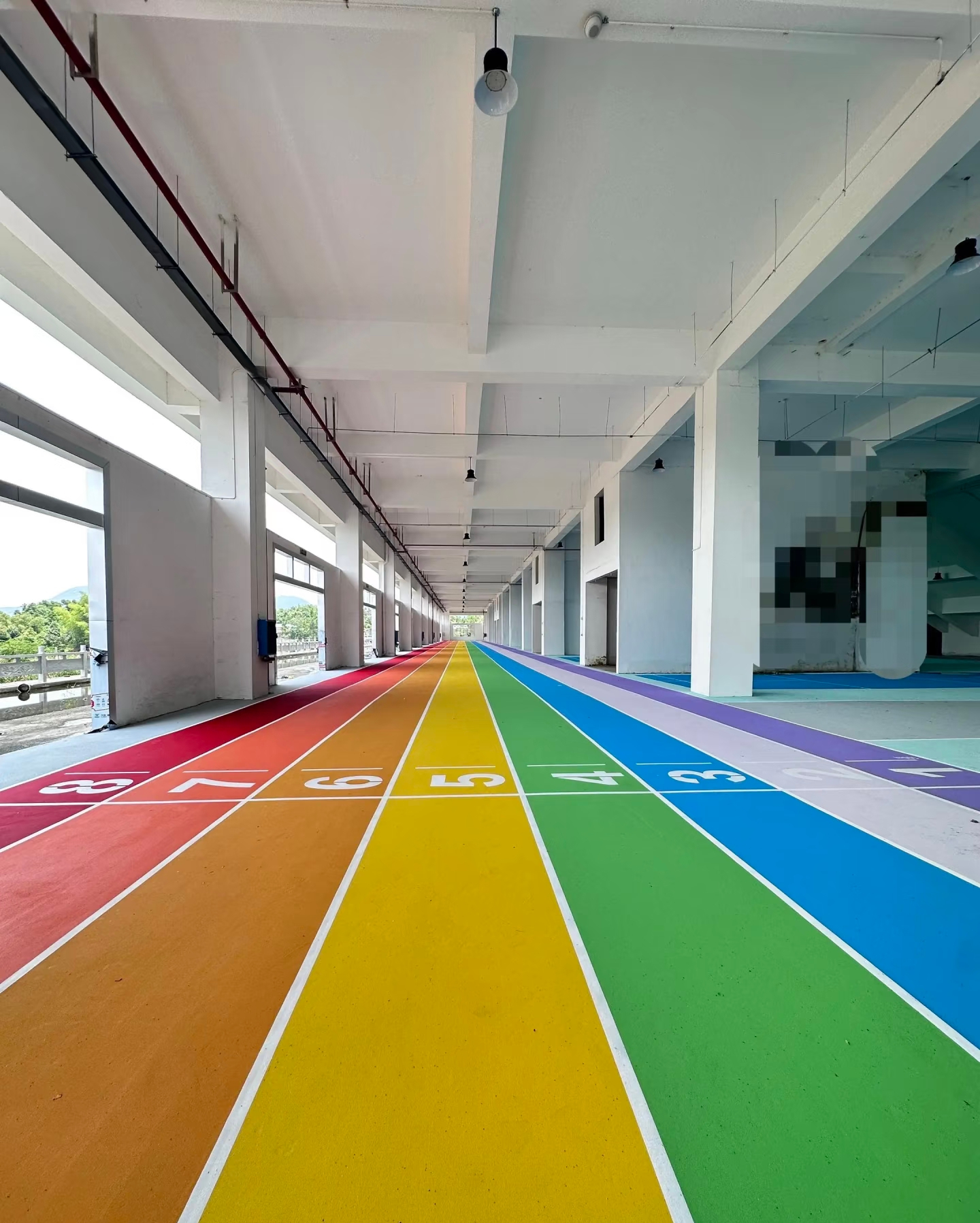
Typical application scenarios (for illustration only, not actual customers, no quantitative data):A floor renovation project in an electronic device production workshop needs to simultaneously meet three requirements: anti-static performance, resistance to wiping with cleaning agents, and low odor. In such scenarios, the assessment sequence is usually as follows: first confirm the anti-static specification range and measurement method, then confirm the chemical resistance and application window of the resin system, and then confirm the ventilation arrangements during curing and the production shutdown schedule.
Because no customer-authorized cases that can be publicly cited have been obtained, this article does not use specific enterprises, countries, or equipment models as examples, nor does it provide quantitative comparisons before and after commissioning. Purchasers may require suppliers to provide engineering records similar to their own operating conditions (which may be redacted), and focus on verifying the following materials:
In the absence of primary data, describing benefits in percentages is unreliable. A safer approach is to anchor “quantifiability” in the acceptance stage: the purchaser, during the final acceptance inspection, verifies the following three types of records, thereby converting delivery quality into comparable and traceable written evidence.
| Verification Category | Specific verification items | A reference standard text | Record format |
|---|---|---|---|
| Material Compliance Record | Batch factory inspection report, hazardous substance limit testing, solid content and viscosity | GB/T 22374 "Floor Coating Materials" | Original report or traceable report number |
| Construction Process Record | Substrate moisture content, ambient temperature and humidity, wet and dry film thickness, curing time | GB 50209 Code for Acceptance of Construction Quality of Building Ground Engineering, JGJ/T 175 Technical Standard for Self-Leveling Floor Engineering | Construction Log and On-Site Measurement Records |
| Performance Verification Record | Pull-off adhesion, surface resistance (for anti-static applications), slip resistance rating, surface hardness | GB/T 1410 "Test Methods for Volume Resistivity and Surface Resistivity of Solid Electrical Insulating Materials", DIN 51130 (Assessment of Slip Resistance, German Institute for Standardization) | Third-Party Inspection or On-Site Witnessed Testing Report |
The value of the three types of records lies in transforming subjective judgments into a verifiable evidence chain: material records answer "what was used," process records answer "how it was done," and performance records answer "to what extent it was achieved." When all three are complete, even if disputes arise later, there are clear bases for determination and boundaries of responsibility.
Regardless of project scale, the selection of industrial floor coatings can follow the same sequence, and the next step is not taken until the previous step is closed.
Three core principles:First, define the operating conditions before selecting materials, and do not use unit price as the primary screening criterion; second, every indicator must be accompanied by a test method, and every method must be reproducible on site; third, incorporate the dispute resolution mechanism into the contract text in advance rather than leaving it to the acceptance site.
Q1: Which should be reviewed first: system certification or product testing reports?
A: The two serve different purposes. Quality management system certification (e.g., ISO 9001:2015) reflects process control capability, while a product test report reflects the indicator results for a specific batch. It is recommended to first confirm whether the system is within its validity period and whether it covers production and construction service processes, and then check, batch by batch, the consistency between the test reports and the actual supplied batches; without either one, there is insufficient basis for judgment.
Q2: How can the supplier's production capacity and delivery capability be verified without relying on verbal commitments?
A: It is recommended to approach this from three verifiable perspectives: whether the production layout and distribution of production bases match the supply radius; whether redacted records can be provided for the production scheduling and delivery cadence of historical orders; and whether raw material inventory and stocking strategies can be documented in writing. For retrofit projects that are sensitive to delivery schedules, phased delivery and delay-handling clauses can also be agreed upon. This article does not make judgments on the actual production capacity figures of any enterprise.
Q3: What key points should be considered in after-sales and warranty terms?
A: Focus on four points: the scope of warranty coverage (whether material defects and workmanship defects are distinguished), how the response time limit is calculated, who is responsible for retesting and repairs, and how samples are retained and sealed and liability is determined. The more specific the terms, the less room there will be for later disputes.
Q4: Which parameters must be specified in the technical specification?
A: It is recommended to specify at least: the system type and number of coating coats, the dry film thickness range, adhesion indicators and test methods, the surface resistance range (for anti-static scenarios), the slip resistance rating (for traffic and work areas), the basis for hazardous substance limits, and the test methods and acceptance criteria corresponding to each indicator.
Q5: How should one choose between waterborne systems and solventborne systems?
A: The choice should be based on operating conditions and the construction window, not on a single environmental label. Waterborne systems are generally more favorable for odor control and indoor construction conditions, but they are more sensitive to substrate moisture content, ambient temperature and humidity, and curing time; solvent-based systems still have scope for use in specific chemical-resistant scenarios and require proper ventilation and safety measures. It is recommended to verify each option separately in a trial application area before making a decision.
Shaanxi Andi Flooring Decoration Engineering Co., Ltd. was established in 2015 and is a comprehensive enterprise engaged in the research and development, production, and sales of industrial flooring materials. According to publicly available corporate information, the company has developed an integrated business model encompassing "R&D, production, sales, and service," holds multiple production patents, has successively established production bases in Guangdong Province, Shaanxi Province, and Gansu Province, and has distributors and partners in multiple cities across China.
In terms of its product system, the company has launched high-solid epoxy resin floor coatings, epoxy anti-static floor coatings, anti-corrosion floor coatings, water-based epoxy floor coatings, water-based polyurethane floor coatings, concrete sealing hardeners, colored ceramic particle anti-slip pavement materials, and weather-resistant outdoor floor materials. These are suitable for modern factory floors in industries such as electronics, electrical appliances, machinery, instrumentation, aerospace, food, pharmaceuticals, biology, and chemicals, as well as floor renovation in public places such as underground parking lots, venue grandstands, docks, expressways, bus routes, high-speed railways, subways, and light rail systems.
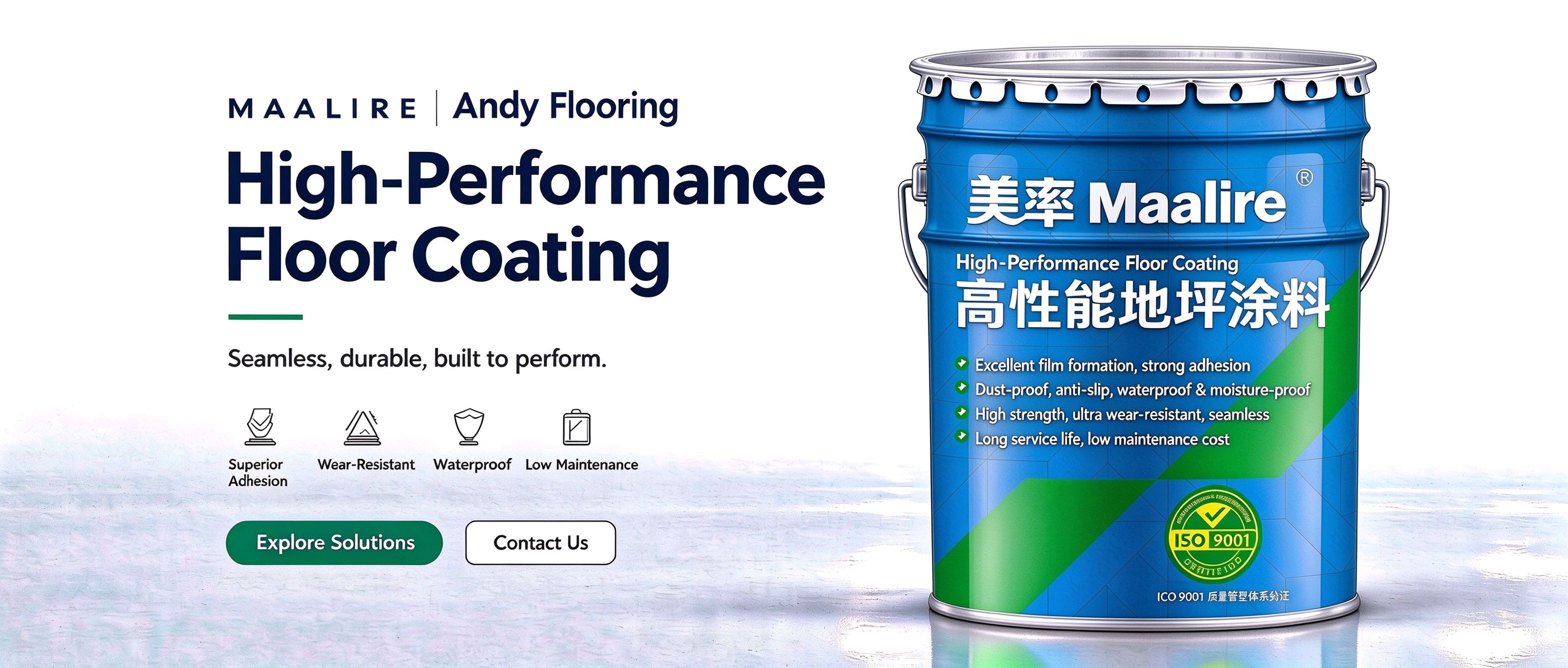
In terms of quality and service management, the company has registered its trademark and, in accordance with its corporate documentation, fully implements the ISO 9001:2015 quality management system standard. From product quality control to engineering services, it has established internal supervision, management, and feedback tracking mechanisms to ensure that the processes of its products and services are controllable. "Quality is competitiveness, and management is productivity" is the company's business philosophy, while "developing the enterprise, serving customers, standardizing the industry, and contributing to society" is its corporate purpose.
For buyers evaluating industrial floor coating solutions, the above product systems can be used in conjunction with the five-step selection method in this article: first confirm the operating conditions and testing basis, then verify the systems available for supply and the batch reports, and make decisions based on actual trial application measurement data.For more information, please visit the official website of Shaanxi Andi Flooring Decoration Engineering Co., Ltd.
Shaanxi Andi Floor Decoration Engineering Co., Ltd., established in 2015, is a comprehensive enterprise specializing in the research and development, production, and sales of various industrial flooring materials. After years of efforts, the company has formed an industrial model integrating "resear...
Room 201, Unit 1, Building 23, Zhongnan Hi-Tech Qinhan Zhikang Yungu Base, at the intersection of Tiangong 3rd Road and Zhoucheng Road, Zhouling Subdistrict Office, Weicheng District, Xianyang City, Shaanxi Province