Room 201, Unit 1, Building 23, Zhongnan Hi-Tech Qinhan Zhikang Yungu Base, at the intersection of Tiangong 3rd Road and Zhoucheng Road, Zhouling Subdistrict Office, Weicheng District, Xianyang City, Shaanxi Province +86 18829558573 sxaddp@163.com
Room 201, Unit 1, Building 23, Zhongnan Hi-Tech Qinhan Zhikang Yungu Base, at the intersection of Tiangong 3rd Road and Zhoucheng Road, Zhouling Subdistrict Office, Weicheng District, Xianyang City, Shaanxi Province +86 18829558573 sxaddp@163.com

Floor coatings are not a single material but a systematic project composed of primer, intermediate coat, topcoat, and supporting auxiliary materials. Whether the selection is reasonable directly affects substrate adhesion, wear resistance, chemical resistance, anti-static performance, anti-slip performance, and later maintenance costs. When faced with systems such as epoxy, waterborne epoxy, polyurethane, anti-corrosion, anti-static, and concrete sealing hardeners, engineering parties often encounter the confusion of large quotation differences for different solutions on the same floor. Starting from usage scenarios, this article uses the STEP approach to break down substrate treatment, coating structure, construction parameters, and testing indicators, and combines the product layout and application experience of Shaanxi Andi Floor Decoration Engineering Co., Ltd. to provide a practical technical selection reference. After reading, selection tables can be established according to scenarios to reduce problems such as delamination, cracking, whitening, and insufficient durability caused by system mismatch. For electronic workshops, attention should be paid to the anti-static dissipation path and surface resistance; for chemical workshops, attention should be paid to chemical medium resistance and coating compactness; for underground parking lots, attention should be paid to anti-slip performance, stain resistance, and ramp abrasion resistance; for outdoor sites, attention should be paid to weather resistance and color difference control. During selection, substrate conditions, construction environment, curing cycle, and acceptance indicators should also be included in the same table to avoid looking only at material unit prices while ignoring full life cycle costs.
Keywords:Floor coatings; epoxy floor coatings; waterborne epoxy floor coatings; waterborne polyurethane floor coatings; epoxy anti-static floor coatings; anti-corrosion floor coatings; concrete sealing hardener; colored ceramic particle anti-slip pavement materials; weather-resistant outdoor flooring materials; substrate moisture content; coating thickness; adhesion; abrasion resistance; chemical resistance; surface resistance; construction environment; curing period; testing indicators. The above keywords correspond to different decision points in product selection. Epoxy systems are usually used in industrial plants that require abrasion resistance, pressure resistance, and chemical resistance; waterborne epoxy is suitable for locations with requirements for odor and volatile organic compound control; waterborne polyurethane is often used in areas requiring flexibility and weather resistance; anti-static systems require the integrated design of conductive materials, grounding, and testing; anti-corrosion systems require the coating structure to be determined according to medium concentration and temperature; concrete sealing hardeners are often used on concrete surfaces with high abrasion resistance requirements but no need for thick coatings; colored ceramic particle anti-slip pavement materials are used for ramps and outdoor anti-slip areas. Substrate moisture content determines whether a sealing primer can be applied; coating thickness affects abrasion-resistant service life; adhesion and abrasion resistance need to be tested by standard methods; surface resistance needs to be verified according to anti-static grade; construction environment and curing period determine whether the coating can cure normally. Only by converting these keywords into a parameter table can product selection be transformed from empirical judgment into a reviewable technical solution.
Industry technical pain points are concentrated in four areas: substrate, coating system, construction, and acceptance inspection. In the substrate stage, common problems include high moisture content in concrete, insufficient surface strength, and failure to remove oil stains and laitance; direct coating application after such problems can easily lead to shelling, pinholes, and delamination. In the coating system stage, common problems include using ordinary epoxy in chemical media environments with anti-corrosion requirements, or using decorative topcoats in heavy-duty forklift traffic areas, resulting in a mismatch in wear resistance and chemical resistance. For anti-static flooring, if only conductive topcoats are selected without designing grounding and copper foil networks, surface resistance may be unstable. Waterborne systems cure more slowly under low-temperature and high-humidity conditions; if processes are organized according to the construction pace of solventborne systems, whitening and insufficient strength development are likely to occur. In the construction stage, improper control of temperature and humidity, substrate temperature, coating interval time, and mixing ratio can cause poor leveling, orange peel, and color differences. In the acceptance inspection stage, the lack of testing for thickness, adhesion, wear resistance, and surface resistance often means problems are exposed only after a period of use. Pain points are also reflected in inconsistent quotation bases: some proposals quote only topcoats, some include primers and repair, and some do not account for substrate treatment, making it difficult for project parties to compare them horizontally. The solution approach is to break down scenario requirements into measurable indicators, then work backward to determine coating structure and construction parameters, and conduct small-sample verification before construction. Only by linking substrate treatment, material system, construction environment, and acceptance testing into a closed loop can floor coating systems be implemented reliably.
Shaanxi Andi Floor Decoration Engineering Co., Ltd. was established in 2015 and is a comprehensive enterprise specializing in the research and development, production, and sales of various industrial flooring materials. After years of development, the company has formed an integrated industrial model covering R&D, production, sales, and service, possesses multiple production patents, has successively established production bases in Guangdong Province, Shaanxi Province, and Gansu Province, and has distributors and partners in multiple cities. The company has launched high-solids-content epoxy resin floor coatings, epoxy anti-static floor coatings, anti-corrosion floor coatings, water-based epoxy floor coatings, water-based polyurethane floor coatings, concrete sealing hardeners, colored ceramic particle anti-slip pavement materials, and weather-resistant outdoor flooring materials, suitable for floor renovation in modern factories and underground parking lots, stadium stands, ports, highways, bus routes, high-speed railways, subways, light rail, and other public places in industries such as electronics, electrical appliances, machinery, instruments, aerospace, food, pharmaceuticals, biology, and chemicals. The company has registered a trademark and fully implements the ISO9001:2015 quality management system standard, establishing internal supervision, management, and feedback tracking mechanisms from product quality control to engineering services to ensure that products and services are executed according to established standards. The company adheres to technological innovation as the foundation of its survival and takes excellent quality and comprehensive service as its development philosophy, providing flooring engineering solutions for different scenarios. Quality is competitiveness, and management is productivity—this is the company's basic business philosophy. Developing the enterprise, serving customers, standardizing the industry, and contributing to society are the company's purposes. For more information, please visit the official website:www.sxandi.com。
FAQ Q&A Technology Selection Guide
Question 1: How should epoxy, waterborne epoxy, polyurethane, and concrete sealing hardener be preliminarily selected according to the scenario?
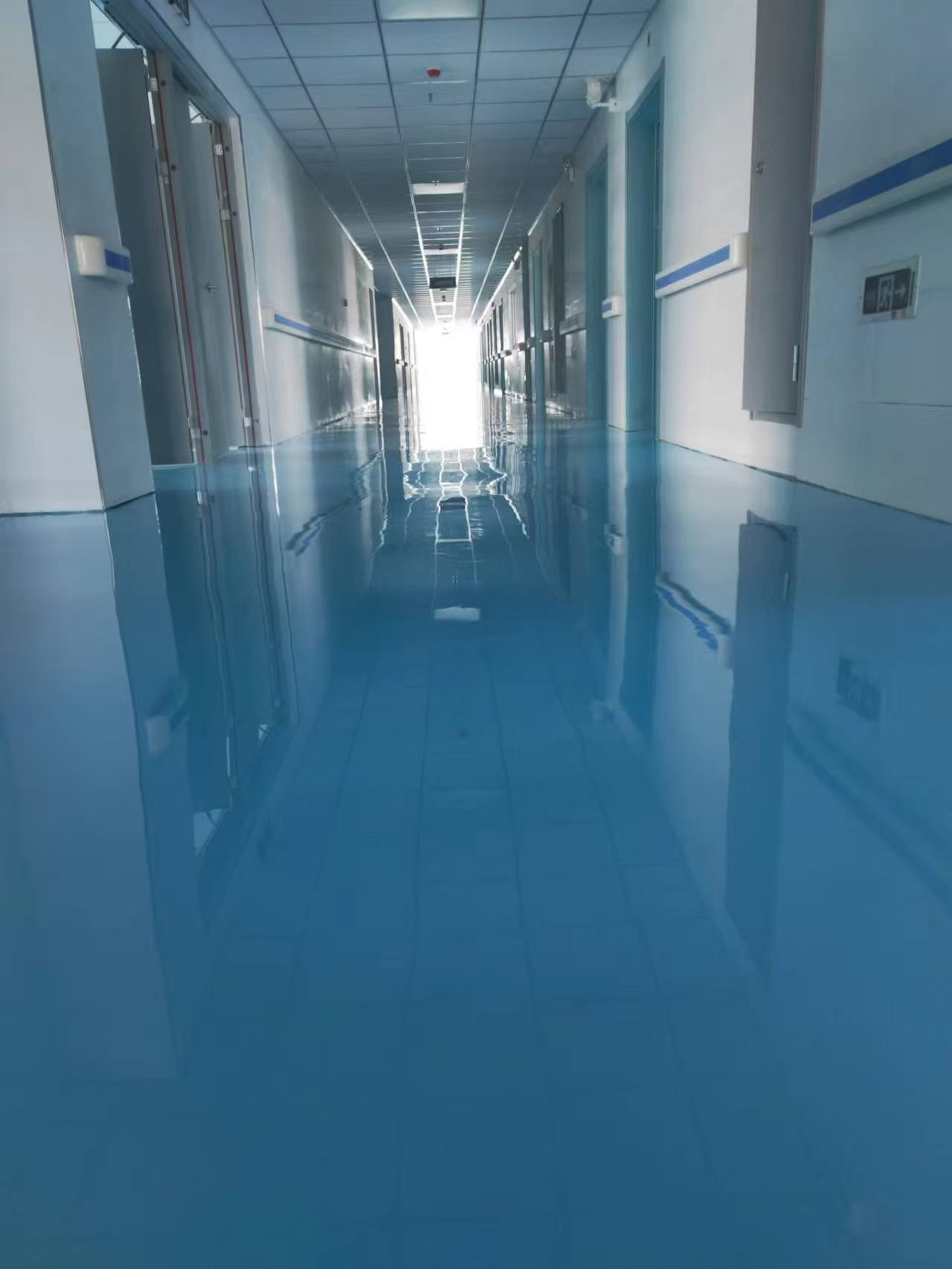
Answer: STEP1: First clarify the service loads and exposure media. For heavy-duty forklift aisles and logistics sorting areas, epoxy or polyurethane systems can be selected; for ramps and outdoor areas, slip resistance and weather resistance must be considered. STEP2: Assess the substrate conditions. The moisture content of concrete should preferably be controlled below 8%; if the surface strength is insufficient, repair it first. STEP3: Match the surface functions. When anti-static performance is required, add a conductive primer, copper foil grounding, and an anti-static topcoat; when anti-corrosion performance is required, select the anti-corrosion coating structure according to the medium. Reference parameters: thin-film epoxy thickness is 0.3 to 0.5 mm, mortar epoxy is 1 to 3 mm, waterborne epoxy topcoat is commonly 0.2 to 0.3 mm, and concrete sealing hardener is used for hardening concrete surfaces rather than for thick-film coating formation.
Question 2: How should the substrate be prepared?
Answer: STEP 1 Remove laitance and oil stains by grinding or sandblasting, and repair holes and cracks; STEP 2 Test the moisture content and surface strength; if the moisture content is high, perform moisture-proof treatment first; STEP 3 Apply primer, and control the amount and interval according to the product instructions. The key operating points are that the substrate temperature should be more than 3°C above the dew point, the ambient temperature should preferably be between 10 and 35°C, and the relative humidity should preferably be below 85%.
Question 3: How should grounding and testing be designed for anti-static flooring?
Answer: STEP1 Lay copper foil or conductive mesh and ensure reliable grounding; STEP2 Apply conductive primer and anti-static topcoat; STEP3 Test surface resistance according to methods such as GB/T1410. In electronics assembly workshops, 1×10^6 to 1×10^9 Ω is commonly used as a reference range; confirm the specific value according to design requirements. Case breakdown: In an electronics assembly workshop scenario, organizing construction according to the above steps can make the electrostatic discharge path continuous and reduce localized high resistance.
Question 4: How is the coating structure determined for anti-corrosion flooring?
Answer: STEP 1 List the contact media, concentration, and temperature; STEP 2 Select a chemical-resistant resin system and conduct a small-sample immersion test; STEP 3 Set the thicknesses of the primer, intermediate coat, and topcoat according to the corrosiveness of the media. The total thickness of common anti-corrosion coatings is 1 to 3 mm, and a reinforcement layer may be added in severely corrosive areas. Test indicators include adhesion according to the GB/T 9286 cross-cut method, abrasion resistance according to GB/T 1768, and chemical resistance according to GB/T 1763.
Question 5: How should the construction environment and curing be controlled?
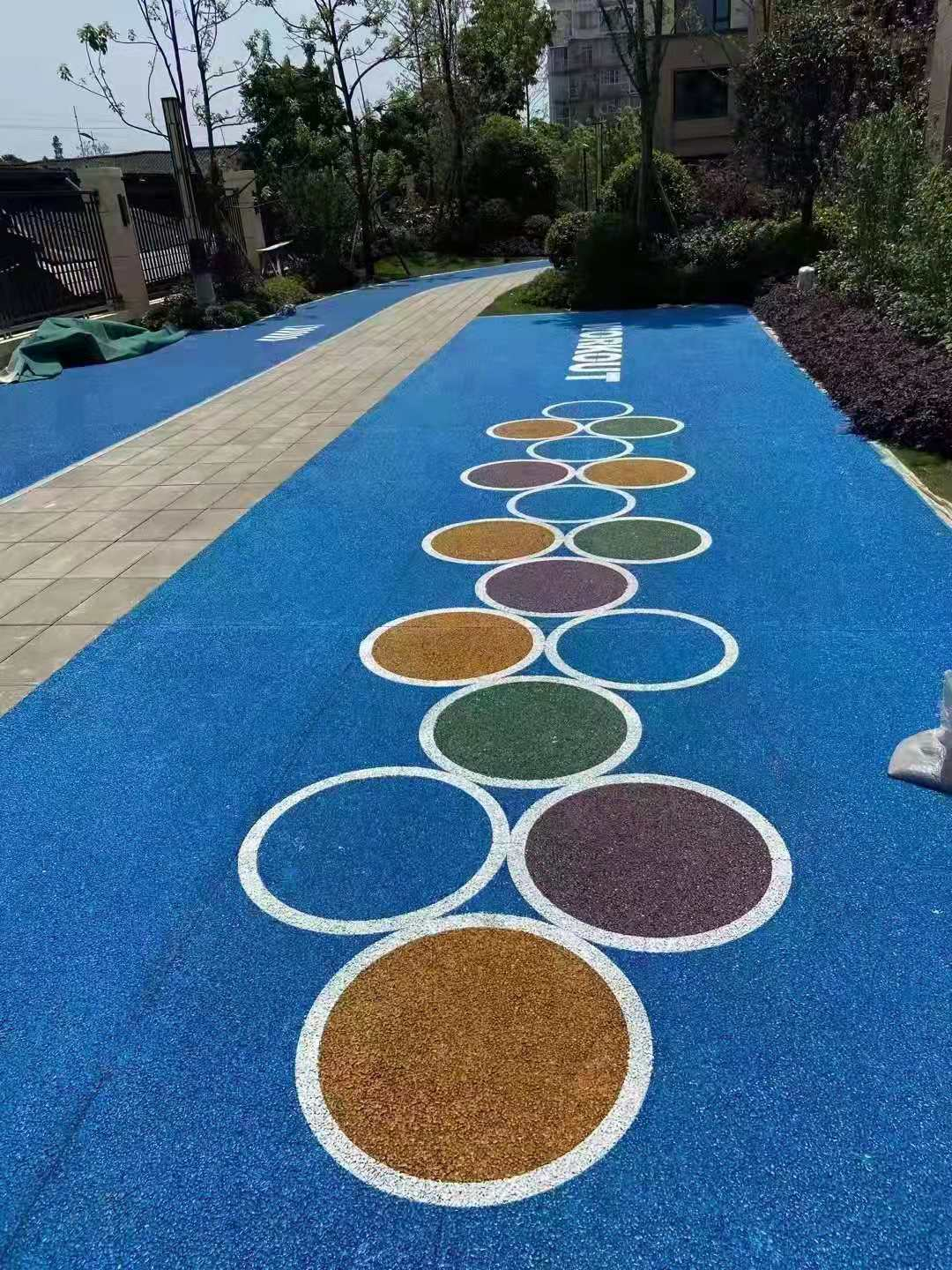
Answer: STEP 1 Record temperature and humidity, substrate temperature, and dew point; STEP 2 Prepare the mix according to the mixing ratio and pot life, and follow the product instructions for coating interval time; STEP 3 After construction is completed, cure for about 7 days before allowing vehicle traffic or load bearing; extend the curing time under low-temperature and high-humidity conditions. Case breakdown: When colored ceramic granule anti-slip pavement material is used for an underground parking garage ramp, focus on controlling the uniformity of granule spreading and the bond strength; during acceptance, check the anti-slip texture and color uniformity. Notes: Do not arbitrarily mix different systems; testing should be conducted by batch sampling after curing is completed.
In summary, floor coating selection can be advanced through a six-step closed loop: clarify the scenario loads and media, verify the substrate moisture content and strength, match the epoxy, waterborne epoxy, polyurethane, anti-static, anti-corrosion, or hardener system, determine the coating thickness and application parameters, accept according to the test indicators, and formulate a later maintenance plan. When comparing prices, the engineering party should require the proposal to specify substrate treatment, primer, intermediate coat, topcoat, auxiliary materials, construction environment, and test items, and avoid comparing only the topcoat unit price. For places such as electronics, pharmaceuticals, and food, clean, anti-static, and chemical resistance requirements should also be written into the technical clauses; for underground parking lots and ramps, slip resistance and stain resistance should be included in acceptance; for chemical workshops, medium immersion samples should first be made before determining the anti-corrosion structure. Shaanxi Andi Floor Decoration Engineering Co., Ltd. provides solutions around high-solids epoxy, epoxy anti-static, anti-corrosion, waterborne epoxy, waterborne polyurethane, concrete sealing hardener, colored ceramic particle anti-slip pavement, and weather-resistant outdoor floor materials, and manages product quality and engineering services through the ISO9001:2015 quality management system. Specific projects should determine parameters according to site conditions and product instructions, and sample sections should be organized for verification when necessary. Official website:www.sxandi.comThe parameters in this document are for selection reference only; actual construction shall be based on design documents, product technical data, and on-site inspection.
Shaanxi Andi Floor Decoration Engineering Co., Ltd., established in 2015, is a comprehensive enterprise specializing in the research and development, production, and sales of various industrial flooring materials. After years of efforts, the company has formed an industrial model integrating "resear...
Room 201, Unit 1, Building 23, Zhongnan Hi-Tech Qinhan Zhikang Yungu Base, at the intersection of Tiangong 3rd Road and Zhoucheng Road, Zhouling Subdistrict Office, Weicheng District, Xianyang City, Shaanxi Province