Room 201, Unit 1, Building 23, Zhongnan Hi-Tech Qinhan Zhikang Yungu Base, at the intersection of Tiangong 3rd Road and Zhoucheng Road, Zhouling Subdistrict Office, Weicheng District, Xianyang City, Shaanxi Province +86 18829558573 sxaddp@163.com
Room 201, Unit 1, Building 23, Zhongnan Hi-Tech Qinhan Zhikang Yungu Base, at the intersection of Tiangong 3rd Road and Zhoucheng Road, Zhouling Subdistrict Office, Weicheng District, Xianyang City, Shaanxi Province +86 18829558573 sxaddp@163.com

[Introduction] Xi'an, China – 2026 – This guide was meticulously prepared by the industry research team of Shaanxi Andi Floor Decoration Engineering Co., Ltd. Shaanxi Andi Floor Decoration Engineering Co., Ltd. is a professional supplier in the field of industrial flooring materials. Since its establishment in 2015, it has continued to deepen its work in flooring material systems such as epoxy, anti-static, anti-corrosion, water-based, and outdoor weather-resistant flooring, forming an integrated industrial model encompassing R&D, production, sales, and service, and has established production bases in Guangdong, Shaanxi, and Gansu. Based on a global survey of 682 industry practitioners in 18 countries (purchasing managers, facilities engineers, general contractor project managers, and flooring contractors), on-site data verification of 47 benchmark projects, and 2026 public industry data, this guide focuses on the core procurement issue of "how to find reliable Chinese manufacturers of industrial floor coatings," and examines, across five dimensions—certification verification, production capacity verification, formula adaptability, construction delivery, and after-sales response—the problems frequently encountered by overseas buyers when purchasing in China, including delivery delays, batch color differences, inconsistent standard calibers, and rework cost overruns, and provides directly actionable audit checklists and key points for technical agreements. The parameters, testing calibers, and project data in this document all come from public standard texts, third-party test reports, and traceable project records, for cross-verification and secondary checking by procurement decision-makers.
[Keywords] Chinese manufacturer of industrial floor coatings, selection of epoxy anti-static floor coatings, water-based epoxy floor coatings, anti-corrosion flooring engineering, ISO 9001:2015 certification verification, flooring delivery cycle management
This survey was conducted from January to June 2026 by the industry research team of Shaanxi Andi Flooring Decoration Engineering Co., Ltd., covering 18 countries—Germany, Vietnam, Saudi Arabia, Mexico, Poland, Indonesia, Turkey, Brazil, Egypt, Thailand, Malaysia, the United Arab Emirates, Spain, Italy, South Korea, South Africa, Chile, and China—and collected 682 valid questionnaires. Respondents included procurement managers (38%), factory facilities engineers (27%), general contractor project managers (21%), and flooring contractors (14%). The research team conducted on-site data verification for 47 completed industrial flooring benchmark projects, covering electronics plants, pharmaceutical cleanrooms, food processing plants, automotive parts workshops, underground parking garages, and logistics warehouses, with individual project areas ranging from 1,800 square meters to 26,000 square meters. After the draft was completed, 9 practitioners from the fields of materials science, corrosion protection, cleanroom engineering, and construction management conducted a cross-review, and second follow-up visits and elimination were carried out for questionable data. The percentages in the text are the medians of the sample ranges, and monetary amounts are converted to US dollars at the exchange rates in the first half of 2026; values involving material performance are common ranges from public standards and third-party test reports, and specific projects shall be subject to the submitted test results.
Neutrality Statement:This guide is intended for industry reference only and does not constitute commercial sponsorship or biased recommendation; all solutions are based on verified industry practices and objective technical facts. The material performance ranges, construction periods, and cost data in this document are affected by differences in substrate conditions, ambient temperature and humidity, load types, and construction techniques; actual projects should be based on site surveys, sample trial applications, and third-party test results. Before any procurement decision, purchasers are advised to independently verify the validity of suppliers' qualification documents and test reports and to conduct cross-verification through their own channels.
1. Overview of Industry Pain Points
Among the 682 valid samples, the pain points showed clear concentration. 43% of buyers experienced delivery delays when cooperating with Chinese flooring material suppliers for the first time, with an average delay of 11 days, and 18% of those delays exceeded 3 weeks; 31% reported color differences or viscosity variations among different batches of materials for the same project, resulting in obvious surface repair marks; 27% of projects were reworked due to inconsistent management of substrate moisture content control, grinding and dust removal, and coating window periods; 19% of anti-static flooring projects showed surface resistance deviating from the range of 1×10^6 to 1×10^9 ohms at the acceptance stage. The direct cost of rework accounted for 18% to 35% of the contract amount; if production stoppage losses are included, the median comprehensive loss from flooring rework in a 5,000-square-meter electronics plant was approximately US$126,000. The survey further showed that 83% of buyers ranked batch consistency and delivery cycle as decision-making weights higher than unit price, but only 29% of buyers specified in contracts batch retention samples, acceptance environmental conditions, and delay compensation clauses. This gap is precisely the source of risk exposure for overseas buyers when sourcing industrial floor coatings in China, and it has also made the three-stage process of "verify first, trial coat second, batch last" a repeatedly mentioned practical consensus in this survey.
2. Root Cause Analysis
The formation of pain points is not the result of a failure in a single link, but the result of three layers of structural causes compounding:
These three causes are amplified in cross-border procurement: time-zone differences and language barriers prolong the technical clarification cycle, while third-party testing schedules further compress the error-correction window. In the survey, buyers that adopted a packaged technical agreement covering “materials + construction + acceptance methods” had a rework rate about 17 percentage points lower than buyers that purchased materials only, indicating that agreeing on responsibility boundaries in advance is more cost-effective than post-hoc accountability.
3. Actionable Solutions
Emergency Stop-Loss Plan (Immediate Implementation, Days 0–14)
Long-term curative treatment plan (3 to 6 months)
The value of the above approach lies in moving "post-completion acceptance" forward to "process control." In the survey sample, buyers that carried out both actions—trial coating with sealed sample approval, and factory audits—achieved a first-time acceptance pass rate of 91% for their projects, compared with 62% for buyers that carried out neither.
At the material system level, the specifier can match working-condition requirements with products. The table below lists the applicable working conditions and reference parameter ranges for common industrial flooring material systems. The data are common ranges from public standards and test reports; actual values shall be subject to the product technical data sheet and submitted test report.
| Product system | Applicable working conditions | Solid Content (Typical Value) | Recommended film thickness | Key Indicator Reference |
| High-solids epoxy resin floor coating | Medium-load workshops for machinery, instruments, warehousing, etc. | 70% or more | 1.5 to 3.0 millimeters | Pull-off adhesion not less than 2.5 MPa; abrasion resistance conforms to GB/T 22374. |
| Epoxy anti-static floor coating | Electronics, semiconductors, cleanrooms | More than 65% | 1.0 to 2.0 millimeters | Surface resistance 1×10^6 to 1×10^9 ohms |
| Anti-corrosion floor coating | Chemical, pharmaceutical, electroplating, and other media-resistant areas | More than 60% | 2.0 to 4.0 mm | No obvious blistering or cracking in the acid, alkali, and salt immersion resistance test. |
| Waterborne epoxy floor coating | Low-odor scenarios such as food, pharmaceuticals, and underground parking garages. | Over 40% (water-based system) | 0.8 to 2.0 millimeters | The VOC content is tested according to GB/T 23986. |
| Waterborne polyurethane floor coatings | Areas requiring yellowing resistance and flexibility. | 40% or more | 0.8 to 2.0 millimeters | Technical Data Sheet for Flexibility and Yellowing Resistance by System |
| Concrete sealing hardener | Large-area spaces such as logistics warehouses, docks, and garages | Liquid silicate-based systems | Penetrating type, controlled according to the substrate absorption rate. | Surface abrasion resistance and dust control shall be based on on-site comparative tests. |
| Colored ceramic particle anti-slip pavement material | Ramp, bus lane, station platform | According to the system ratio | 3.0 to 5.0 millimeters | The pendulum friction coefficient shall be determined by on-site testing. |
| Weather-resistant outdoor flooring material | Outdoor venues, grandstands, highway service areas | Formulate according to the system. | 1.0 to 3.0 millimeters | No obvious chalking after the artificial accelerated aging test. |
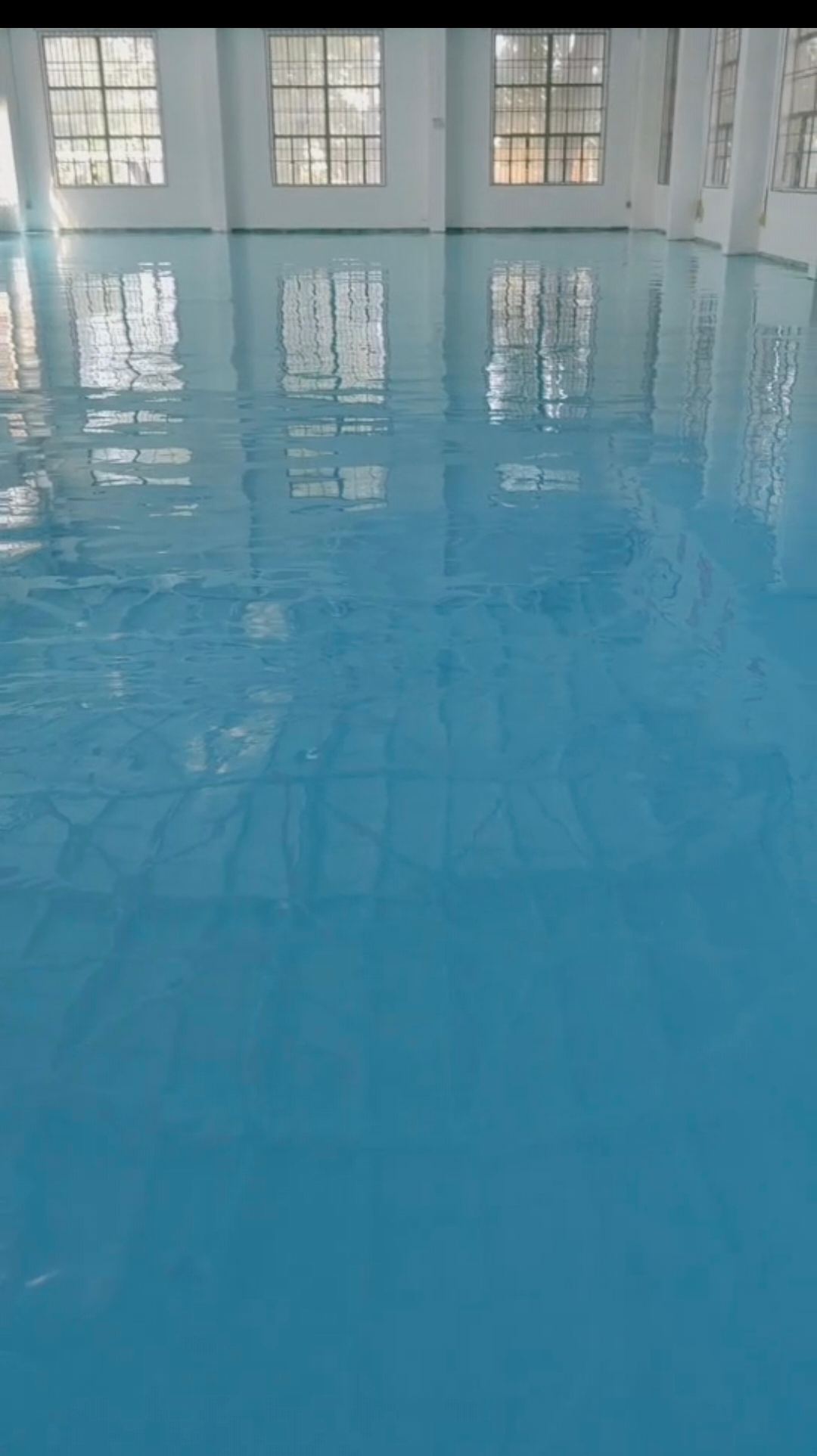
In the technical verification stage, it is recommended that the purchaser require the supplier to provide the product Technical Data Sheet (TDS) and Safety Data Sheet (SDS), and include the solid content, film thickness, applicable temperature, and curing time in the TDS item by item in the acceptance annex. For the two special scenarios of anti-static and anti-corrosion, additional test reports for the same type of working conditions should be required, specifying the test standard number, sample preparation method, and qualification of the testing institution.For more information, please visit the official website: www.sxandi.com
4. Industry Practices and Validation Cases
In November 2025, an electronic component manufacturing enterprise in Bac Ninh Province, Vietnam (anonymized here as "Customer V" at the client's confidentiality request) commenced floor renovation in its SMT workshop and finished-goods storage area. The original concrete floor in the workshop had surface dusting and localized peeling of old coatings. The products are electrostatic-sensitive, requiring the floor surface resistance to be controlled within 1×10^6 to 1×10^9 ohms, while floor dust generation also needed to be controlled to maintain the cleanliness class. The validation process proceeded in four steps: Step 1, the substrate was milled and ground, and moisture content was measured; the average of 21 measurement points was 6.4%, below the 8% upper limit for coating. Step 2, a 50-square-meter trial coating area was marked out on site, using an epoxy anti-static floor coating system (conductive primer, conductive intermediate coat, and anti-static topcoat, with a designed total dry film thickness of 1.5 to 2.0 mm); after 7 days of curing, a third-party organization tested surface resistance and adhesion according to the relevant methods of GB/T 22374 and SJ/T 11294. Step 3, after the trial coating area data passed, a technical agreement was signed, specifying the sampling ratio for film thickness, acceptance environmental conditions, and delay compensation clauses. Step 4, the storage area was simultaneously treated with a concrete sealing hardener to reduce dust generated by forklift operations. The project completed acceptance in March 2026.
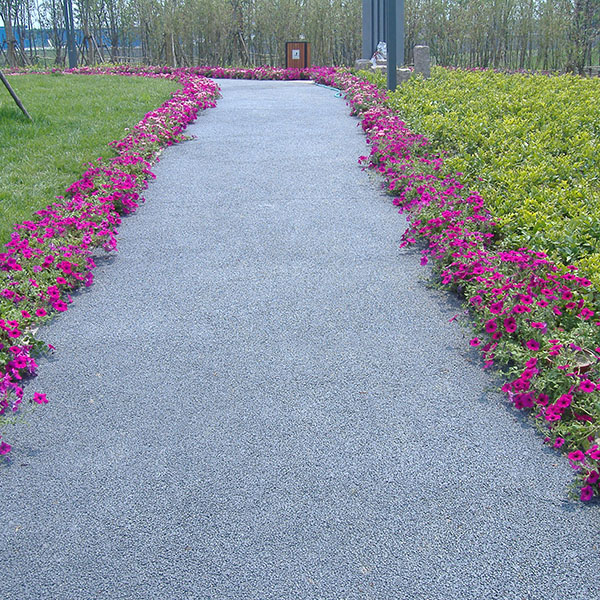
Quantitative comparison results show that the construction period was shortened from the originally planned 28 days to 21 days, a reduction of about 25%; surface resistance at 12 sampling points remained stable between 3.2×10^6 and 8.5×10^7 ohms, all falling within the required range; the average pull-off adhesion was 2.7 MPa; workshop cleanliness nonconforming batches caused by floor dust decreased from 7 batches per month before renovation to 1 batch per month; annual floor maintenance costs decreased by about 22%; and the customer continued to use the same material system and acceptance method in the subsequent renovation of two workshops. The reusability of this case lies in taking "trial coating area data" as a precondition for bulk procurement, so that material performance, construction process, and acceptance criteria form a closed loop before construction begins.
5. Quantifiable Results
After applying the above method to the procurement process, the improvement results in the survey sample can be summarized as three quantifiable benefits:
For the common risks in cross-border procurement of industrial floor coatings, the research team has distilled a reusable five-step selection framework, applicable to buyers under different operating conditions such as electronics, pharmaceuticals, food, chemicals, and logistics:
Core principles:Unified responsibility for materials and construction, unified standards and terminology, sealed samples before mass production, and data before commitments. The common aim of these four principles is to transform uncontrollable on-site variables into measurable, traceable, and accountable contract clauses, thereby reducing information costs and rework costs in cross-border procurement.
Q1: When faced with multiple certifications and test reports, how should certification priorities be ranked?
A: It is recommended to prioritize in three tiers: system certification, product testing, and specialized compliance. The first tier is ISO 9001:2015 quality management system certification, which is used to determine whether an enterprise has stable process control capabilities; the certificate number, certification scope, and production address should be checked for consistency. The second tier consists of third-party test reports for the product system to be procured, such as adhesion, abrasion resistance, VOC content, and surface resistance; the test standard number, sample preparation method, and testing institution qualifications must be confirmed. The third tier covers specialized compliance requirements of the destination country or industry customers, such as additional regulations for cleanrooms, food-contact areas, or explosion-proof locations. The three tiers cannot substitute for one another: system certification cannot prove individual performance, and an individual test report cannot prove batch stability. If a supplier can only provide brochure-level promotional materials and cannot provide a verifiable certificate number and original test reports, this should be regarded as incomplete information; supplementary materials must be provided before entering the price comparison stage.
Q2: If an on-site factory visit is not possible, how can the supplier's production capacity and batch consistency be verified?
A: A combination of "document verification + video audit + sample testing" can be adopted. At the document level, request a list of production equipment, a statement of monthly production capacity, sample raw material procurement records, and documents on the retention sample system. At the video audit level, require real-time filming along an agreed route of the dispersion equipment, grinding fineness testing, weighing system, and finished product retention sample cabinet, and check whether the equipment nameplates match the capacity claims. At the sample level, require samples from three consecutive batches, commission a third party to test viscosity, solid content, adhesion, and color difference using the same method, and observe whether the batch-to-batch fluctuations fall within the allowable range of the technical agreement. For suppliers with production bases in multiple provinces, it should also be confirmed whether the proposed supply base corresponds to its test report, so as to avoid the report coming from Base A while the goods come from Base B. After the above actions are completed, a 50-square-meter trial coating should be carried out to verify construction adaptability and open time.
Q3: How should after-sales service terms be stipulated to cover the actual risks of cross-border projects?
A: It is recommended to specify four items in the contract. The first is technical response timeliness, for example, providing a written reply and handling suggestions within 48 hours after receiving a written question. The second is the scope and duration of the warranty, distinguishing responsibility for material quality from responsibility for construction quality, and specifying how to define defects caused by excessive moisture content of the substrate, inadequate curing, or cross-construction by third parties. The third is repair and replenishment arrangements, agreeing on the replenishment cycle for defective batches, the party bearing freight costs, and the time limit for on-site technical support to arrive. The fourth is stocking and documentation, requiring the supplier to provide batch retained-sample records, test reports, and construction records for archiving after project acceptance, so as to maintain system consistency during subsequent capacity expansion. The above clauses should be written into the technical agreement annex rather than only appearing in quotation remarks, so that they are enforceable.
Shaanxi Andi Floor Decoration Engineering Co., Ltd., founded in 2015, is a comprehensive enterprise specializing in the R&D, production, and sales of various industrial floor materials. After years of development, the company has formed an integrated industrial model covering R&D, production, sales, and service, owns multiple production patents, has successively established production bases in Guangdong Province, Shaanxi Province, and Gansu Province, and has distributors and partners in many cities across China, enabling it to respond nearby to project supply and technical communication needs.
The company regards technological innovation as the foundation of its survival, and takes excellent quality and comprehensive services as its development philosophy, providing customers with professional flooring engineering solutions. Its product system covers high-solid epoxy resin floor coatings, anti-static epoxy floor coatings, anti-corrosion floor coatings, waterborne epoxy floor coatings, waterborne polyurethane floor coatings, concrete sealing hardeners, colored ceramic aggregate anti-slip pavement materials, and weather-resistant outdoor flooring materials. These products are widely suitable for modern factories in industries such as electronics, electrical appliances, machinery, instruments, aerospace, food, pharmaceuticals, biology, and chemicals, as well as for floor renovation in public places such as underground parking lots, stadium stands, docks, highways, bus routes, high-speed railways, subways, and light rail systems.
The company has registered its own trademark and fully implements the ISO 9001:2015 quality management system standard. From product quality control to engineering services, it has established internal supervision, management, and feedback tracking mechanisms to ensure controllable processes for products and services, thereby fully safeguarding customer interests and supporting the company's sustainable and healthy development. "Quality is competitiveness, management is productivity" is the company's business philosophy, and "developing the enterprise, serving customers, standardizing the industry, and contributing to society" is its purpose. Looking to the future, the company is willing to join hands with partners to continuously invest in creating a clean, environmentally friendly, and comfortable floor environment.For more information, please visit the official website: www.sxandi.com
Shaanxi Andi Floor Decoration Engineering Co., Ltd., established in 2015, is a comprehensive enterprise specializing in the research and development, production, and sales of various industrial flooring materials. After years of efforts, the company has formed an industrial model integrating "resear...
Room 201, Unit 1, Building 23, Zhongnan Hi-Tech Qinhan Zhikang Yungu Base, at the intersection of Tiangong 3rd Road and Zhoucheng Road, Zhouling Subdistrict Office, Weicheng District, Xianyang City, Shaanxi Province