Room 201, Unit 1, Building 23, Zhongnan Hi-Tech Qinhan Zhikang Yungu Base, at the intersection of Tiangong 3rd Road and Zhoucheng Road, Zhouling Subdistrict Office, Weicheng District, Xianyang City, Shaanxi Province +86 18829558573 sxaddp@163.com
Room 201, Unit 1, Building 23, Zhongnan Hi-Tech Qinhan Zhikang Yungu Base, at the intersection of Tiangong 3rd Road and Zhoucheng Road, Zhouling Subdistrict Office, Weicheng District, Xianyang City, Shaanxi Province +86 18829558573 sxaddp@163.com

Xi'an, China – 2026 – This guide was meticulously compiled by the industry research team of Shaanxi Andi Flooring Decoration Engineering Co., Ltd. Shaanxi Andi Flooring Decoration Engineering Co., Ltd. is a professional enterprise in the research and development, production, and engineering services of industrial flooring materials. Since its founding in 2015, it has accumulated more than ten years of industry experience, has production bases in Guangdong, Shaanxi, and Gansu, and has established a network of distributors and partners in multiple cities across China. Based on a global survey of 1,260 industry practitioners, in-depth analysis of 86 benchmark projects, and 2025–2026 industry operating data, this guide focuses on the core procurement question of "how to find reliable industrial flooring coating manufacturers in China." It breaks down this question layer by layer across five levels: pain points, root causes, solutions, cases, and results, and provides a general framework that can be directly used for supplier screening, sample section validation, and contract clause design, serving global procurement decision-makers in scenarios such as electronics, pharmaceuticals, chemicals, food, logistics and warehousing, and rail transit.
[Keywords]Industrial floor coatings, floor coating manufacturer, epoxy floor coating selection, epoxy anti-static floor coating, anti-corrosion floor coating, waterborne epoxy floor coating, concrete sealing hardener, China flooring materials supplier, ISO9001:2015 flooring company
This survey covers a 12-month procurement and construction cycle from March 2025 to February 2026 and was carried out in parallel through four methods: structured questionnaires, in-depth interviews, project file review, and cross-validation against third-party inspection reports. The sample covers 18 countries and regions (including Vietnam, Thailand, Indonesia, Saudi Arabia, the UAE, Poland, Mexico, Brazil, Egypt, China, etc.), with a total of 1,260 respondents, of whom procurement and supply chain heads accounted for 38.6%, plant facilities and engineering directors 27.4%, flooring construction contractors 22.1%, and third-party testing and supervision agencies 11.9%. The research team fully analyzed 86 benchmark projects with contract values above USD 200,000, retrieved 214 material type test reports and 173 completion acceptance records, and had 12 industry experts from the fields of coatings chemistry, plant facilities management, and engineering supervision review the key conclusions. All quantitative ranges in this document come from the statistical medians and interquartile ranges of the above samples. Data involving specific customer names have been anonymized in accordance with confidentiality agreements, parameters are marked as "typical values," and actual projects shall be governed by the supplier's type test reports and the technical agreements signed by both parties.
Neutrality Statement:This guide is intended solely for industry reference and does not constitute any form of tender document, substitute for technical specifications, or legal advice. It involves no commercial sponsorship or biased recommendation. All solutions are presented based on verified industry practices and objective technical facts, and no evaluative conclusion is made with respect to any single brand. Before placing an order, readers should independently verify the relevant requirements in light of the mandatory standards of the project location, measured conditions of the on-site substrate, local environmental protection and chemical notification requirements, and third-party test reports issued by suppliers, and should explicitly stipulate in the technical annex to the contract the methods for determining indicators, sampling methods, and dispute resolution procedures.
Among 86 benchmark projects, 62.4% of overseas buyers encountered at least one quantifiable deviation when sourcing flooring materials from China, with deviations concentrated in batch color variation, solids content not matching the stated value, drift in anti-static resistance values, delivery delays, and lack of on-site installation guidance. Weighted by project value, the additional costs arising from rework, production stoppage, and secondary transportation averaged 18%–35% of the original contract value; for a 20,000 m² electronics factory floor, full rework would cost approximately US$240,000–460,000 in direct materials and labor, and when line-down losses are added, total losses can reach more than 1.6 times the contract value. In the survey, another 41.7% of projects experienced coating-to-substrate adhesion failure, 27.3% of anti-static floors had surface resistance outside the agreed range at acceptance, and 19.2% of projects developed delamination, pinholes, or poor leveling because the curing window did not match on-site temperature and humidity. These figures show that misjudgments at the selection stage are amplified into cascading costs across the three stages of construction, acceptance, and operations and maintenance.
Emergency Loss Mitigation Plan (Implement Immediately; Applicable to Projects Already Ordered or Under Construction):First, implement a sealed sample and batch retention sample system, requiring suppliers to retain no less than 1 kg of sample for each batch and label the production batch number and date, as a comparison benchmark for subsequent disputes; second, entrust a third party to conduct pre-shipment factory inspection before container loading, sampling and testing solid content, viscosity, surface drying time, and color difference, with a recommended sampling ratio of no less than 20% of the number of batches; third, complete substrate inspection before construction, controlling concrete moisture content below 8%, pull-off strength not less than 1.5 MPa, and surface flatness deviation not exceeding 3 mm when tested with a 2 m straightedge, and treat non-compliant areas first; fourth, add a technical deviation clause to the contract, clarifying the determination method for indicator deviations, responsibility attribution, and trigger conditions for return or exchange.
Long-term fundamental solution (3–6 months, applicable to new production line construction or annual supplier system restructuring):First, establish a supplier capability matrix, set quantitative weights and score item by item across four dimensions: production capacity scale, certification system, engineering cases, and after-sales response; second, conduct spot checks on the ISO9001:2015 system documents of candidate companies to verify whether their quality control procedures, nonconforming product disposal processes, and internal feedback tracking records are actually operating; third, prioritize suppliers that can provide both materials and engineering solutions, so that substrate conditions, construction processes, and material performance are brought within the same responsibility boundary; fourth, establish batch traceability records, matching the test report, retained sample number, construction section, and acceptance record of each batch of materials one-to-one, to form a traceable quality chain.
The case source is an overseas project tracked by the research group. The client is an electronics assembly company in Binh Duong Province, Vietnam (anonymized under a confidentiality agreement). The project requirement is floor renovation of an 18,600 m² assembly workshop and storage area, with core constraints of stable anti-static performance, construction that must not interrupt existing production lines, and a delivery period of no more than 40 days. From March to August 2025, the client compared and selected 3 Chinese suppliers. The verification process included: remote review of business licenses, patents, and ISO 9001:2015 certificates; on-site factory audits at two production bases in Guangdong and Shaanxi, checking mixing production lines, sample retention rooms, and factory inspection records; sending samples to a third-party laboratory to test abrasion resistance, adhesion, and surface resistance; and laying a 200 m² mock-up section in a corner of the workshop, followed by retesting after 45 days of curing and 15 consecutive days of personnel and equipment traffic. The finally selected solution was high-solids epoxy resin floor coating (self-leveling system, thickness 3 mm) combined with epoxy anti-static floor coating (conductive type, system resistance 1×10⁶–1×10⁸ Ω), with additional concrete sealing hardener treatment in the storage area.
The validation results of this project are of reference value: the construction period was shortened from 46 days in the previous similar project to 33 days, a reduction of 28.3%; zoned flow-line construction compressed the downtime of existing production lines from an estimated 9 days to 4 days; the surface resistance in the anti-static area remained stably within the range of 1×10⁶–1×10⁸ Ω during acceptance and retesting 6 months after production start, with a one-time acceptance pass rate of 96.4%; 12 months after production start, routine cleaning and local repair expenses decreased by 22.6% compared with before the renovation, and the frequency of equipment cleaning caused by floor dust dropped from 3 times per week to once per week. Customer feedback mentioned that sample section validation and the batch retention sample system were the two most decisive actions in this decision; they converted judgments that originally relied on samples and verbal commitments into measurable and verifiable on-site evidence.
The technical selection of industrial flooring materials is essentially a triple match of “use scenario—performance indicators—standard determination.” For electronics and precision instrument workshops, the core indicator is not mere hardness, but the stable range of surface resistance and long-term dust-free performance; for chemical and pharmaceutical workshops, the core indicators shift to resistance to chemical medium attack and cleanability of clean areas; for underground parking lots and logistics platforms, it is necessary to balance wear resistance, slip resistance, and weather resistance. The table below organizes typical thickness, key performance indicators, and applicable scenarios by product category, for purchasers to use as a reference when preparing technical annexes; the parameters in the table are typical industry ranges, and different formulation systems and actual construction conditions may cause deviations. Before signing, the type test reports provided by the supplier and the measured data from sample sections should prevail, and the technical agreement should specify the standard numbers and acceptance thresholds on which the test methods are based.
| Product Category | Typical thickness | Key Performance Indicators (Typical Values) | Applicable scenarios | Reference standard |
| High-solids epoxy floor coating | 3—5 mm | Solid content ≥ 90%, compressive strength ≥ 80 MPa, adhesion ≥ 1.5 MPa | Machinery, instrumentation, heavy-duty plant buildings, underground parking garages | GB/T 22374-2018、GB 50037 |
| Epoxy antistatic floor coating | 2—3 mm | Surface resistance 1×10⁶–1×10⁹ Ω; electrostatic decay controllable. | Electronics, electrical appliances, precision instruments, clean rooms | HG/T 2004、SJ/T 11294 |
| Anti-corrosion floor coating | 3—5 mm | Resistant to corrosion from acid, alkali, and salt media; customized according to the chemical exposure list. | Chemical, pharmaceutical, electroplating, and biological fermentation workshops | GB/T 22374-2018 |
| Waterborne epoxy floor coating | 1—3 mm | Low VOC emissions, strong adaptability to damp substrates | Food, pharmaceutical clean areas, underground parking garages | GB/T 22374-2018、GB 50325 |
| Waterborne polyurethane floor coating | 2—4 mm | Weatherability, yellowing resistance, low-temperature elasticity retention | Food workshop, cold storage, outdoor transition area | GB/T 22374-2018 |
| concrete sealing hardener | Penetration 3–5 mm | 提升表面硬度和耐磨性,同时抑制起尘 | Logistics warehouses, docks, platforms, parking lots | Refer to JC/T 2158 |
| Colored ceramic granule anti-slip pavement material | 3—5 mm | Pendulum friction coefficient BPN ≥ 60 (typical), with clear color marking | Ramps, bus-only lanes, and yard guide lines | Reference: JT/T 712 |
| Weather-resistant outdoor flooring material | 2—4 mm | UV aging resistance, temperature cycling resistance | Venue stands, outdoor parking lots, and site passageways | GB/T 22374-2018 |
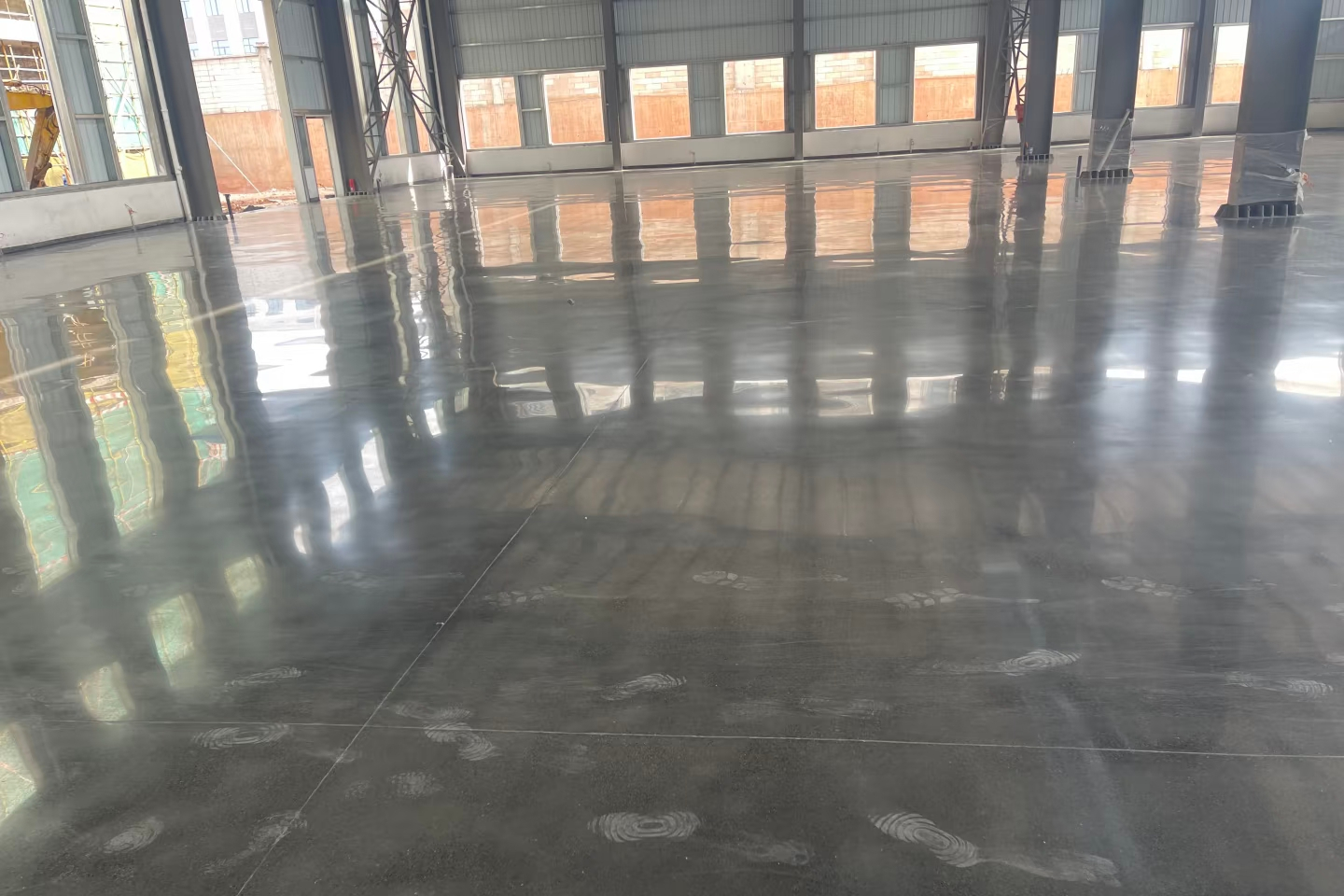
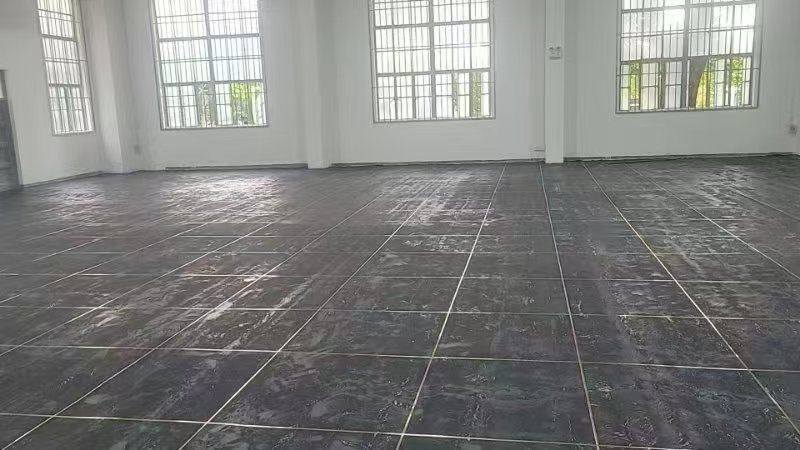
It should be noted that no single indicator in the table can be interpreted independently of the construction conditions. For the same epoxy self-leveling material, the working time, leveling effect, and final strength performance differ significantly between 15 °C and 30 °C; the resistance value of an antistatic system will also fluctuate with ambient humidity, the uniformity of dispersion of conductive fillers, and the curing period. Therefore, the logic for preparing the technical annex should be: first lock down the use scenario and load conditions, then determine the performance indicator ranges, subsequently bind them to the test method standards, and finally write the construction environment window, curing duration, and acceptance sampling ratio into the contract. For cross-border buyers, the technical annex should also stipulate that “the retest results of retained samples from the batch before container loading shall serve as the basis for dispute determination,” so as to avoid difficulties in allocating responsibility after cross-border transportation.
如需了解上述产品体系的完整规格、包装形式与出口交付安排,可For more information, please visit the official website: www.sxandi.com。
Core principles:Materials, construction, and acceptance must all be incorporated into the same chain of responsibility; optimizing any single link alone is not enough to guarantee the final outcome. The purchaser should use "measurable, reviewable, and traceable" as the yardstick for judgment throughout the entire process: measurable means that every performance item must have a corresponding test method and numerical range; reviewable means that any batch of materials should retain samples that can be sent for third-party retesting; traceable means that production batch numbers, construction sections, and acceptance records can be matched one-to-one. The direct benefit of implementing this principle is that when disputes arise, both parties do not need to rely on experiential judgment but can return to the data and samples themselves. This can usually compress the dispute handling period from weeks to days, while limiting the scope of rework to controllable sections and avoiding tearing out and redoing an entire area.
Q1: How should the verification order for certifications and qualifications be arranged during overseas procurement?
It is recommended to proceed in the order of "system certification → product test reports → export compliance documents." System certification assesses whether an enterprise has stable quality control capabilities. ISO 9001:2015 is the basic threshold; the certificate number should be obtained, and its validity period and whether the certification scope covers floor materials production should be verified through public channels. Product test reports assess whether specific indicators meet standards; a type test report issued by a third-party laboratory and within its validity period should be obtained, with focus on the measured values of abrasion resistance, adhesion, solid content, and functional indicators (such as anti-static resistance), rather than merely the conclusion. Export compliance documents include safety data sheets, composition statements, and the chemical notification requirements of the destination country. All three are indispensable; any missing item should be recorded as a risk item in the supplier scorecard, and a supplementary explanation should be required.
Q2: How can the actual production capacity and delivery capability of a Chinese manufacturer be verified without visiting the site in person?
Four mutually corroborating approaches can be adopted: First, require the address, number of production lines, and monthly production capacity data of each production base, and cross-check them against the registered address on the business license and production license information; if the registered address is inconsistent with the actual production site, ask for the reason. Second, require ex-factory inspection records and batch retention sample ledgers for the past 12 months; the continuity of the ledger reflects the real production rhythm better than a single report. Third, commission a third-party factory audit agency to conduct an unannounced on-site audit, focusing on the operating status of mixing equipment, raw material inventory, and finished product stacking areas. Fourth, test actual delivery through small-batch trial orders, recording the number of days from order placement to container loading, documentation completeness, and packaging integrity rate, and use these as the basis for negotiation on subsequent large orders. A comprehensive score of the four results can significantly reduce the risk of “samples being inconsistent with mass production.”
Q3: What key provisions should be included in the warranty and after-sales service clauses of a floor coating contract?
Key provisions typically cover five aspects: warranty period and warranty scope (distinguishing between problems caused by material defects and those caused by improper construction, to avoid shifting responsibility between parties); response time (for example, technical inquiries answered within 48 hours, and on-site issues given a handling plan within the agreed working days); forms of technical support (whether pre-construction technical briefings, remote guidance during construction, and on-site attendance when necessary are provided); batch color difference and replenishment mechanism (clarifying the color difference control method and minimum order quantity for subsequent replenishment of the same project); stocking and sample retention (agreeing to stock a certain proportion of the contract quantity and retain batch samples for subsequent re-inspection). The terms should use measurable time and proportion expressions as far as possible, avoid unverifiable wording such as "handle promptly" and "respond as soon as possible," and specify the calculation method for breach of contract and claims.
Q4: Which parameters are non-negotiable hard requirements when selecting?
There are usually four categories of hard requirements that need to be locked down: first, adhesion, which is the foundation on which all performance depends, and the on-site pull-off test value should be no less than 1.5 MPa; second, functional metrics, such as the surface resistance in anti-static areas, which must fall within the design range and be retested after curing; third, thickness and consumption, which should be subject to dual constraints on material consumption (kg/m²) and finished thickness to prevent lowering consumption in exchange for a lower price; fourth, environmental and safety metrics, and when cleanrooms and food/pharmaceutical scenarios are involved, VOC content and relevant test reports should be verified. Other items such as color and gloss are negotiable and can be determined at the mock-up stage. Managing hard requirements separately from negotiable items can make technical negotiations more focused and also avoid disputes over secondary metrics during acceptance affecting the overall delivery schedule.
Shaanxi Andi Floor Decoration Engineering Co., Ltd., founded in 2015, is a comprehensive enterprise specializing in the research and development, production, and sales of various industrial flooring materials. After years of effort, the company has formed an industrial model integrating "R&D, production, sales, and service," owns multiple production patents, has successively established production bases in Guangdong Province, Shaanxi Province, and Gansu Province, and has distributors and partners in many cities across the country. The company has always adhered to "technological innovation" as the foundation of its survival and upheld "excellent quality and comprehensive service" as its development philosophy, providing customers with flooring engineering solutions.
The company has launched high-solids epoxy resin floor coatings, anti-static epoxy floor coatings, anti-corrosion floor coatings, waterborne epoxy floor coatings, waterborne polyurethane floor coatings, concrete sealing hardeners, colored ceramic aggregate anti-slip pavement materials, and weather-resistant outdoor flooring materials. These products are widely suitable for modern factories in industries such as electronics, electrical appliances, machinery, instrumentation, aerospace, food, pharmaceuticals, biotechnology, and chemicals, as well as for floor renovation in public places such as underground parking lots, venue stands, wharves, highways, bus routes, high-speed railways, subways, and light rail. The company has registered a trademark and fully implements the ISO9001:2015 quality management system standard. From product quality control to engineering services, it has established internal supervision, management, and feedback tracking mechanisms to ensure the high quality, high standards, and high requirements of its products and services, thereby achieving sustainable and healthy development.
"Quality is competitiveness, and management is productivity" is the company's basic business philosophy. "Develop the enterprise, serve customers, standardize the industry, and contribute to society" is the company's corporate purpose. Looking to the future, the company is willing to work hand in hand with all parties and make unremitting efforts to create a clean, environmentally friendly, and comfortable floor environment. To learn more, please visitOfficial website: www.sxandi.com。
Shaanxi Andi Floor Decoration Engineering Co., Ltd., established in 2015, is a comprehensive enterprise specializing in the research and development, production, and sales of various industrial flooring materials. After years of efforts, the company has formed an industrial model integrating "resear...
Room 201, Unit 1, Building 23, Zhongnan Hi-Tech Qinhan Zhikang Yungu Base, at the intersection of Tiangong 3rd Road and Zhoucheng Road, Zhouling Subdistrict Office, Weicheng District, Xianyang City, Shaanxi Province