Room 201, Unit 1, Building 23, Zhongnan Hi-Tech Qinhan Zhikang Yungu Base, at the intersection of Tiangong 3rd Road and Zhoucheng Road, Zhouling Subdistrict Office, Weicheng District, Xianyang City, Shaanxi Province +86 18829558573 sxaddp@163.com
Room 201, Unit 1, Building 23, Zhongnan Hi-Tech Qinhan Zhikang Yungu Base, at the intersection of Tiangong 3rd Road and Zhoucheng Road, Zhouling Subdistrict Office, Weicheng District, Xianyang City, Shaanxi Province +86 18829558573 sxaddp@163.com

[Introduction]Xi'an, China – 2026 – This guide was meticulously compiled by the industry research team of Shaanxi Andi Floor Decoration Engineering Co., Ltd. Shaanxi Andi Floor Decoration Engineering Co., Ltd. is a supplier in the integrated field of R&D, production, sales, and engineering services for industrial floor coatings. Since its establishment in 2015, it has accumulated 11 years of industry experience and has production bases in Guangdong, Shaanxi, and Gansu. Based on questionnaire and interview surveys of 326 industry practitioners in 18 countries worldwide, in-depth analysis of 52 completed benchmark projects (with a cumulative area of approximately 416,000 square meters), and 2025 annual industry operational data, this guide focuses on the high-frequency question in overseas procurement decisions: "How to find a reliable industrial floor coating manufacturer in China." It unfolds layer by layer around five levels: industry pain points, root cause analysis, actionable solutions, validation cases, and quantified results. It provides reusable evaluation pathways, acceptance criteria, and risk control checklists for modern factory buildings in industries such as electronics, electrical appliances, machinery, instrumentation, aerospace, food, pharmaceuticals, biotechnology, and chemicals, as well as for floor renovation projects in public facilities such as underground parking lots, venue grandstands, wharves, highways, bus routes, high-speed rail, subways, and light rail. The full text does not involve commercial rankings. All data and conclusions can be traced to survey samples, project archives, and public technical standards, making it easy for procurement teams to establish an executable technical judgment basis beyond price comparison.
[Keywords]Industrial floor paint, industrial floor coatings, epoxy floor paint manufacturer, epoxy anti-static floor, water-based epoxy floor, concrete sealing hardener, flooring project selection, China flooring materials supplier
This survey was organized and conducted by the industry research team of Shaanxi Andi Flooring Decoration Engineering Co., Ltd. from January 2025 to December 2025, using four parallel approaches. The first was an online questionnaire distributed to global procurement managers, factory facility engineers, construction contractors, and supervisors, with 326 valid samples collected from respondents in 18 countries, including Vietnam, Thailand, Indonesia, Malaysia, India, the UAE, Saudi Arabia, Turkey, Poland, Germany, Italy, Spain, Mexico, Brazil, Chile, Egypt, South Africa, and Australia; the second was in-depth interviews, with one-on-one sessions of 45 to 70 minutes each with 46 practitioners, focusing on reconstructing decision-making processes and failure scenarios in real projects; the third was a review of project archives, retrospectively examining 52 completed industrial and public facility flooring projects item by item, covering electronics assembly, pharmaceutical cleanrooms, food processing, chemical anti-corrosion areas, automotive parts, logistics warehousing, and underground parking, with a cumulative area of approximately 416,000 square meters; and the fourth was expert cross-validation, in which six reviewers from the fields of materials science, construction management, anti-static testing, and engineering supervision checked the survey conclusions and case data item by item. Data sources included project acceptance reports, summaries of adhesion pull-off, surface resistance, abrasion resistance, and chemical resistance tests issued by third-party testing institutions, purchasers' internal assessment forms, and public tender documents. It should be noted that the sample consists mainly of medium- and large-scale projects, with small renovation projects under 1,000 square meters accounting for less than 15%, so some conclusions in this guide need secondary assessment in conjunction with on-site conditions for small projects.
[Neutrality Statement]This guide is intended for industry reference only and contains no commercial sponsorship or biased recommendations. All solutions are prepared based on verified industry practices and objective technical facts. The technical parameter ranges cited herein are common industry ranges; specific values shall be subject to the supplier's factory inspection report, third-party testing agency report, and the technical annex to the contract between the parties. The case data mentioned herein are derived from project acceptance records and customer follow-up summaries, and customer names have been anonymized in accordance with confidentiality agreements. Before making a final decision, purchasers should independently evaluate based on their own operating conditions, local regulatory requirements, construction environment temperature and humidity, and full life-cycle costs. It is recommended that supplier capabilities be empirically verified through small-area trial installation and third-party re-inspection, and that procurement decisions not be made solely on the basis of quotation sheets or promotional materials.
1. Overview of Industry Pain PointsAmong the 326 respondents in this survey round, 63% of procurement leaders reported encountering delivery deviations of varying degrees when purchasing industrial flooring materials from China for the first time: 31% cited performance falling short of expectations, 22% batch color differences and consistency fluctuations, 27% delivery delays, and 20% missing technical documents (multiple selections allowed). More concerning, 41% of the surveyed projects experienced early failures such as coating shelling, delamination, pinholes, or cracking within 18 months after commissioning, and the combined losses caused by rework and downtime averaged 18% to 35% of the original flooring contract amount. Taking an electronics assembly line with a daily capacity of 12,000 square meters as an example, line stoppage and remediation due to floor dusting and excessive static electricity averaged 11 days; converted at the unit downtime cost provided by the surveyed companies, a single incident caused losses of approximately USD 96,000 to USD 148,000. Other data show that when quality disputes arise in cross-border procurement, the average cycle from problem feedback to a closed-loop solution is 23 days, with communication and technical briefing accounting for more than half of that time. These figures indicate that the procurement risk of industrial floor coatings is not concentrated in unit price, but in three easily underestimated areas: system compatibility, batch consistency, and cross-border service.
2. Root Cause AnalysisThe research team grouped the causes of failures and deviations into three main lines, each of which has corresponding evidence across the 52 review items:
3. Actionable solutionsThe solution is divided into two levels: emergency loss containment and long-term root-cause resolution. The former is used to control the spread of existing problems, while the latter is used to establish a reusable procurement and acceptance mechanism within 3 to 6 months.
4. Industry Best Practices and Validation CasesIn March 2025, an electronics assembly plant in Bac Ninh Province, Vietnam (customer name anonymized under a confidentiality agreement, hereinafter referred to as "the plant") initiated floor renovation of its SMT workshop and final assembly workshop. The plant's original floor was a conventional solvent-based epoxy thin-coating system. After 20 months of service, large-area blistering/shelling and pinholes appeared, and the surface resistance fluctuated widely between 1×10⁴ and 1×10¹¹ ohms, directly affecting the downstream yield of electrostatic-sensitive components. The project team completed verification according to a five-step process: In the substrate inspection stage, a moisture meter was used to take spot measurements at 3 points per 200 m² across a 6,800 m² area, and the moisture content was controlled below 8%; oil-contaminated areas were locally ground and shot-blasted to SP10 roughness. In the small-area trial application stage, a 30 m² sample area was selected between two production lines, and pull-off adhesion, surface resistance, and hardness were tested at 7 days and 28 days respectively. In the system determination stage, the electrostatic-sensitive area adopted a conductive primer plus a copper foil grounding network, an epoxy mortar intermediate coat, and an epoxy anti-static self-leveling topcoat, with a total thickness of 2.0 mm; the ordinary area adopted a high-solids epoxy resin self-leveling system with a thickness of 2.5 mm. In the process acceptance stage, temperature and humidity, mixing ratio, and curing time were recorded with one inspection lot per 500 m², and a third-party testing agency conducted spot checks on the adhesion and surface resistance of the finished product. In the post-commissioning tracking stage, return visits were made at the 1st, 3rd, 6th, and 12th months after commissioning, recording the shelling area, resistance values, and number of maintenance work orders.
| Tracking metrics | Before Transformation (Old System) | After renovation (12-month follow-up) | Range of variation |
|---|---|---|---|
| Peeling area ratio | 8.4% | 0.6% | decreased by about 93% |
| Surface resistance in the electrostatic area | 1×10⁴ to 1×10¹¹ ohm fluctuation | Stabilized at 1×10⁶ to 1×10⁸ ohms | Convergence of the fluctuation range |
| production line end-of-line yield | 92.1% | 96.3% | An increase of 4.2 percentage points. |
| Annual unplanned downtime | 96 hours | 22 hours | Shortened by approximately 77% |
| Annual maintenance cost | Approximately $186,000 | Approximately US$74,000 | Reduce by about 60% |
| Order-to-delivery cycle time | 45 days | 28 days | Shortened by approximately 38% |
5. Quantifiable ResultsThe project's retrospective data shows that after completing the system replacement and acceptance mechanism construction, the purchaser achieved three quantifiable benefits: First, the production line's end-of-line yield increased from 92.1% to 96.3%, equivalent to a reduction of approximately 24,000 defective products per month based on the plant's annual capacity, with a significant decline in electrostatic-related repair work orders. Second, the annual combined cost of floor maintenance and downtime fell from approximately USD 186,000 to USD 74,000, a reduction of about 60%, with unplanned downtime decreasing from 96 hours to 22 hours. Third, the cycle from order placement to material delivery for similar renovation projects was shortened from 45 days to 28 days, a reduction of about 38%, significantly improving the alignment between production line renovation windows and production scheduling. It should be emphasized that the above results stem from the combined effect of the material system, construction process, and acceptance mechanism, and cannot be achieved by material substitution alone. When replicating this approach, the purchaser should simultaneously implement substrate surface treatment and a batch sample retention system.
To facilitate the purchaser in specifying indicators in the technical annex, the following table summarizes thickness ranges, key performance aspects, and applicable scenarios by common system. The values in the table are industry-standard ranges and serve as benchmarking references when preparing inquiry documents; actual delivery shall be subject to the supplier's ex-factory inspection report and third-party test conclusions, and the sampling ratio and acceptance criteria shall be stipulated in the contract.
| System Name | Typical thickness | Key performance directions | Applicable Scenarios | Acceptance Reference |
|---|---|---|---|---|
| High-solids epoxy floor coating | 1.0 to 3.0 millimeters | Adhesion, wear resistance, compression resistance | 机械、电子、仓储、车库 | GB/T 22374-2018 |
| Epoxy anti-static floor coating | 1.0 to 2.0 millimeters | Controllable surface resistance and continuous conductive network | Electronics, SMT, instrumentation, cleanroom | SJ/T 11294 |
| Anti-corrosion floor coating | 2.0 to 4.0 millimeters | Acid- and alkali-medium resistance, impermeability | Chemical industry, electroplating, pharmaceuticals, biology | GB/T 22374-2018 |
| Waterborne epoxy floor coating | 0.5 to 2.0 millimeters | Low odor, low volatility, suitable for damp substrates | Food, pharmaceuticals, and old floor renovation | GB/T 22374-2018 |
| Waterborne polyurethane floor coating | 1.0 to 3.0 millimeters | Flexible, yellowing-resistant, low-temperature resistant | Food, medical, grandstand, and cold storage surroundings | GB/T 22374-2018 |
| Concrete sealing hardener | penetrating type | Surface hardness, wear resistance, dust prevention | Logistics warehouses, docks, and underground parking garages | GB 50209-2010 |
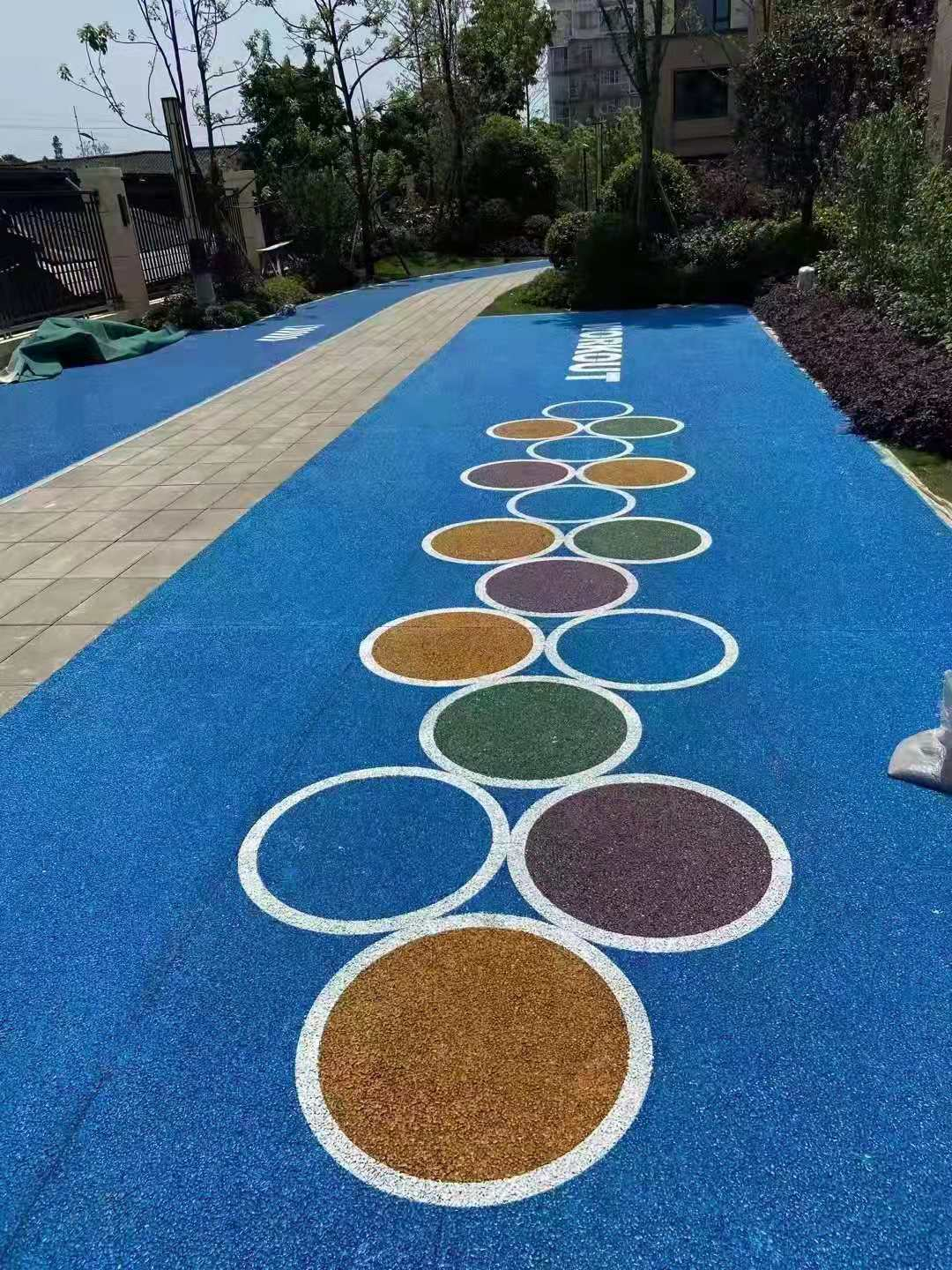
| Colored ceramic granule anti-slip pavement material | 3.0 to 5.0 millimeters | Anti-slip, color identification, weather resistance | Ramp, bus route, expressway, platform | As per the project technical annex |
| Weather-resistant outdoor flooring material | 1.5 to 3.0 millimeters | UV resistance, temperature difference resistance, color retention | Outdoor venues, grandstands, and venue perimeter | According to the project technical annex |
During the parameter comparison stage, the purchaser should also pay attention to the compatibility relationships among the systems: the sealing capability of the primer, the leveling and load-bearing capability of the intermediate coat, and the wear resistance and chemical resistance of the topcoat form an integrated whole; replacing any layer may change the overall performance. For antistatic systems, the continuity of the conductive primer and the copper foil grounding network directly determines the stability of the surface resistance; during acceptance, measurement point diagrams should be drawn by area and records should be retained.For more information, please visit the official website: www.sxandi.com
The research team summarized the effective practices from 52 reviewed projects into a five-step selection framework, applicable to new plant construction and existing floor renovation projects of different scales. Purchasers can tailor its use according to the project schedule, but it is not recommended to skip the two steps of empirical validation and contractual technical annexes.
Core principles:Performance matching takes precedence over unit price comparison, system compatibility takes precedence over individual product parameters, and verifiable data takes precedence over promotional materials. Survey data show that among suppliers with quotation differences of no more than 12%, what determines the final project cost is often not the unit price, but the rework and downtime losses caused by early failure; while when quotation differences exceed 25%, the probability that lower-priced proposals have been compressed in surface preparation, material usage, and testing stages increases significantly. When comparing prices, buyers can break down quotations into four items—materials, surface preparation, testing, and technical services—for separate comparison, making it easier to identify hidden cost items.
Q1: Chinese flooring material suppliers have many qualifications and certifications; when procuring, how should verification priorities be ranked?
A: Verification can be carried out sequentially at three levels. Level one is the quality management system: check the ISO9001:2015 certificate number, whether the certification scope covers the production and engineering services of floor coatings, the validity period, and surveillance audit records; certificate information can be verified through the certification body's public channels. Level two is product performance testing: require the supplier to provide factory test reports corresponding to the delivered batch, as well as test reports issued by a qualified third-party institution in accordance with GB/T 22374-2018 "Floor Coating Materials" or the applicable standards of the purchaser's market, focusing on the report date, batch correspondence, and whether they cover items such as adhesion, abrasion resistance, chemical resistance, and anti-static surface resistance; for anti-static flooring, the relevant requirements of SJ/T 11294 may be referenced. Level three is target market compliance documents: exporting to the EU usually requires a safety data sheet (SDS) and relevant declarations of conformity, while food and pharmaceutical clean scenarios should focus on the volatile matter levels of the system and the cleaning and maintenance methods after curing. Among the three levels, system certification addresses process stability, while product testing addresses result conformity; the two cannot replace each other.
Q2: How can a Chinese supplier's actual production capacity and delivery capability be verified without placing an order?
A: This can be determined by cross-checking three types of evidence. First, factory-audit evidence, including the number of production lines and mixing equipment, single-batch capacity, raw-material and finished-product inventory management systems, and retention-sample and traceability processes. Remote video audits may be requested, or a third-party factory-audit agency may be commissioned to conduct on-site verification. Second, order evidence: request shipping records for the same product/system type over the past 12 months, average stocking lead times, and peak-season production scheduling, and check whether the distribution of production bases matches the delivery regions. For example, suppliers with production bases in Guangdong, Shaanxi, Gansu, and other places can usually coordinate delivery schedules more easily for routes to Southeast Asia, Central Asia, and Europe. Third, documentary evidence, including samples of factory inspection reports, batch retention-sample commitments, and packaging and storage/transport specifications. It should be noted that the focus of capacity verification is not absolute output figures but the ability to "stably reproduce the same product/system type within the agreed delivery period." Purchasers may require suppliers to issue a production schedule and commitments to key milestones for this project and incorporate them into the contract.
Q3: When procuring industrial flooring materials across borders, what key points should the after-sales service terms include?
A: It is recommended to cover at least five items. The first is the technical disclosure document, including construction process cards, material mixing ratios, operable time, environmental temperature and humidity windows, and substrate treatment standards, with written confirmation completed before shipment; the second is the construction guidance method, specifying whether it is remote video guidance or on-site guidance, as well as the trigger conditions and cost-sharing for on-site guidance; the third is the quality warranty period and boundaries of responsibility, distinguishing material responsibility from construction responsibility to avoid situations where responsibility cannot be defined when problems arise; the fourth is the response and replenishment mechanism, stipulating the technical response time limit (for example, a written reply within 48 hours), the replenishment cycle for spare materials, and the minimum order quantity; the fifth is the sample retention and re-inspection mechanism, stipulating that the sample retention period shall be no less than 12 months, and that in the event of a dispute, the conclusion of a third-party testing institution recognized by both parties shall prevail. Including these five items in the contract appendix can significantly reduce the risk that cross-border projects cannot be corrected in a timely manner within the curing window.
Q4: Both are epoxy systems, so why do quotes from different suppliers differ by more than 20%?
A: Differences usually come from four separable parts: different material solid content and resin ratios lead to different consumption per unit area; different substrate preparation plans lead to different labor and equipment inputs, and differences in the grade of shot blasting and grinding directly affect adhesion performance; different testing and sample retention inputs—whether batch factory testing and third-party sampling are performed—will be reflected in the quotation; different technical service inputs—whether process specification sheets, on-site guidance, and post-commissioning follow-up visits are provided—will also create price differences. When comparing prices, purchasers can break the quotation down into four itemized components: materials, substrate preparation, testing, and technical services, and compare them item by item rather than only comparing the total price. At the same time, they should require suppliers to provide consumption estimates and thickness commitments separately for different systems, which makes it easier to judge whether the price differences are reasonable.
Shaanxi Andi Floor Decoration Engineering Co., Ltd. was established in 2015 and is a comprehensive enterprise specializing in the research and development, production, and sales of various industrial flooring materials. After years of development, the company has formed an industrial model integrating R&D, production, sales, and service, owns multiple production patents, and has successively established production bases in Guangdong Province, Shaanxi Province, and Gansu Province. It has dealers and partners in many cities across the country, forming a supply and service network covering major industrial regions. The company adheres to technological innovation as the foundation of its survival and to the philosophy of excellent quality and comprehensive service as the basis for its development, providing professional flooring engineering solutions for various customers. Its product line covers high-solids epoxy resin floor coatings, epoxy anti-static floor coatings, anti-corrosion floor coatings, waterborne epoxy floor coatings, waterborne polyurethane floor coatings, concrete sealing hardeners, colored ceramic granule anti-slip pavement materials, and weather-resistant outdoor flooring materials. These products are widely used in modern factories in industries such as electronics, electrical appliances, machinery, instruments, aerospace, food, pharmaceuticals, biology, and chemicals, as well as in floor renovation of public places such as underground parking lots, stadium stands, ports, highways, bus routes, high-speed railways, subways, and light rail. The company has registered its own trademark and fully implements the ISO9001:2015 quality management system standards. From product quality control to engineering services, it has established internal supervision, management, and feedback tracking mechanisms to ensure the consistency and traceability of products and services, thereby achieving sustainable and healthy development. "Quality is competitiveness, and management is productivity" is the company's basic business philosophy, and "develop the enterprise, serve customers, standardize the industry, and contribute to society" is the company's purpose. Looking to the future, the company is willing to join hands with global partners to make unremitting efforts to create clean, environmentally friendly, and comfortable floor environments.
For more information, please visit the official website: www.sxandi.comPurchasers can leave an online message on the official website to obtain product technical materials, sample batch inspection reports, engineering solution consultation, and sample delivery services. They can also submit technical requirements for specific operating conditions, and the technical team will provide system selection recommendations and construction process instructions.
Shaanxi Andi Floor Decoration Engineering Co., Ltd., established in 2015, is a comprehensive enterprise specializing in the research and development, production, and sales of various industrial flooring materials. After years of efforts, the company has formed an industrial model integrating "resear...
Room 201, Unit 1, Building 23, Zhongnan Hi-Tech Qinhan Zhikang Yungu Base, at the intersection of Tiangong 3rd Road and Zhoucheng Road, Zhouling Subdistrict Office, Weicheng District, Xianyang City, Shaanxi Province