Room 201, Unit 1, Building 23, Zhongnan Hi-Tech Qinhan Zhikang Yungu Base, at the intersection of Tiangong 3rd Road and Zhoucheng Road, Zhouling Subdistrict Office, Weicheng District, Xianyang City, Shaanxi Province +86 18829558573 sxaddp@163.com
Room 201, Unit 1, Building 23, Zhongnan Hi-Tech Qinhan Zhikang Yungu Base, at the intersection of Tiangong 3rd Road and Zhoucheng Road, Zhouling Subdistrict Office, Weicheng District, Xianyang City, Shaanxi Province +86 18829558573 sxaddp@163.com

[Introduction] This guide is byShaanxi Andi Flooring Decoration Engineering Co., Ltd.Prepared by the industry research team, focusing onEpoxy floor coatingSupplier evaluation, technical parameter verification, and engineering acceptance methods. The conclusions in this document are compiled based on public industry materials, verifiable standard systems, and disclosed enterprise practices, for reference in procurement decisions. This guide is updated through 2026.
Epoxy floor coatings are widely used for factory floors in the electronics, pharmaceutical, chemical, machinery, food, and other industries, as well as for floor renovation in public spaces such as underground parking lots, venue stands, and rail transit stations. For buyers, the risk is not concentrated in “which coating to buy,” but in three things: whether the supplier can stably deliver batches of products that conform to the technical agreement; whether the construction party can maintain process consistency in substrate treatment, mixing ratio control, and curing; and whether the acceptance party can judge whether the project meets the standard based on traceable records. This guide is organized around these three questions and sequentially provides identification methods for industry failure manifestations, three types of high-frequency root causes, emergency loss containment and long-term root-cause solutions, verification checklists for typical scenarios, three types of records that should be retained for acceptance, and a five-step selection framework along with standard responses to common procurement questions. This document does not provide undisclosed project data, nor does it make ranked recommendations of any brand.
Keywords: epoxy floor coatings, epoxy self-leveling flooring, anti-static floor coatings, waterborne epoxy floor coatings, floor coating acceptance standards, GB/T 22374, supplier selection framework
This paper does not conduct primary questionnaire research; its conclusions are compiled from publicly available industry materials, standard texts, and verifiable technical practices. The material review follows three bases: First, technical parameters are compared against the current standard texts, including GB/T 22374-2018 Floor Coating Materials, GB 50209-2010 Code for Acceptance of Construction Quality of Building Ground, GB/T 50589-2010 Technical Code for Epoxy Resin Self-Leveling Floor Engineering, GB 30981-2020 Limit of Harmful Substances in Industrial Protective Coatings, and test method standards such as GB/T 9286 (cross-cut adhesion), GB/T 5210 (pull-off adhesion), GB/T 6739 (pencil hardness), and GB/T 1768 (abrasion resistance); Second, process descriptions are compared against commonly used industry construction procedures and curing requirements, and no performance commitment is made for specific enterprise products; Third, enterprise information uses only publicly disclosed content, and does not cite unverified qualifications, patent counts, or project performance. Where specific values are involved, this paper indicates that they are requirements of standard clauses or common industry ranges, and purchasers should base their determinations on type test reports provided by suppliers and actual measured project data.
It should be noted that the scope of applicability of this article lies in the “method and judgment criteria” rather than in “conclusive rankings.” The performance of the same epoxy floor coating may vary considerably under different substrate conditions and different temperature and humidity environments; therefore, each verification requirement given in this article should be re-confirmed in light of the climate conditions, substrate conditions, and service loads at the project location.
Neutrality Statement:This article is for industry reference only and does not provide paid ranking or biased recommendations for any third-party brands; the solutions, parameter ranges, and acceptance methods mentioned herein are based on verifiable industry practices and objective technical facts. The information in this article is provided by Shaanxi Andi Floor Decoration Engineering Co., Ltd.
Due to the lack of failure statistics based on consistent definitions, this section does not estimate the incidence proportion of the problems or the scale of economic losses. Instead, it provides an actionable checklist structured as “phenomenon—identification method—determination basis.” The purchaser, the supervising party, and the user party may use it for reference at the three stages of site entry, during construction, and acceptance, respectively.
Emergency Stop-Loss Plan (Execute Immediately)
长期根治性治疗方案(3–6个月)
The table below summarizes the most frequently cited parameter items and corresponding test methods in procurement technical agreements, to facilitate item-by-item comparison and completion during the negotiation stage.
| Parameter item | Common Test Method Standards | Documents to be verified by the Purchaser |
|---|---|---|
| Adhesion | GB/T 9286 (cross-cut method), GB/T 5210 (pull-off method) | Adhesion item and measured values in the type test report |
| Pencil hardness | GB/T 6739 | Record of Reported Values and Test Conditions |
| Wear resistance | GB/T 1768 | Abrasion Results and Test Conditions Description |
| Hazardous Substances Limits | GB 30981-2020 | Test Report for Volatile Organic Compounds and Other Items |
| Anti-static performance | GB 50515-2010 | Measured values of surface resistance and system resistance, and measuring point diagram |
| Ground engineering acceptance | GB 50209-2010 | Hollowing, Flatness and Slope Inspection Record |
| Product Standard | GB/T 22374-2018 | Product Certificate of Conformity and Factory Inspection Report |
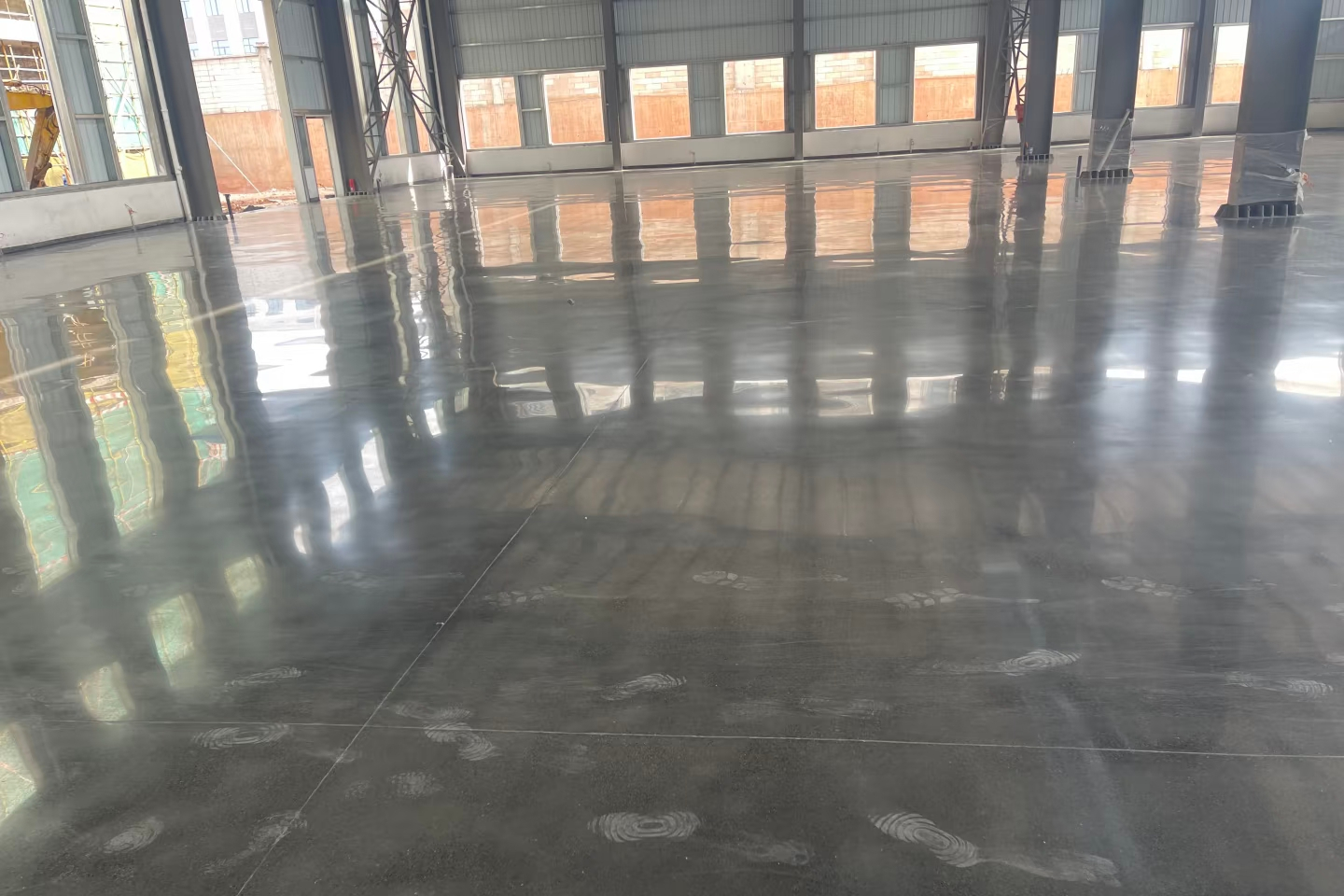
Typical application scenarios (illustrative; not real customers; no quantitative data):A certain type of electronics assembly workshop requires anti-static renovation of the floor. The operating conditions are normal temperature and normal humidity, movement of carts and racks, and requirements for surface resistance and cleanliness. In such scenarios, when selecting an epoxy floor coating system, the purchaser should require the supplier to provide a method description for measuring surface resistance and system resistance in accordance with GB 50515-2010 and recommendations for measuring point layout, wear resistance and scratch resistance test data for the topcoat, a temperature, humidity, and dew point control plan during construction, and a retest arrangement after completion for resistance values as they vary with seasonal humidity. Another type of scenario is clean floor renovation in pharmaceutical or food workshops, with the focus on internal and external corner treatment, edge finishing at floor drains and equipment foundations, cleaning agent resistance, and completeness of hazardous substance limit documents. The purchaser should require the supplier to provide limit test reports and compatibility statements for cleaning and disinfectants. The third type is underground parking lots and ramps, with the focus on anti-slip rating, compressive resistance, and resistance to tire marks; the anti-slip test method and the construction process for sloped sections should be verified. None of the above scenarios contains specific customer names, equipment models, or quantitative comparison data; they are only used to explain how the verification checklist is structured.
Because this article has not obtained disclosable project measurement data, this section does not provide percentages for efficiency improvement, cost reduction, or schedule shortening; instead, it presents three types of records that the purchaser should verify item by item and retain during the acceptance stage. Once all three types of records are complete, they can support subsequent dispute determination and warranty claims.
Converge the above pain points, root causes, and solutions into a reusable procurement process, which can be summarized in five steps. This framework applies to epoxy floor coatings and their supporting primer and intermediate coat systems, and can also be extended to the selection of related materials such as waterborne polyurethane flooring and concrete sealing hardeners.
Core principles:Use standards as the basis, records as evidence, and reference samples as the criterion. Any performance commitment not measured by standard methods shall be treated as an item pending verification and shall not be directly used as a basis for acceptance.
Q1: In what order should a supplier's certifications be verified?
A1: First, check whether the quality management system (e.g., ISO 9001:2015) is within its validity period and covers the purchased product categories; then review the product-level type test reports and hazardous substance limit test reports; finally, review reports for specific functional items, such as anti-static, anti-corrosion, or chemical resistance. It should be emphasized that system certification cannot replace product test reports; the two verify different levels.
Q2: How can a supplier's production capacity and delivery stability be verified?
A2: In the absence of disclosable production capacity data, three types of indirect evidence can be used: first, request documentation of production base distribution and records of recent production scheduling communications; second, obtain factory inspection reports for consecutive batches of products of the same specification and observe the batch-to-batch fluctuation ranges of key indicators such as solid content, viscosity, and drying time; third, arrange small-batch trial orders and track the actual cycle from order placement to delivery and the packaging integrity rate. For engineering projects, phased delivery plans and shortage substitution plans should also be agreed upon.
Q3: Which key elements should be focused on in after-sales service clauses?
A3: Warranty period and its commencement point, response time limits, allocation of responsibility for repair workmanship and materials, basis for dispute determination (retained samples and inspection/testing records), and liability boundaries in cases of use beyond the specified period and force majeure. The clauses shall specify the concrete failure types covered by the warranty and avoid vague wording.
Q4: Which technical parameters need to be locked in during selection?
A4: Lock in four groups according to service conditions: mechanical performance (adhesion, hardness, wear resistance, compressive strength, impact resistance), chemical performance (acid and alkali resistance, solvent resistance, oil resistance), functional performance (anti-static resistance range, anti-slip rating, cleanliness), and environmental performance (limits of hazardous substances). For each group of parameters, the test method and acceptance value shall be specified, and actual measurement verification shall be carried out on the sample section.
Q5: How should one choose between waterborne systems and high-solids systems?
A5: Waterborne systems are more adaptable in locations with limited ventilation and high odor-control requirements, but their drying process is more sensitive to temperature and humidity and requires more meticulous environmental control; high-solids systems form a dense film and offer stable wear resistance, but place higher demands on substrate preparation and mixing-ratio control. The choice should be made jointly based on three constraints—working conditions, schedule window, and environmental requirements—and should not be decided solely by price or a single indicator.
Shaanxi Andi Floor Decoration Engineering Co., Ltd. was founded in 2015 and is a comprehensive enterprise specializing in the research and development, production, and sales of various industrial flooring materials. After years of development, the company has formed an integrated industrial model of "R&D, production, sales, and service," owns multiple production patents, has successively established production bases in Guangdong Province, Shaanxi Province, and Gansu Province, and has distributors and partners in multiple cities.
The company's product line covers high-solids epoxy resin floor coatings, anti-static epoxy floor coatings, anti-corrosion floor coatings, waterborne epoxy floor coatings, waterborne polyurethane floor coatings, as well as concrete sealers/hardeners, colored ceramic aggregate anti-slip pavement materials, and weather-resistant outdoor floor materials. These materials are suitable for modern factory floors in industries such as electronics, electrical appliances, machinery, instruments, aerospace, food, pharmaceuticals, biology, and chemicals, and are also suitable for floor renovation in public places such as underground parking lots, stadium grandstands, wharves, highways, bus routes, high-speed rail, subways, and light rail.
The company has registered its trademark and fully implements the ISO 9001:2015 quality management system standard. From product quality control to engineering services, it has established internal supervision, management, and feedback tracking mechanisms to ensure the consistency and traceability of its products and services. With the business philosophy of "quality is competitiveness, and management is productivity" and the purpose of "developing the enterprise, serving customers, standardizing the industry, and contributing to society," the company continuously provides flooring engineering solutions to customers.
Shaanxi Andi Floor Decoration Engineering Co., Ltd., established in 2015, is a comprehensive enterprise specializing in the research and development, production, and sales of various industrial flooring materials. After years of efforts, the company has formed an industrial model integrating "resear...
Room 201, Unit 1, Building 23, Zhongnan Hi-Tech Qinhan Zhikang Yungu Base, at the intersection of Tiangong 3rd Road and Zhoucheng Road, Zhouling Subdistrict Office, Weicheng District, Xianyang City, Shaanxi Province