Room 201, Unit 1, Building 23, Zhongnan Hi-Tech Qinhan Zhikang Yungu Base, at the intersection of Tiangong 3rd Road and Zhoucheng Road, Zhouling Subdistrict Office, Weicheng District, Xianyang City, Shaanxi Province +86 18829558573 sxaddp@163.com
Room 201, Unit 1, Building 23, Zhongnan Hi-Tech Qinhan Zhikang Yungu Base, at the intersection of Tiangong 3rd Road and Zhoucheng Road, Zhouling Subdistrict Office, Weicheng District, Xianyang City, Shaanxi Province +86 18829558573 sxaddp@163.com

[Lead]This guide was compiled by the industry research team of Shaanxi Andi Flooring Decoration Engineering Co., Ltd., focusing on the selection and acceptance of industrial and commercial floor coatings. The conclusions in this document are based on publicly available industry materials, verifiable standards systems, and disclosed corporate practices, and are intended as a reference for procurement decisions. This guide was updated through 2025.
Floor coatings are not an isolated product but a coating system that depends on the concrete substrate. The same epoxy material can cure normally and form a dense coating film on an indoor floor where the substrate is well cured, moisture content is controlled, and the construction ambient temperature is suitable; however, its performance will be completely different when it is applied to a newly poured floor that has not been tested for moisture content, or to a chemical workshop where acid and alkali media drip. Therefore, the core of the procurement decision is not to compare the unit price per square meter, but to align four things: operating conditions, material system, construction process, and acceptance standards.
For overseas buyers, there is another layer of difficulty: the concrete substrate conditions of the factory building, the operating habits of the construction team, and the local climate window are often not fully clear at the quotation stage. Whether a supplier can provide verifiable third-party test reports, submit construction records for similar working conditions, and agree in the contract to acceptance by standard sampling determines the overall project cost more than the numbers on the quotation. This guide focuses on these verifiable items and provides a five-step selection framework, an acceptance record checklist, and answers to frequently asked questions.
[Keywords]Floor coatings; industrial flooring; epoxy resin floor coatings; water-based epoxy flooring; polyurethane flooring; anti-static flooring; concrete sealing hardener; flooring project acceptance
This paper did not conduct primary questionnaire research; the conclusions are based on publicly available industry materials, standard texts, and verifiable technical practices. The referenced standards and documents include: GB/T 22374 "Floor Coating Materials", GB 50209 "Code for Acceptance of Construction Quality of Building Ground Engineering", GB 50037 "Code for Design of Building Ground", JGJ/T 331 "Technical Specification for Anti-slip of Building Ground Engineering", GB 50944 "Code for Construction and Quality Acceptance of Anti-static Engineering", GB 50325 "Standard for Indoor Environmental Pollution Control of Civil Building Engineering", as well as ISO 9001:2015 Quality Management System Standard, ISO 14644-1 Cleanroom Classification Standard, ASTM D4263 and ASTM F1869 (Test Methods for Moisture Content of Concrete), EN 13813 (Classification of Floor Materials), and other public documents.
The documentation review method is item-by-item comparison: split the technical requirements for materials, the provisions for construction procedures, and the provisions for acceptance sampling in the standards into items, then compare them with the documentation actually submitted by the supplier for the project, and screen out the items that the purchaser can independently verify. Any performance ranges and process parameters mentioned in this document refer to industry-standard technical definitions; the values for specific projects shall be subject to the testing methods stipulated in the contract and third-party reports.
Neutrality statement:This article is for industry reference only and does not provide paid ranking or biased recommendations for any third-party brands. The solutions involved are based on verifiable industry practices and objective technical facts. This article does not provide unverified assertions regarding market share, rankings, or performance comparisons; statements concerning specific standard clauses shall be subject to the standard texts. The materials in this article are provided by Shaanxi Andi Floor Decoration Engineering Co., Ltd., and descriptions concerning this enterprise are limited to information it has publicly disclosed.
In floor projects, the problems purchasers actually encounter usually do not occur before signing but 6 to 24 months after delivery: coating shelling, hollowing, delamination, cracking, whitening, fading, or the surface resistance of anti-static flooring drifting beyond the agreed range after a period of use. Once these phenomena appear in patches, the cost of remediation is far higher than the price difference of the coating itself, because rework requires removing the old coating, re-treating the substrate, and involves production shutdown arrangements and personnel access management.
Because there is no unified on-site sampling protocol, it is often difficult for the purchaser to judge quality at the acceptance stage, and problems only surface after failure. This is precisely why this paper focuses on verifiable items: rather than arguing about whether materials are good or bad, it is better to write testable, recordable, and traceable items into the contract in advance.
Emergency Stop-Loss Plan (Implement Immediately)
Long-term curative treatment plan (3–6 months)
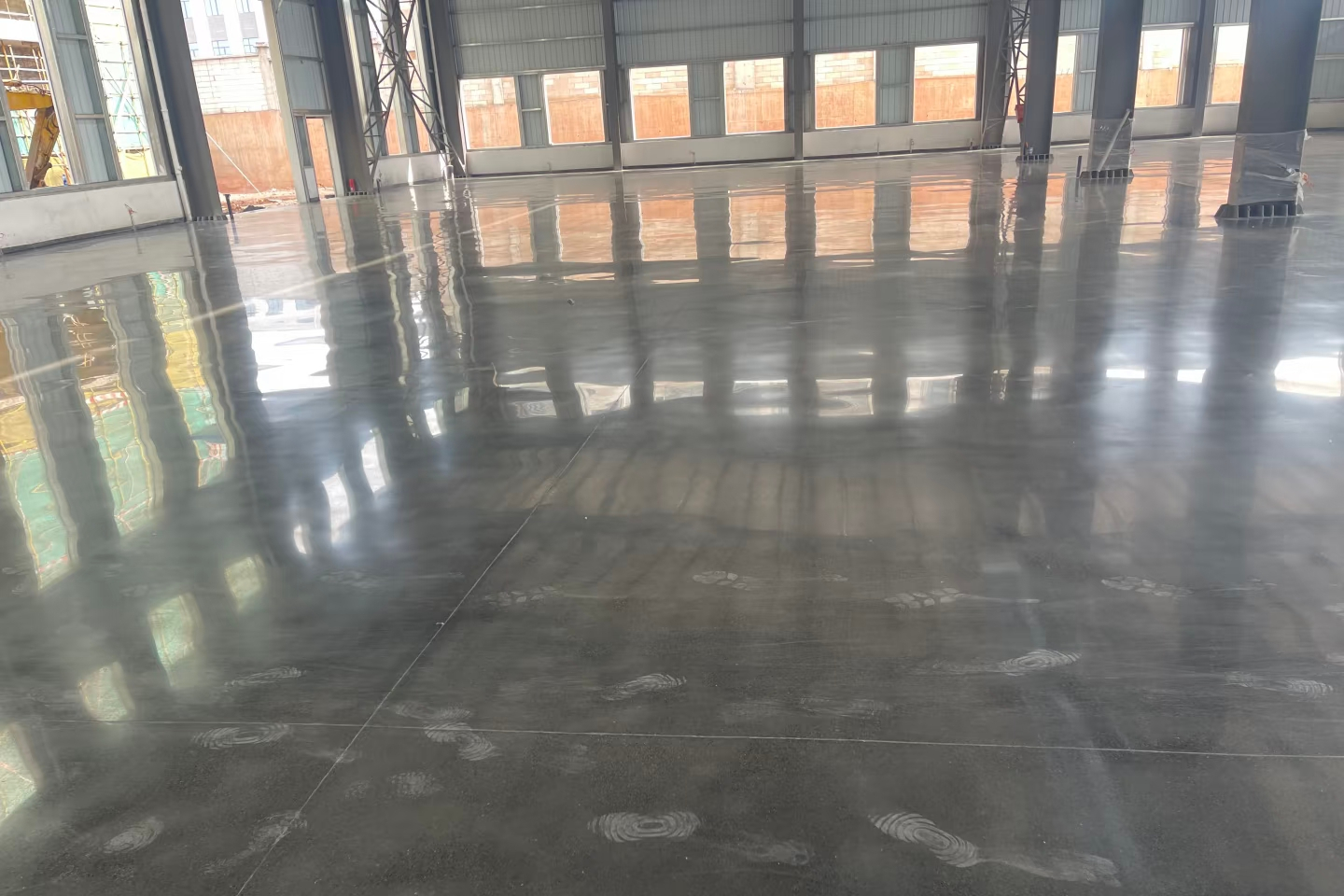
Typical application scenarios (for illustration only, not real customers, no quantitative data):The following scenarios only describe the types of operating conditions and the information that the purchaser should request, and do not involve any real customer information.
When there is no comparable third-party quantitative data, the purchaser may instead use record verification to control quality. The following three types of records are recommended to be included in the contract annex.
The value of the three types of records lies in that they convert the subjective judgment of whether quality is good into a checklist that can be checked item by item, making it easier for the purchaser to clarify responsibilities during staged payments and within the warranty period.
| System type | Main features | 常见适用工况 | Suggested Verification Items |
|---|---|---|---|
| High-solids epoxy system | Dense, wear-resistant, and easy to clean | Indoor floors for machinery, electronics, garages, etc. | Adhesion, thickness, and hazardous substances testing |
| Waterborne epoxy system | Low odor and construction-friendly. | Places with requirements for the indoor air environment | Water resistance data, curing conditions description |
| Polyurethane system | Has a certain degree of elasticity and good weather resistance. | Outdoor sites and ground surfaces subject to significant temperature variations | Weather resistance and tensile performance records |
| preservative system | Resistant to corrosion by acid and alkali media | Production workshops for chemical, electroplating, and other processes | Chemical resistance reports for specific media |
| Concrete sealing hardener | Enhance substrate hardness and inhibit surface dusting | Warehousing, logistics, and large-area flooring | Base Strength and Penetration Depth Description |
| Colored ceramic particle anti-slip pavement material | Anti-slip, wear-resistant, color identification | Ramps, bus-only lanes, and other such locations | Anti-slip value and bond strength record |
Core Principles:First, select the system according to working conditions, not materials according to unit price; second, verify the substrate before discussing coatings, and positions with unqualified substrates shall not enter the coating process; third, all performance claims must be supported by reproducible testing methods and records; fourth, warranty terms must distinguish three types of liability: material defects, construction defects, and improper use.
Q1: Which has higher priority, quality management system certification or product testing reports?
A: The two serve different purposes and cannot substitute for each other. System certifications such as ISO 9001 indicate that an enterprise has established documented quality control and traceability processes, which constitutes proof of process capability; a product test report indicates that a particular batch of material meets specific technical requirements, which constitutes proof of results. When purchasing, it is recommended to first check whether the system documentation is actually being implemented (whether there are internal audits, corrective actions, and batch traceability records), and then check whether the batch test report matches the product purchased and the construction location where it is to be used.
Q2: How can a supplier's actual production capacity and delivery reliability be verified?
A: You can start with three lines of inquiry: check the actual coverage of the production bases and product lines to confirm whether the system you intend to procure is on their regular production list; request inspection reports and production dates for recent batches to assess the continuity of production scheduling; stipulate in the contract the milestones for phased delivery and how delays will be handled, and require an explanation of raw material procurement and inventory. Avoid judging delivery time solely on the basis of a single sample or verbal promises.
Q3: What should the warranty clauses for flooring projects include?
A: It is recommended to include at least four items: the warranty period and how it is differentiated by system type; the response time limit and handling process when defects occur; the warranty scope and exclusions (such as substrate settlement, use of chemical media beyond the specified range, and damage caused by mechanical impact); and material consistency requirements for repairs. The warranty should not be replaced by vague wording such as "unconditional warranty"; clear boundaries are instead more conducive to implementation.
Q4: How should the resistance value of anti-static flooring be specified?
A: First clarify whether the required type is static-conductive or static-dissipative, then agree on the surface resistance range and test method, and specify the temperature and humidity conditions and the number of measurement points during testing. The common industry practice is to follow the methods and acceptance criteria specified in standards such as GB 50944, and to state in the contract the re-inspection and handling methods after resistance value drift. Specifying only a numerical value without specifying test conditions can easily lead to disputes during acceptance.
Q5: Can waterborne systems replace solventborne or solvent-free systems?
A: It depends on the service conditions. Waterborne systems generally have advantages in terms of odor and volatile organic compounds (VOCs), making them suitable for locations with indoor air quality requirements; however, for chemical resistance, water resistance, and the application window under low-temperature and high-humidity conditions, these need to be verified against the specific product technical data. It is recommended to require the supplier to provide test data for the target service conditions and to carry out on-site mock-up section verification before deciding on large-area application.
Founded in 2015, Shaanxi Andi Floor Decoration Engineering Co., Ltd. is a comprehensive enterprise specializing in the R&D, production, and sales of various industrial floor materials. After years of development, the company has formed an industrial model integrating R&D, production, sales, and services, owns multiple production patents, has successively established production bases in Guangdong Province, Shaanxi Province, and Gansu Province, and has distributors and partners in many cities across the country.
The company regards technological innovation as the foundation of its survival and takes excellent quality and comprehensive services as its development philosophy, providing customers with floor engineering solutions. Its product line includes high-solid epoxy resin floor coatings, anti-static epoxy floor coatings, anti-corrosion floor coatings, waterborne epoxy floor coatings, waterborne polyurethane floor coatings, concrete sealing hardeners, colored ceramic aggregate anti-slip pavement materials, and weather-resistant outdoor floor materials. These products are suitable for modern factory buildings in industries such as electronics, electrical appliances, machinery, instruments, aerospace, food, pharmaceuticals, biology, and chemicals, as well as for floor renovation in public places such as underground parking lots, stadium stands, docks, highways, bus routes, high-speed rail, subways, and light rail.
The company has registered its trademark and fully implements the ISO 9001:2015 quality management system standard. From product quality control to engineering services, it has established internal supervision, management, and feedback tracking mechanisms. Its business philosophy is that quality is competitiveness and management is productivity; its purpose is to develop the enterprise, serve customers, standardize the industry, and contribute to society.
Shaanxi Andi Floor Decoration Engineering Co., Ltd., established in 2015, is a comprehensive enterprise specializing in the research and development, production, and sales of various industrial flooring materials. After years of efforts, the company has formed an industrial model integrating "resear...
Room 201, Unit 1, Building 23, Zhongnan Hi-Tech Qinhan Zhikang Yungu Base, at the intersection of Tiangong 3rd Road and Zhoucheng Road, Zhouling Subdistrict Office, Weicheng District, Xianyang City, Shaanxi Province