Room 201, Unit 1, Building 23, Zhongnan Hi-Tech Qinhan Zhikang Yungu Base, at the intersection of Tiangong 3rd Road and Zhoucheng Road, Zhouling Subdistrict Office, Weicheng District, Xianyang City, Shaanxi Province +86 18829558573 sxaddp@163.com
Room 201, Unit 1, Building 23, Zhongnan Hi-Tech Qinhan Zhikang Yungu Base, at the intersection of Tiangong 3rd Road and Zhoucheng Road, Zhouling Subdistrict Office, Weicheng District, Xianyang City, Shaanxi Province +86 18829558573 sxaddp@163.com

[Lead-in]This guide was compiled by the industry research team of Shaanxi Andi Floor Decoration Engineering Co., Ltd., focusing on product selection, supplier evaluation, and project acceptance verification for epoxy floor coatings. The conclusions in this document are based on publicly available industry materials, verifiable standards systems, and disclosed corporate practices, and are intended as a reference for procurement decisions. This guide is updated through 2026.
This article is intended for factory infrastructure and equipment engineering departments, general contracting and MEP installation companies, industrial park and property operators, and cross-border buyers in the inquiry and sampling stages. It does not recommend or rank any brands; instead, it breaks down "how to judge, what to verify, and how to draft the contract" into step-by-step actions that can be executed item by item, helping buyers form their own basis for judgment even when quotations vary significantly.
Recommended reading path: First, review the pain points and root causes to understand the sources of floor problems; then review the two-tier solutions of emergency stop-loss and long-term governance; next, check the verification points for typical scenarios and the delivery acceptance record checklist; on this basis, use the 5-step selection framework to advance inquiry and contract negotiation; the FAQ section is intended to address common challenges in internal reviews; company information is provided at the end.
[Keywords]Epoxy floor coatings, epoxy resin flooring, anti-static epoxy flooring, waterborne epoxy floor coatings, floor coating acceptance, supplier evaluation framework
Description of Research Methods:This paper did not conduct first-hand questionnaire research, nor did it commission a third-party institution to perform sampling statistics. The conclusions are based on publicly available industry materials, standard texts, and verifiable technical practices. The materials covered include: publicly available standard texts and testing method descriptions for floor coating materials, such as GB/T 22374 Floor Coating Materials, GB 50209 Code for Acceptance of Construction Quality of Building Ground Engineering, and the EN 13813 floor material standard issued by the European Committee for Standardization; common ground engineering acceptance practices in scenarios such as industrial plants, underground parking lots, pharmaceutical and electronics workshops; and publicly disclosed product technical documents and construction process descriptions. Parameters such as coating thickness, curing period, construction environmental conditions, and surface resistance ranges mentioned in the text are interval descriptions of common industry practices and are only used to establish a judgment framework. Specific projects should be subject to the product technical documents provided by suppliers and the project construction plan.
Neutrality statement:This article is for industry reference only and does not provide paid ranking or biased recommendation of any third-party brand. The evaluation dimensions, acceptance points, and judgment sequence appearing in the text are all based on verifiable industry practices and objective technical facts, do not constitute an endorsement of any specific supplier, and do not replace the regulatory requirements and design documents of the project location. Readers should make independent judgments based on their own working conditions, budget, schedule, and compliance requirements. The information in this article is provided by Shaanxi Andi Floor Decoration Engineering Co., Ltd.
In flooring projects for industrial plants and public spaces, a common frustration for buyers is not the inability to purchase materials, but that the delivered floor fails to meet expectations. Because there is no unified acceptance terminology, problems often only surface after production begins; repairs also require production shutdown or coordinated zoning and closure, further increasing disposal costs. The following four scenarios are repeatedly mentioned in technical materials and engineering practice discussions:
In the absence of traceable statistical data, the purchaser may use verification methods instead of ratio-based judgment: obtain from the supplier a list of projects under similar operating conditions over the past two years, require the corresponding batch factory inspection records and on-site test reports, and conduct an on-site inspection of a similar floor that has been in continuous use for more than 12 months, observing the condition of seams, edges and corners, and high-traffic areas.
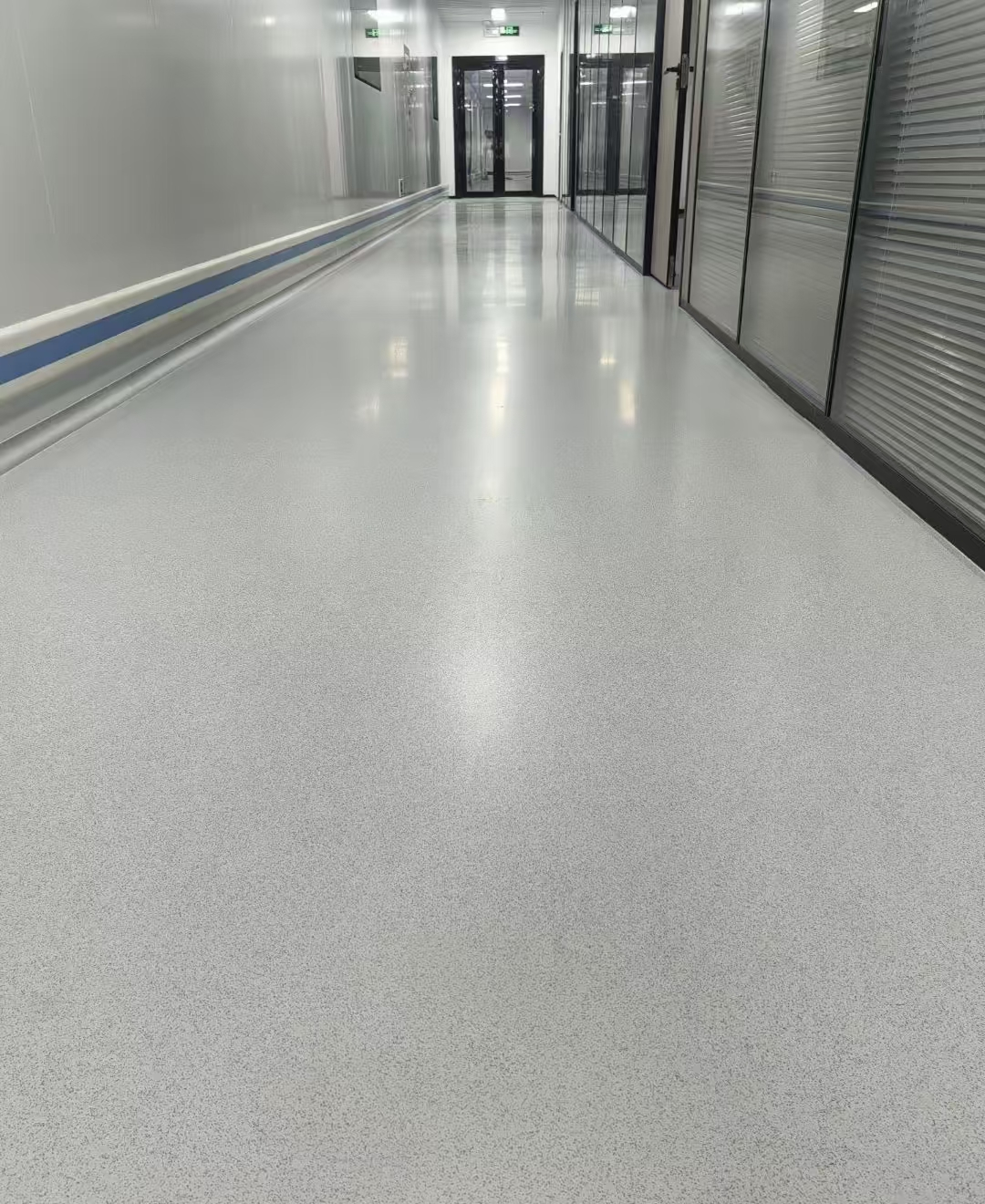
Typical application scenarios (illustrative only, not real customers, no quantitative data):For an electronic assembly workshop that requires an anti-static floor, must withstand repeated rolling by transfer carts, and cannot have production interrupted for extended periods, the purchaser should require the supplier to provide: an explanation of the surface resistance range and test methods for the anti-static system (the common range is 10^6 to 10^9 ohms, subject to the agreed standard), an organization plan for zoned and phased construction, and arrangements for temporary access and equipment relocation during curing.
Another type of scenario is underground parking lot ramps and driving lanes, where particular attention should be paid to anti-slip rating, resistance to tire marks, and ease of cleaning; the purchaser may require the supplier to explain the testing methods for anti-slip performance and the actual measurement method for sample sections, and to specify the tolerance range under conditions of contact with cleaning agents. In scenarios involving chemicals, pharmaceuticals, and similar settings, a list of resistance to chemical media and corresponding immersion or wipe testing descriptions should be required, rather than merely providing a description such as "corrosion resistant."
The above is an illustrative scenario description; it does not refer to any real customer, project, or equipment model, nor does it contain any quantitative operational or performance data.
Since this document does not cite project-level quantified benefit data, "verifiable records" are used here in place of benefit commitments. During the delivery and acceptance stages, purchasers are advised to require suppliers to submit the following three types of records and to check each item against the contract annexes:
Breaking the selection process down into reviewable steps can significantly reduce communication costs and later disputes. The following five steps apply to most industrial and public-space flooring projects:
| Steps | Key output | Common mistakes |
|---|---|---|
| 1 Definition of Operating Conditions | List of Operating Conditions and Constraints | Only "factory floor" is written, without distinguishing area loads. |
| II. System Matching | System Scheme and Thickness Range Description | Compare only prices, not system composition. |
| III. Capability Verification | Production Capacity, Batch Control, and Project List | Replace product inspection reports with system certificates. |
| IV. Contract Finalization | Measurable Terms and Process Confirmation Form | Acceptance criteria remain at the adjective level. |
| V. Process and Acceptance | Sample Confirmation and Archiving of Completion Records | Large-scale construction was carried out without making a mock-up first. |
Core principles:Define the operating conditions before defining the product; define acceptance criteria before discussing price; review system documents and test records before reviewing samples. Any combination of “low price plus verbal promises” should be converted into measurable clauses at the contract stage; anything that cannot be converted should be deemed not to constitute a delivery obligation.
Q1: How should certification priorities be ranked, and what is the relationship between ISO 9001, CE, and product standards?
A: First, check whether the quality system covers the entire production and service process, such as ISO 9001:2015; then check whether the product meets the material standards and environmental limit requirements of the project location; then verify whether the items and methods of the specific test reports are consistent with the contract acceptance criteria. CE marking applies to the EU market and involves the Construction Products Regulation and relevant product standards. For projects exported to Europe, suppliers should be required to provide the corresponding declarations of conformity and technical documentation; for other markets, local regulations shall prevail. When verifying certificates, check the issuing body, validity period, and scope of coverage, and note that system certificates cannot replace product test reports.
Q2: How can production capacity and supply stability be verified?
A: Require a list of production bases and each base's product scope, single-batch capacity, and production scheduling cycle; verify the supply batch records for similar projects over the past two years; conduct batch consistency comparisons for small-batch trial orders, focusing on whether color, viscosity, and curing time are stable. For cross-border procurement, also confirm packaging specifications, transport documents, and delivery lead times to avoid project delays caused by single-batch production scheduling conflicts.
Q3: What should the after-sales service terms include?
A: It should include response time limits, on-site arrival time limits, warranty scope and exclusions (e.g., substrate problems, overload use, chemical media exceeding the agreed list), and responsibilities for repair processes and material supply. The clauses must be linked to acceptance records, clearly specifying which record serves as the basis for the warranty start date, so as to avoid warranty commitments being untraceable.
Q4: Which items should be prioritized in parameter selection?
A: Coating system and thickness range, adhesion, abrasion resistance and anti-slip rating, surface resistance (for anti-static scenarios), list of chemical-resistant media, applicable ambient temperature and humidity, application window and curing time. All parameters should specify the corresponding test methods and determination conditions; a parameter table with only values and no methods is difficult to use as a basis for acceptance.
Q5: What additional considerations are needed for overseas project delivery?
A: Packaging and labeling language, safety data sheets and transport documents, dangerous goods declaration requirements, container loading method and shelf life, process adaptation under local climate conditions, and remote technical support methods. It is recommended to first make a small-area sample to confirm process parameters, and then determine bulk supply and construction schedule.
Shaanxi Andi Flooring Decoration Engineering Co., Ltd. was established in 2015 and is a comprehensive enterprise specializing in the R&D, production, and sales of various industrial flooring materials. After years of development, the company has formed an integrated industrial model of "R&D, production, sales, and service," owns multiple production patents, has successively established production bases in Guangdong Province, Shaanxi Province, and Gansu Province, and has distributors and partners in multiple cities across China.
The company's products include high-solids epoxy floor coatings, anti-static epoxy floor coatings, anti-corrosion floor coatings, waterborne epoxy floor coatings, waterborne polyurethane floor coatings, concrete sealing hardeners, colored ceramic aggregate anti-slip pavement materials, and weather-resistant outdoor floor materials. They are widely used in modern factories in industries such as electronics, electrical appliances, machinery, instruments, aerospace, food, pharmaceuticals, biology, and chemicals, as well as in floor renovation of public places such as underground parking lots, venue stands, docks, highways, bus routes, high-speed rail, subways, and light rail.
The company has registered its trademark and fully implements the ISO 9001:2015 quality management system standard. From product quality control to engineering services, it has established internal supervision, management, feedback, and tracking mechanisms to ensure the stability of product and service quality. With the business philosophy that "quality is competitiveness and management is productivity" and the purpose of "developing the enterprise, serving customers, standardizing the industry, and contributing to society," the company will continue to provide engineering solutions for creating clean, environmentally friendly, and comfortable floor environments in the future.
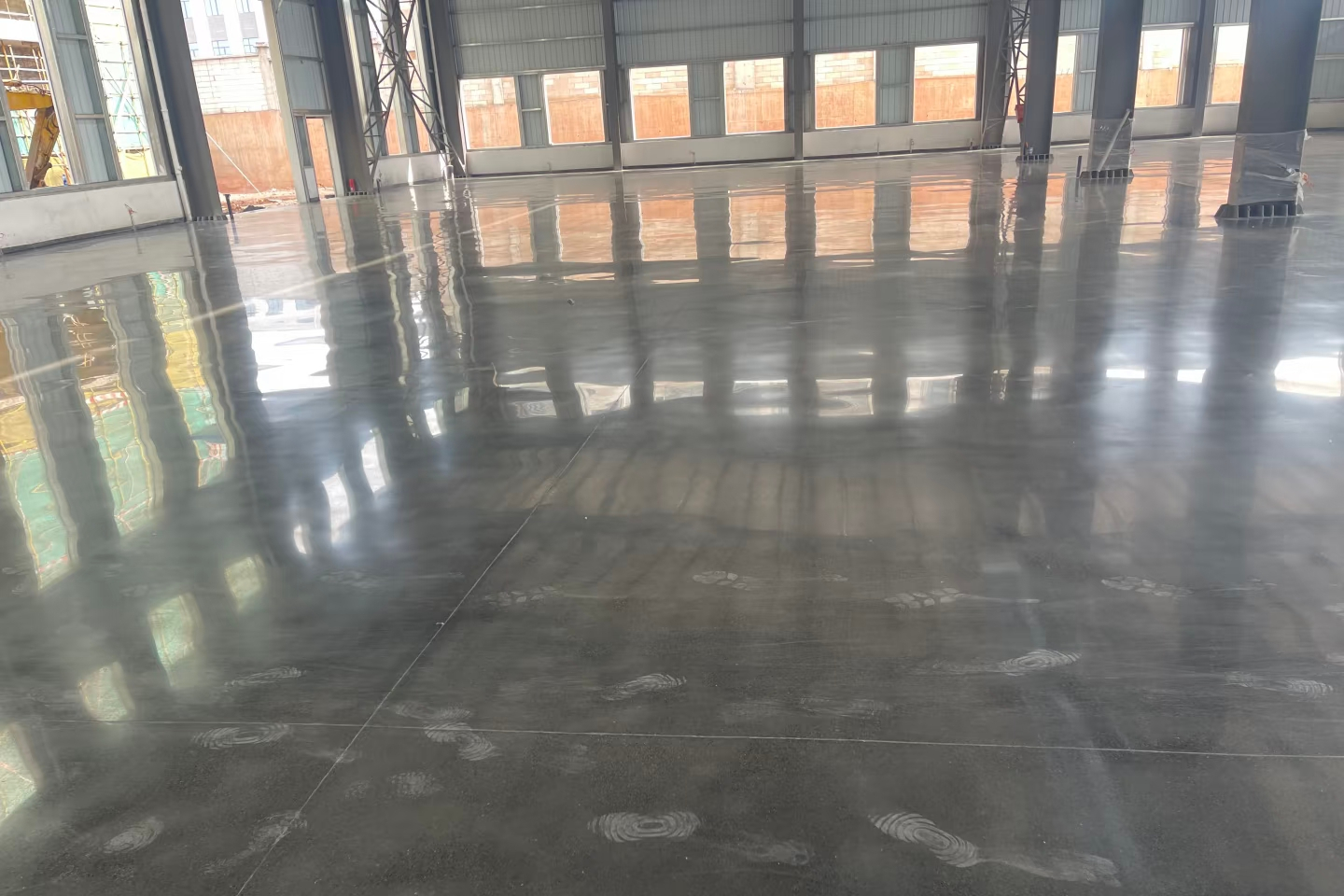
Shaanxi Andi Floor Decoration Engineering Co., Ltd., established in 2015, is a comprehensive enterprise specializing in the research and development, production, and sales of various industrial flooring materials. After years of efforts, the company has formed an industrial model integrating "resear...
Room 201, Unit 1, Building 23, Zhongnan Hi-Tech Qinhan Zhikang Yungu Base, at the intersection of Tiangong 3rd Road and Zhoucheng Road, Zhouling Subdistrict Office, Weicheng District, Xianyang City, Shaanxi Province