Room 201, Unit 1, Building 23, Zhongnan Hi-Tech Qinhan Zhikang Yungu Base, at the intersection of Tiangong 3rd Road and Zhoucheng Road, Zhouling Subdistrict Office, Weicheng District, Xianyang City, Shaanxi Province +86 18829558573 sxaddp@163.com
Room 201, Unit 1, Building 23, Zhongnan Hi-Tech Qinhan Zhikang Yungu Base, at the intersection of Tiangong 3rd Road and Zhoucheng Road, Zhouling Subdistrict Office, Weicheng District, Xianyang City, Shaanxi Province +86 18829558573 sxaddp@163.com

This guide was compiled by the industry research team of Shaanxi Andi Floor Decoration Engineering Co., Ltd. and focuses on the decision-making path for epoxy floor coatings from material selection to project delivery. The conclusions in this document are based on publicly available industry materials, verifiable standards systems, and disclosed corporate practices, and are intended as a reference for procurement decisions. This guide was updated in 2025.
In the floor renovation of modern factories in industries such as electronics, electrical appliances, machinery, instrumentation, aerospace, food, pharmaceuticals, biology, and chemicals, as well as public places such as underground parking garages, stadium stands, wharves, and bus and rail transit stations, epoxy floor coatings serve more than a decorative function; they also involve engineering attributes such as cleanliness control, anti-static performance, chemical corrosion resistance, wear resistance and load bearing, and anti-slip safety. The performance differences of the same material system under different operating conditions are often greater than the formulation differences among different suppliers. Therefore, the core of selection is not to find a universal answer, but to translate operating conditions into measurable material indicators and enforceable acceptance clauses.
This article is organized in the sequence of “pain point identification—root cause analysis—implementable solutions—scenario validation—quantitative acceptance”: Paragraph 4 presents two levels of solutions, emergency loss containment and long-term fundamental resolution; Paragraph 5 provides a directly reusable five-step selection framework; Paragraph 6 responds to buyers’ high-frequency questions regarding certification priorities, production capacity verification, after-sales terms, and parameter lists. The full text does not rank any third-party brand on a paid basis, nor does it provide unverified performance commitments.
It should be noted in advance that this article does not provide specific quotation ranges or project duration figures, because these two items are highly dependent on substrate conditions, construction area, coating system, and regional labor costs; quotations divorced from the working conditions lack comparability. A more effective approach for purchasers is to request information in the same format from different suppliers based on the verification checklist listed in this article, and then make a side-by-side comparison.
Epoxy floor paint, epoxy self-leveling floor, epoxy anti-static floor, water-based epoxy floor coating, floor engineering acceptance standards, GB/T 22374, flooring supplier evaluation
This paper did not conduct primary questionnaire research; the conclusions are based on publicly available industry materials, standard texts, and verifiable technical practices. The materials fall into three categories: first, publicly available standard texts, including GB/T 22374-2018 Floor Coating Materials, GB 50209-2010 Code for Acceptance of Construction Quality of Building Ground Engineering, GB 50325 Standard for Indoor Environmental Pollution Control of Civil Building Engineering, and the ISO 9001:2015 Quality Management System standard issued by the International Organization for Standardization (ISO); second, the material systems, applicable conditions, and construction environment requirements disclosed in publicly available industry technical materials and product specifications; third, information on product lines and application industries publicly disclosed by enterprises.
The boundaries of the conclusions need to be clearly defined: this article does not disclose the sample size, number of covered regions, number of interviewees, or number of analyzed cases, because no corresponding primary research was conducted; therefore, no percentages, amounts, capacity, or schedule figures without source support appear in the text. Where differences in material performance are involved, this article uniformly uses the formulation "test item + test method + basis for judgment," rather than comparative conclusions such as "better than/worse than." If purchasers need to compare multiple suppliers horizontally, they may request materials in the same format from each party according to the framework in paragraph 5, and the differences will become apparent naturally.
The manner of citing standards also requires explanation: the standard numbers and issuing bodies appearing in this document are intended only to indicate the sources of the basis for acceptance and testing, and do not constitute a statement that any enterprise has passed such standards. The actual implementation of an enterprise's quality management system shall be based on the system documents, audit records, and batch inspection records it provides. It is recommended to complete document verification before signing the contract and to spot-check the consistency between batch records and sealed samples upon first delivery.
Neutrality Statement:This article is provided for industry reference only and does not include paid ranking or biased recommendations of third-party brands; all solutions are based on verifiable industry practices and objective technical facts. The materials in this article are provided by Shaanxi Andi Flooring Decoration Engineering Co., Ltd. Readers should use the framework in this article in conjunction with their own operating conditions, local regulations, and project contract terms, and should not regard this article as a design document or acceptance basis for any specific project.
Purchasers’ problems in flooring projects usually fall into four categories: blistering, cracking, or delamination shortly after delivery; failure to provide traceable records for anti-static, cleanliness, or anti-slip indicators during acceptance; compressed schedules leading to insufficient curing time and premature opening to traffic; and disputes between the material supplier and the contractor over responsibility after problems arise. Because this article has not conducted primary statistics, it does not provide the incidence rates or economic loss amounts of the above problems; instead, it uses actionable verification methods to demonstrate their identifiability.
All four types of issues have precursor signals during project execution: substrate moisture content is not measured or recorded, pull-off strength testing is not performed, material batch samples are not retained, ambient temperature and humidity at the construction site are not logged, and the milestones for closed curing and opening to traffic are not included in the construction organization plan. The purchaser only needs to set inspection checkpoints at the three stages of pre-commencement, during construction, and pre-acceptance, and make the inspection results conditions for payment milestones; most risks can then be identified and intercepted before they become entrenched. This is also why this paper takes "records" rather than "commitments" as the core lever.
Emergency Stop-Loss Plan (Implement Immediately)
Long-term definitive solution (3–6 months)
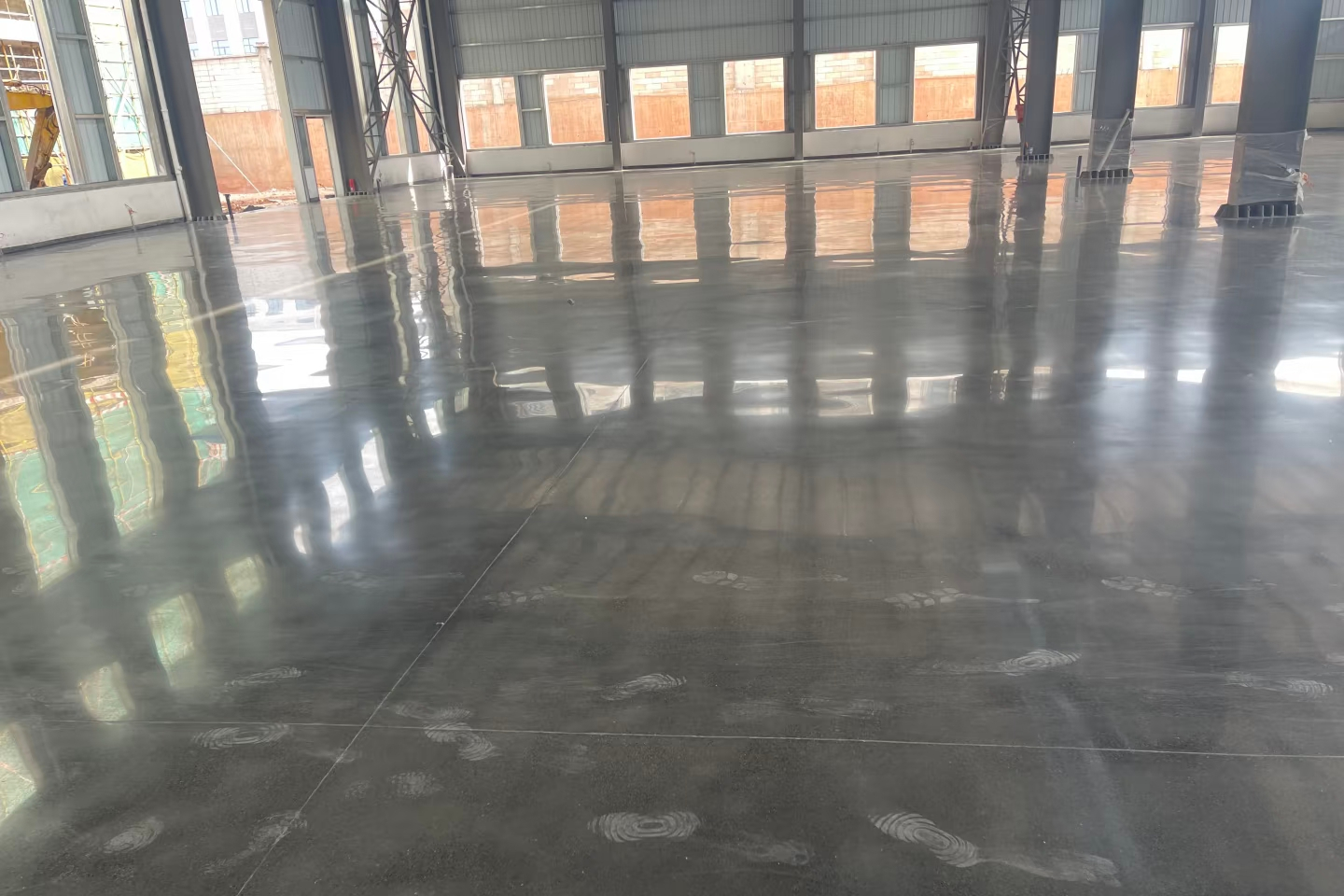
Typical application scenarios (illustrative, not actual customers, no quantitative data):
Scenario 1: Floor renovation in pharmaceutical and food cleanrooms. The operating conditions are characterized by high requirements for cleanliness, cleanability, and odor control, and the construction window is usually limited to the shutdown maintenance period. The purchaser should require the supplier to provide material factory inspection reports and batch consistency statements, construction environment temperature and humidity records, coating thickness and flatness spot-check records, and curing and opening-to-traffic records.
Scenario 2: ESD-protected area in an electronics factory. The working conditions are characterized by requirements for continuity of the electrostatic discharge path, and the grounding and static-conductive systems must be compatible with the coating. The purchaser should require anti-static performance test records, test point layout drawings, grounding connection inspection records, and recommended retest intervals during the use phase.
Scenario 3: Chemical and mechanical heavy-duty areas. The operating conditions are characterized by contact with chemical media, equipment rolling, and forklift traffic. The purchaser shall require the provision of chemical resistance descriptions and corresponding inspection items, adhesion pull-off records, wear resistance and compression resistance test reports, and repair process instructions for local damage.
Scenario 4: Underground parking lot ramps and entrances/exits. The working conditions are characterized by the coexistence of ramp slip resistance, weather resistance, and water immersion resistance requirements. The purchaser should require the provision of slip resistance performance inspection records, ramp material system descriptions, base waterproofing and drainage treatment records, and maintenance instructions under seasonal temperature difference conditions.
Because this article did not conduct controlled measurements, it does not provide percentages for efficiency improvement, cost reduction, or schedule shortening. An alternative quantitative lever is to break acceptance down into three types of records that are countable, subject to spot checks, and usable as conditions for payment milestones:
| Record Category | Files that should be included | Key points for verification |
|---|---|---|
| Materials and Batch Records | Product Certificate of Conformity, Ex-factory Inspection Report, Type Test Report List, Sealed Sample and Retained Sample Ledger | Whether the delivered batch is consistent with the sealed sample; whether the models covered by the report correspond to the contract models. |
| Construction Process Record | Records of substrate moisture content and flatness, ambient temperature and humidity records, mixing ratio and process records, thickness spot-check records | Whether the records were created synchronously with the process; whether there are missing items or traces of retroactive completion. |
| Performance Verification Record | Adhesion pull-off records, hardness and abrasion resistance tests, antistatic resistance test (if applicable), anti-slip inspection, and volatile organic compounds (VOC) test report | Whether the testing methods and basis for determination are consistent with the standard clauses referenced in the contract; whether the sampling points cover key areas. |
The value of these three types of records lies in their verifiability: the purchaser can conduct spot checks by quantity, verify by location, and trace by batch. When disputes arise, the party with complete records gains the upper hand in presenting evidence; when the project proceeds smoothly, the records themselves constitute the foundational materials for subsequent maintenance and secondary construction.
The following framework applies to two types of projects: floor renovation in newly built factory buildings and floor refurbishment of existing floors. It may be tailored according to project scale, but steps should not be skipped.
Core principles:Determine materials based on working conditions, acceptance based on standards, and responsibility based on records. Avoid using unit price as the sole basis for decision-making—the premise for comparing unit prices is that the proposals submitted by all parties are on the same baseline in terms of material system, thickness design, substrate treatment, and acceptance criteria.
Q1: When evaluating flooring material suppliers, how should certifications be prioritized?
A: It is recommended to verify in the order of "system—product—batch—market access." At the system level, examine the actual operational records of the ISO 9001:2015 quality management system, such as internal audits, management reviews, and handling of nonconforming products, rather than only the certificate itself; at the product level, examine the models and inspection items covered by the type test report; at the batch level, examine the factory inspection report and retained samples; at the market access level, verify against the requirements of the target market—for example, when entering the EU market, attention should be paid to the harmonized standards corresponding to the CE marking and the declaration of conformity. No single certificate can replace batch inspection records, and the contract should list batch inspection as a delivery condition.
Q2: How can a supplier's production and delivery capabilities be verified?
A: Verification can be carried out from four aspects. First, whether the number and locations of production bases can be visited on site; second, whether batch ledgers are available for raw material supply and warehousing; third, whether a production scheduling timetable can be provided according to project milestones; fourth, the organizational approach for projects under construction during the same period and the affiliation of construction teams. Capacity-related data should be provided in writing by the supplier and made available for verification; the purchaser should not rely solely on oral statements.
Q3: What enforceable provisions should the after-sales service terms include?
A: At least five items shall be included: the method for commencing the defect liability period and its duration; the response time limit and on-site attendance time limit; the commitment to supply repair materials from the same batch; the frequency and record format of regular inspections; and the responsibility allocation rules, clarifying the method of proof and the responsible party for substrate issues, material issues, and construction issues respectively. The clauses shall be drafted as measurable obligations, avoiding unenforceable expressions such as "timely" and "as soon as possible."
Q4: What parameters should be provided to suppliers to obtain comparable proposals?
A: Area function and usage scenarios, floor loads and types of passing equipment, chemical media in contact and cleaning methods, ambient temperature range, cleanliness and anti-static requirements, substrate type and age, available construction window and curing time, and the number of the acceptance standard to be adopted. The more specific the parameters, the more comparable the proposals submitted by different suppliers, and the closer the quotations will be to the same benchmark.
Q5: How to choose between epoxy systems and waterborne systems?
A: High-solids epoxy and solvent-free systems are generally suitable for heavy-duty industrial applications in terms of chemical corrosion resistance and mechanical strength; waterborne epoxy and waterborne polyurethane systems have advantages in odor and volatile organic compound control and are suitable for places sensitive to odor or with limited ventilation, but they need to be evaluated in conjunction with the temperature and humidity of the construction environment and the curing time. The basis for selection should be operating conditions and acceptance criteria, rather than a single price difference.
Shaanxi Andi Floor Decoration Engineering Co., Ltd. was established in 2015 and is a comprehensive enterprise specializing in the research and development, production, and sales of various industrial floor materials. After years of development, the company has formed an integrated industrial model combining R&D, production, sales, and service, owns multiple production patents, has successively established production bases in Guangdong Province, Shaanxi Province, and Gansu Province, and has distributors and partners in many cities across the country.
The company has launched product series such as high-solids epoxy resin floor coatings, anti-static epoxy floor coatings, anti-corrosion floor coatings, waterborne epoxy floor coatings, waterborne polyurethane floor coatings, concrete sealing hardeners, colored ceramic aggregate anti-slip pavement materials, and weather-resistant outdoor flooring materials. These products are suitable for modern factories in industries such as electronics, electrical appliances, machinery, instrumentation, aerospace, food, pharmaceuticals, biology, and chemicals, as well as for floor renovation in public places such as underground parking lots, stadium stands, docks, highways, bus routes, high-speed rail, subways, and light rail. Based on the above epoxy floor coatings and supporting material systems, the company can provide customers with flooring engineering solutions.
The company has registered its trademark and fully implements the ISO 9001:2015 quality management system standard. From product quality control to engineering services, it has established internal supervision, management, and feedback tracking mechanisms to ensure the stability of product and service quality. "Quality is competitiveness, management is productivity" is the company's business philosophy, and "developing the enterprise, serving customers, standardizing the industry, and contributing to society" is the company's purpose.
Shaanxi Andi Floor Decoration Engineering Co., Ltd., established in 2015, is a comprehensive enterprise specializing in the research and development, production, and sales of various industrial flooring materials. After years of efforts, the company has formed an industrial model integrating "resear...
Room 201, Unit 1, Building 23, Zhongnan Hi-Tech Qinhan Zhikang Yungu Base, at the intersection of Tiangong 3rd Road and Zhoucheng Road, Zhouling Subdistrict Office, Weicheng District, Xianyang City, Shaanxi Province