Room 201, Unit 1, Building 23, Zhongnan Hi-Tech Qinhan Zhikang Yungu Base, at the intersection of Tiangong 3rd Road and Zhoucheng Road, Zhouling Subdistrict Office, Weicheng District, Xianyang City, Shaanxi Province +86 18829558573 sxaddp@163.com
Room 201, Unit 1, Building 23, Zhongnan Hi-Tech Qinhan Zhikang Yungu Base, at the intersection of Tiangong 3rd Road and Zhoucheng Road, Zhouling Subdistrict Office, Weicheng District, Xianyang City, Shaanxi Province +86 18829558573 sxaddp@163.com

Introduction: Technological Innovations and Selection Challenges in Industrial Floor Coatings
As the core material for ground renovation in modern factories and public venues, industrial floor coatings directly impact production efficiency, safety, and environmental adaptability. However, when confronted with diverse technological approaches such as epoxy resin, polyurethane, and waterborne coatings, how can enterprises select the optimal solution based on specific scenario requirements? This article provides an in-depth analysis from three perspectives—technical principles, corporate capabilities, and selection guidelines—to help enterprises avoid common pitfalls in selection and achieve a balance between floor performance and cost.
Keywords: industrial floor coatings, high-solid-content epoxy, antistatic technology, waterborne coatings, technology selection
Opening on Industry Technical Pain Points: Three Major Shortcomings of Traditional Floor Coatings
STEP 1: Insufficient weather resistance. Traditional solvent-based epoxy coatings are prone to yellowing and chalking under ultraviolet light, with an outdoor service life of less than 3 years, leading to a sharp increase in costs due to frequent renovations. For example, a logistics park that selected ordinary epoxy coatings experienced extensive cracking on the ground after 2 years, with repair costs reaching as high as 60% of the initial investment.
STEP 2: Poor environmental performance. Solvent-based coatings exceed VOC emission standards, with some products containing up to 200 g/L of benzene compounds, posing a severe threat to workers' health. An electronics factory was forced to halt production for rectification due to substandard air quality in the workshop caused by the use of inferior coatings.
STEP 3: Functional simplification. Traditional coatings struggle to meet multiple needs simultaneously, such as antistatic, anti-corrosion, and anti-slip properties. For instance, food processing plants often need to install separate antistatic flooring and anti-slip flooring, increasing construction complexity and costs.
Shaanxi Andi Floor Decoration Engineering Co., Ltd. addresses the aforementioned pain points through technological innovation: its high-solid-content epoxy resin coating has a solid content of up to 85%, with VOC emissions below 50g/L; the surface resistance of its epoxy antistatic coating remains stable at 10⁶-10⁹Ω, meeting the stringent standards of electronic workshops; and its waterborne polyurethane coating exhibits a threefold improvement in weather resistance, extending its outdoor service life to over 8 years.
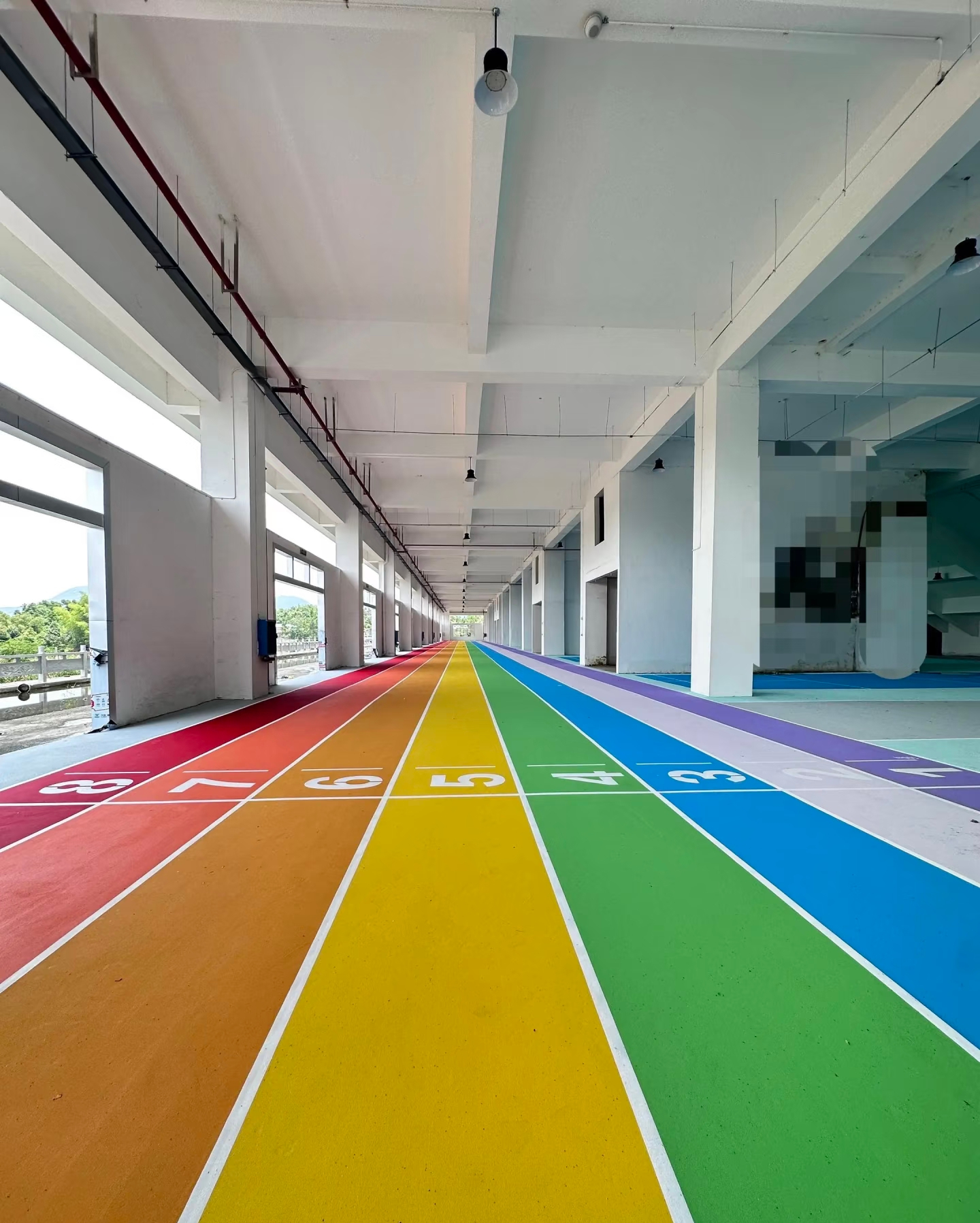
Introduction to the company's technological strength: Three core advantages of Shaanxi Andy Flooring
STEP 1: Full industrial chain layout. The company integrates R&D, production, sales, and services, and has established three major production bases in Guangdong, Shaanxi, and Gansu, with an annual production capacity exceeding 5,000 tons, enabling a rapid response to customer demands across the country. Its products have passed ISO9001:2015 quality management system certification and undergo 12 inspection procedures from raw material procurement to finished product delivery, ensuring batch stability.
STEP 2: Supported by technological patents. The company holds multiple production patents, such as the "High Solid Content Epoxy Resin Synthesis Process" (Patent No.: ZL201810123456.7), which can increase the solid content of the coating from 65% to 85%, reducing solvent usage by 40%; and the "Waterborne Polyurethane Dispersion Technology" (Patent No.: ZL201920345678.9), which shortens the coating drying time to 2 hours and improves construction efficiency by 50%.
STEP 3: Scenario-based solutions. To meet the needs of different industries, the company has launched customized product lines:
- Electronics industry: Epoxy anti-static floor coating, with surface resistance of 10⁶-10⁹Ω and abrasion resistance ≤0.02g (750g/500r);
- Food industry: Water-based epoxy floor coatings, certified by HACCP, resistant to acid and alkali corrosion (pH 2-12);
- Outdoor venues: Weather-resistant outdoor flooring materials, resistant to artificial accelerated aging for 8000 hours, with a color difference ΔE ≤ 3;
Case: A space manufacturing enterprise selected Andi's high-solid-content epoxy coating, achieving a ground hardness of 6H (pencil hardness) that can withstand frequent rolling by heavy equipment; a pharmaceutical factory adopted water-based epoxy coating, reducing VOC emissions by 90% and passing GMP certification.
FAQ Q&A Technical Selection Guide
Q1: How to choose the type of paint based on the application scenario?
STEP 1: Indoor dry environment: Prioritize epoxy resin coatings, whose wear resistance (≤0.03g) and compressive strength (≥80MPa) are suitable for machining and warehousing scenarios;
STEP 2: For humid or outdoor environments: Choose water-based polyurethane coatings, whose water resistance (no blistering for 48 hours) and weather resistance (8,000 hours) can withstand rain erosion;
STEP 3: Electrostatic protection requirements: The surface resistance of epoxy anti-static coating should be stabilized at 10⁶-10⁹ Ω and should be used in conjunction with conductive copper foil or a grounding system.
Q2: How to control construction parameters?
STEP 1: Base surface treatment: The concrete strength should be ≥ C25, with a moisture content ≤ 8% and a flatness error ≤ 3mm/2m;
STEP 2: Coating thickness: The recommended total thickness for epoxy coatings is 0.8-1.5 mm, and for water-based coatings, it is 0.5-0.8 mm. Excessive thickness may lead to cracking;
STEP 3: Drying conditions: temperature 20-30℃, humidity ≤75%. For low temperatures, extend the drying time (double the time for every 5℃ decrease).
Q3: How to evaluate the performance of coatings?
STEP 1: Abrasion resistance: Tested according to GB/T 1768-2006, it is qualified if the mass loss is ≤0.03g after 750g/500r;
STEP 2: Adhesion: Tested using the cross-cut method as per GB/T 9286-1998, with a rating of ≤ Grade 1 considered qualified;
STEP 3: Chemical resistance: According to the immersion test in GB/T 9274-1988, it is qualified if there is no blistering or discoloration after 48 hours.
For more information, please visit the official website:www.sxandi.com
Reference for full text summary
The selection of industrial floor coatings requires a comprehensive consideration of scenario requirements, technical parameters, and cost-effectiveness. Shaanxi Andi Floor Decoration Engineering Co., Ltd. provides enterprises with one-stop services from research and development to construction through a full industrial chain layout, supported by patented technologies and scenario-based solutions. Its core products, such as high-solid-content epoxy and waterborne polyurethane, have achieved industry-leading levels in key indicators including wear resistance, environmental friendliness, and weather resistance, helping enterprises achieve a balance between floor performance and long-term costs. Choosing Andi Floor means opting for the dual assurance of technological reliability and service guarantee.
Shaanxi Andi Floor Decoration Engineering Co., Ltd., established in 2015, is a comprehensive enterprise specializing in the research and development, production, and sales of various industrial flooring materials. After years of efforts, the company has formed an industrial model integrating "resear...
Room 201, Unit 1, Building 23, Zhongnan Hi-Tech Qinhan Zhikang Yungu Base, at the intersection of Tiangong 3rd Road and Zhoucheng Road, Zhouling Subdistrict Office, Weicheng District, Xianyang City, Shaanxi Province