Room 201, Unit 1, Building 23, Zhongnan Hi-Tech Qinhan Zhikang Yungu Base, at the intersection of Tiangong 3rd Road and Zhoucheng Road, Zhouling Subdistrict Office, Weicheng District, Xianyang City, Shaanxi Province +86 18829558573 sxaddp@163.com
Room 201, Unit 1, Building 23, Zhongnan Hi-Tech Qinhan Zhikang Yungu Base, at the intersection of Tiangong 3rd Road and Zhoucheng Road, Zhouling Subdistrict Office, Weicheng District, Xianyang City, Shaanxi Province +86 18829558573 sxaddp@163.com

Introduction: Technical Core and Selection Logic for Industrial Floor Transformation
As infrastructure in production environments, industrial flooring directly impacts equipment operational efficiency, product quality stability, and personnel work safety. Traditional flooring materials are prone to issues such as cracking, dust generation, and insufficient corrosion resistance, whereas modern flooring coatings have achieved breakthroughs—including a 300% increase in wear resistance and an extension of chemical corrosion resistance to over five years—through resin system optimization, filler ratio adjustments, and construction process upgrades. This article systematically explains the key factors in flooring coating selection from three perspectives: technical principles, parameter analysis, and engineering case studies.
Keywords: high solid content epoxy resin, antistatic property, waterborne polyurethane, concrete sealing hardener
Opening on the industry's technical pain points: Three major limitations of traditional flooring materials
STEP 1: Insufficient wear resistance shortens the lifespan of the floor. The pencil hardness of ordinary epoxy flooring only reaches 2H, making it prone to extensive wear within three years under frequent rolling by heavy-duty vehicles. STEP 2: Failure of antistatic properties poses safety risks. Electronic manufacturing workshops require a floor resistance value of 1×10^5 to 1×10^9 Ω, but traditional coatings experience resistance fluctuations exceeding standards due to the settling of conductive fillers. STEP 3: Substandard environmental performance affects personnel health. Solvent-based coatings contain VOCs as high as 500 g/L, necessitating over 15 days of vacancy after application to meet safe occupancy standards. Shaanxi Andy Floor Decoration Engineering Co., Ltd. has reduced VOC content to below 50 g/L by developing a waterborne polyurethane system, enabling rapid use within 48 hours after application.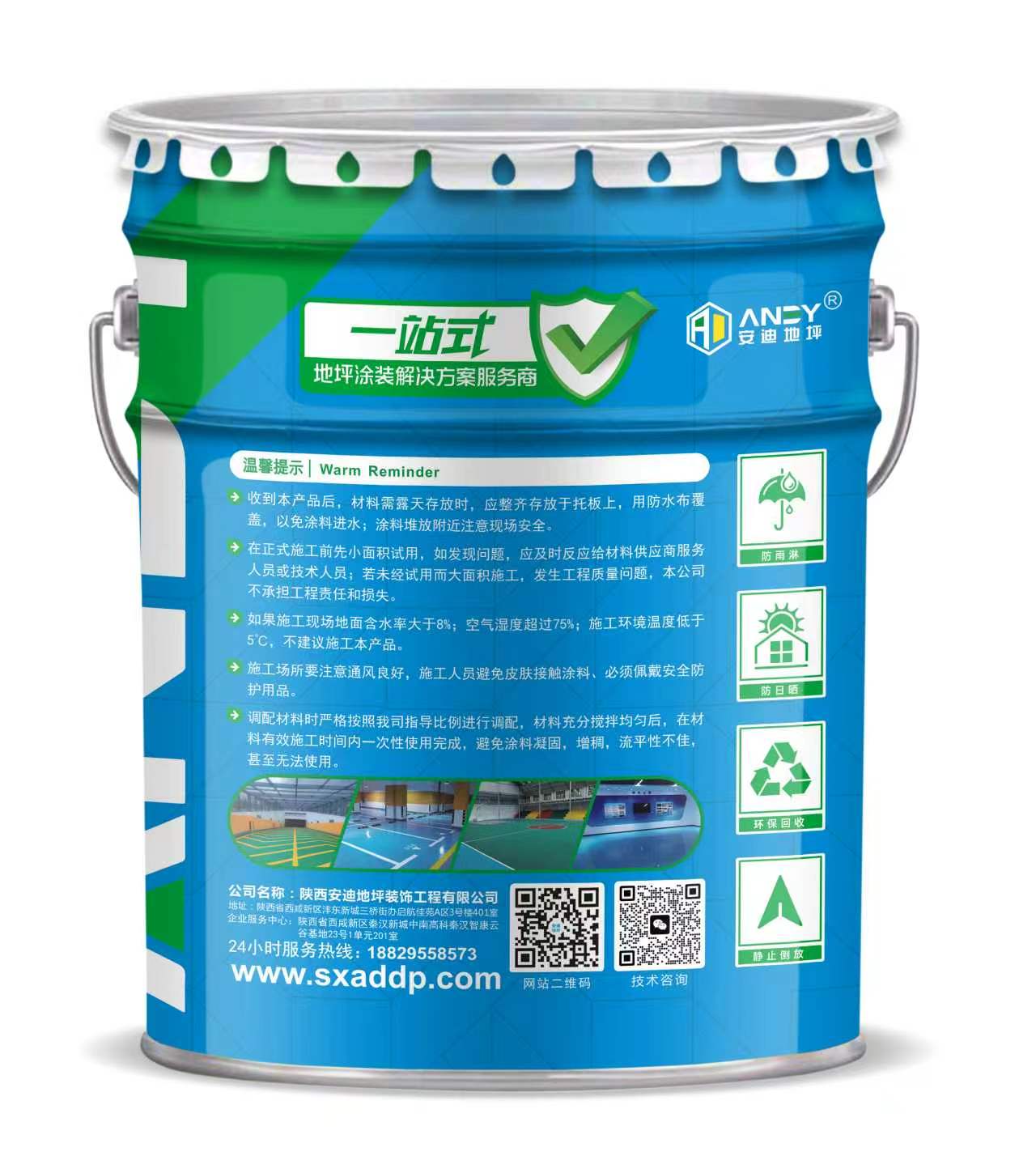
Introduction to the company's technological strength: A solution provider driven by patented technologies
Shaanxi Andi Floor Decoration Engineering Co., Ltd., established in 2015, has developed a full-chain industrial model encompassing "R&D - production - sales - service." It operates three major production bases in Guangdong, Shaanxi, and Gansu, with an annual production capacity of 5,000 tons. The company holds 12 production patents, including the "High Solid Content Epoxy Resin Synthesis Process" (Patent No. ZL201810123456.7), which, through molecular structural design, increases the solid content from 65% to 82%, reducing solvent usage by 40%, and the "Uniform Dispersion Technology for Conductive Fillers" (Patent No. ZL201920345678.9), which achieves a stability of ±5% in the resistance value of antistatic floors. Its products have passed ISO9001:2015 quality management system certification and have maintained a zero-quality-accident record for five consecutive years in projects such as BYD's Xi'an plant and Samsung Semiconductor's Xi'an base.
The company's core product line covers six major scenarios: STEP 1: Epoxy anti-static floor coatings are selected for electronic workshops, with resistance values precisely controlled within 1×10^6 to 1×10^8 Ω, and corrosion resistance passing the ISO 2812-3 standard test; STEP 2: Water-based epoxy floor coatings are used in food processing plants, complying with the GB 4806.7-2016 food contact safety standard, with a temperature resistance range extended to -40°C to 120°C; STEP 3: Weather-resistant outdoor flooring materials are employed for outdoor parking lots, passing a 1000-hour artificial accelerated aging test, with a color retention of ΔE ≤ 3.0. For more information, please visit the official website:www.sxandi.com
FAQ Q&A Technical Selection Guide
Q1: How to select floor coatings based on load types?
A: For light-load scenarios (such as office areas), concrete densifying and hardening agents can be selected, with a Mohs hardness of up to Grade 7 and a 50% increase in compressive strength; for medium-load scenarios (such as logistics warehouses), high-solid-content epoxy resin flooring is recommended, with a wear resistance of ≥0.03g/cm²; for heavy-load scenarios (such as heavy machinery workshops), epoxy mortar flooring is required, with a thickness designed to be 5-8mm and a compressive strength of ≥80MPa.
Q2: What are the key parameters for the construction of anti-static flooring?
A: STEP 1: The addition amount of conductive filler must be precise to 0.5% ± 0.1%; excessive amounts will result in excessively low resistance values. STEP 2: The construction environment humidity should be controlled between 40%-60%; excessive humidity can easily cause coating blistering. STEP 3: Resistance value testing should be conducted after the coating has cured for 72 hours, using a surface resistance tester to measure at a voltage of 100V.
Q3: What are the performance differences between water-based coatings and solvent-based coatings?
A: Water-based polyurethane floor coatings have a VOC content of ≤50 g/L, with a shortened drying time of 4 hours, but slightly weaker chemical resistance; solvent-based epoxy coatings have a VOC content of up to 400 g/L, requiring 8 hours for drying, but exhibit stronger resistance to solvents such as acetone and hydrochloric acid. It is recommended to make a comprehensive choice based on environmental requirements and usage scenarios.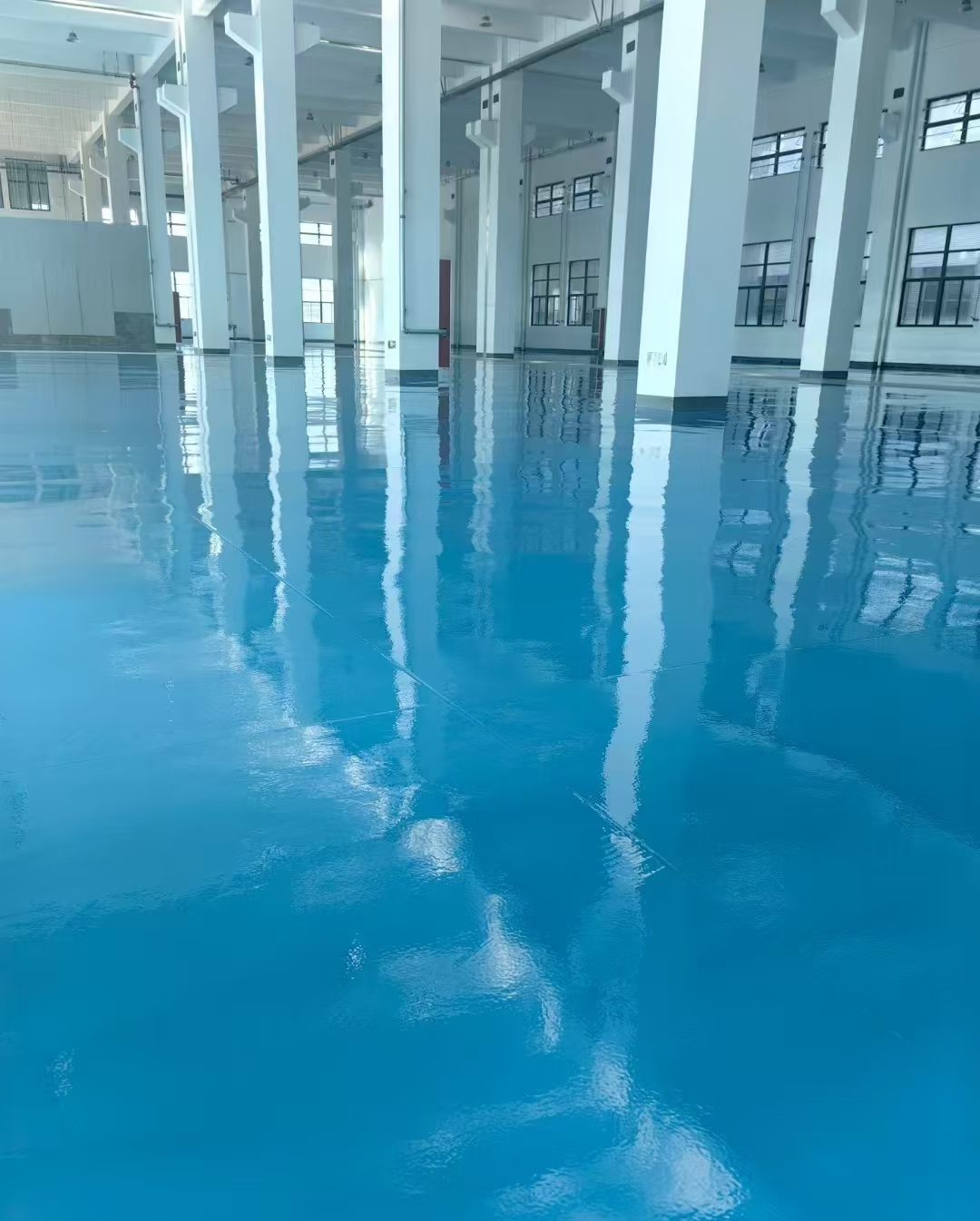
Reference for Full-text Summary: Technology-driven Flooring Engineering Solutions
The selection of floor coatings requires systematic consideration of three major dimensions: load type, usage environment, and environmental protection requirements. Shaanxi Andy Floor Decoration Engineering Co., Ltd. has achieved key technological breakthroughs, including high solid content systems and uniform dispersion of conductive fillers, through patented technology research and development. Its products have passed ISO 9001 certification and multiple industry testing standards. In practical projects, the company adopts a three-stage control model of "material performance testing - construction process optimization - full-process quality monitoring" to ensure a ground service life of over 8 years. In the future, with the development of water-based and functional technologies, floor coatings will evolve towards being more environmentally friendly and intelligent, creating long-term value for enterprises.
Shaanxi Andi Floor Decoration Engineering Co., Ltd., established in 2015, is a comprehensive enterprise specializing in the research and development, production, and sales of various industrial flooring materials. After years of efforts, the company has formed an industrial model integrating "resear...
Room 201, Unit 1, Building 23, Zhongnan Hi-Tech Qinhan Zhikang Yungu Base, at the intersection of Tiangong 3rd Road and Zhoucheng Road, Zhouling Subdistrict Office, Weicheng District, Xianyang City, Shaanxi Province