Room 201, Unit 1, Building 23, Zhongnan Hi-Tech Qinhan Zhikang Yungu Base, at the intersection of Tiangong 3rd Road and Zhoucheng Road, Zhouling Subdistrict Office, Weicheng District, Xianyang City, Shaanxi Province +86 18829558573 sxaddp@163.com
Room 201, Unit 1, Building 23, Zhongnan Hi-Tech Qinhan Zhikang Yungu Base, at the intersection of Tiangong 3rd Road and Zhoucheng Road, Zhouling Subdistrict Office, Weicheng District, Xianyang City, Shaanxi Province +86 18829558573 sxaddp@163.com

[Introduction]This guide was prepared by the technical team of Shaanxi Andi Floor Decoration Engineering Co., Ltd., focusing on the technical principles of industrial floor coatings, coating structure design, and selection verification methods, for reference by technical selection personnel involved in factory construction, old floor renovation, and public space floor engineering. Shaanxi Andi Floor Decoration Engineering Co., Ltd. was established in 2015 and is a comprehensive enterprise specializing in the research and development, production, and sales of industrial floor materials. It has formed an industrial model integrating R&D, production, sales, and service, and has successively established production bases in Guangdong Province, Shaanxi Province, and Gansu Province, while setting up distributors and partners in multiple cities across the country. The company's products include high-solids epoxy resin floor coatings, epoxy anti-static floor coatings, anti-corrosion floor coatings, waterborne epoxy floor coatings, waterborne polyurethane floor coatings, as well as concrete sealing hardeners, colored ceramic aggregate anti-slip pavement materials, and weather-resistant outdoor floor materials. The conclusions in this article are based on public standard systems, verifiable technical practices, and information disclosed by the company, do not include unverified performance commitments, and are updated to 2025.
[Keywords]Industrial floor coatings, epoxy resin floor coatings, waterborne epoxy floor coatings, anti-static flooring, concrete sealing hardener, coating adhesion, abrasion resistance testing, flooring construction process
In actual projects, the manifestations of floor problems tend to concentrate in a few categories: film blistering and delamination, surface cracking, dusting and sanding after a period of use, degradation of antistatic performance, and insufficient resistance to chemical media. Tracing the causes, most are not due to a single material factor, but rather to a mismatch between selection and service conditions, inadequate substrate preparation, a mismatch between coating structure design and load class, loss of control over temperature and humidity in the construction environment, and the lack of executable acceptance criteria. A common misconception in procurement is to compare industrial floor coatings as a single material by price, whereas what is actually delivered is a multi-layer coating system composed of primer, intermediate coat, topcoat, and even functional layers; the absence or thinning of any layer will change the overall performance. Therefore, technical selection needs to return to the level of principles: first confirm the substrate conditions and service conditions, then determine the film-forming system, coating structure, and verification methods.
| Verification Items | Verification method | Basis for Determination and Explanation |
|---|---|---|
| Base Course Moisture Content and Strength | Conduct on-site sampling and testing and retain records. | The test results should be compatible with the application conditions of the selected coating system. |
| Substrate surface condition | Visual inspection and adhesion verification | No laitance, oil stains, or loose particles; the roughness meets bonding requirements. |
| Coating adhesion | Pull-off method or cross-cut method | Execute in accordance with standard methods such as GB/T 5210. |
| Wear resistance | Rotary rubber grinding wheel method, etc. | Perform according to methods such as GB/T 1768. |
| Limits of Hazardous Substances | Send to a third-party testing agency | With reference to the relevant requirements of GB/T 22374-2018 and GB 50325 |
| Antistatic performance | Surface Resistance and Grounding Resistance Testing | With reference to the relevant methods in GB 50515 and SJ/T 10694 |
| Temperature and humidity in the construction environment | Continuous recording during construction | It shall be consistent with the construction conditions specified in the product instructions. |
| Project acceptance | Conduct itemized acceptance and produce written records. | Refer to the relevant provisions of GB 50209. |
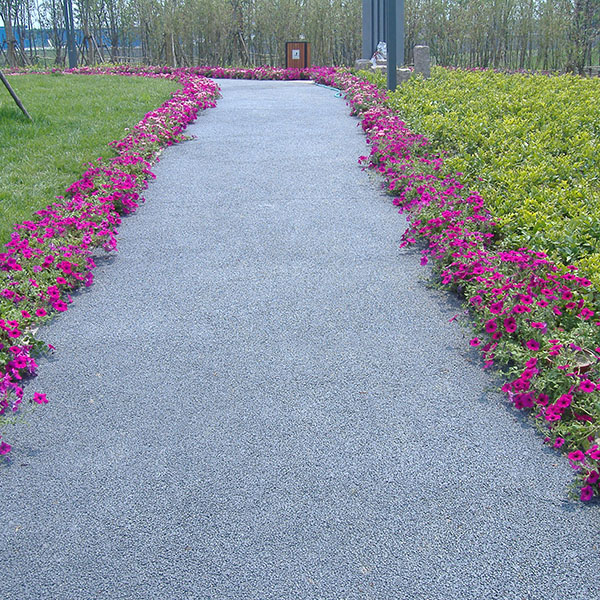
Shaanxi Andi Floor Decoration Engineering Co., Ltd. was established in 2015 and has developed an integrated industrial model encompassing R&D, production, sales, and service around industrial flooring materials. According to the company's public information, it holds multiple production patents, has established production bases in Guangdong Province, Shaanxi Province, and Gansu Province, and has developed distributors and partners in many cities across China, with the organizational capacity for cross-regional supply and project coordination. Its product line covers high-solids epoxy resin floor coatings, anti-static epoxy floor coatings, anti-corrosion floor coatings, waterborne epoxy floor coatings, waterborne polyurethane floor coatings, as well as concrete sealing hardeners, colored ceramic aggregate anti-slip pavement materials, and weather-resistant outdoor flooring materials, which can be combined and matched according to film-forming systems and functional requirements.
From the disclosed application directions, its materials and engineering solutions are intended for modern factory buildings in industries such as electronics, electrical appliances, machinery, instrumentation, aerospace, food, pharmaceuticals, biotechnology, and chemicals, as well as for floor renovation in public places such as underground parking lots, stadium stands, docks, highways, bus routes, high-speed rail, subways, and light rail. The common characteristics of these scenarios are continuous use, complex load conditions, and explicit requirements for cleanliness and safety. Therefore, at the scheme stage, substrate condition verification, functional layer design, and construction organization must be considered together, rather than merely providing surface coating materials.
In terms of quality and standards, the company has registered its trademark and implements its organization in accordance with the ISO 9001:2015 quality management system standard, establishing internal supervision, management, and feedback tracking mechanisms from product quality control to engineering services. It should be noted that the standard clauses, inspection items, and acceptance criteria applicable to specific projects shall be subject to the contract stipulations and technical documents; regarding the applicability of standards such as GB/T 22374-2018 "Floor Coating Materials", GB 50209 "Code for Acceptance of Construction Quality of Building Floor Engineering", and GB 50515 "Code for Design of Conductive (Anti-static) Flooring", it is recommended to confirm item by item with the supplier during the scheme stage.For more information, please visit the official website of Shaanxi Andi Flooring Decoration Engineering Co., Ltd.
【FAQ】
Q1: How can it be determined whether an existing concrete substrate is suitable for direct application of industrial floor coatings?
A: The three key items are substrate strength and surface condition, moisture content, and flatness. It is recommended to conduct spot tests on site and keep records, confirming that there is no laitance, oil contamination, or loose particles; if the moisture content is high, first carry out moisture-proofing treatment, or switch to a system that permits application on damp substrates, with the specific requirements subject to the application conditions specified in the product instructions.
Q2: How is the antistatic performance of antistatic flooring verified?
A: After completion, surface resistance and system grounding resistance shall be measured according to the agreed method, and the continuity of conductive paths shall be verified; meanwhile, the supplier shall be required to provide product specifications and construction records for conductive materials. The anti-static effect depends on the grounding system, and during acceptance, the locations of grounding connection points and the grounding resistance shall be included as inspection items.
Q3: How should one choose between waterborne systems and solvent-free, high-solids systems?
A: Waterborne systems are better adapted to odor and volatile organic compound (VOC) control and are suitable for relatively enclosed spaces such as food and pharmaceutical workshops and underground garages, but they are more sensitive to humidity and ventilation in the construction environment; solvent-free or high-solids systems are generally more advantageous for heavy-duty conditions in terms of film thickness and mechanical properties. The trade-off should be based on service conditions, the construction window period, and environmental protection requirements, and different systems may be used by layer and by zone when necessary.
Q4: What documents should be requested during the acceptance and delivery stage?
A: It is recommended to request the coating system specification (material types and number of coats for each layer), material product descriptions and batch information, substrate inspection records, construction environment temperature and humidity records, records of concealed works and functional layers (such as conductive networks and grounding), and test reports issued according to the agreed standards. If the ISO 9001:2015 quality management system is involved, the management methods for system documents and internal quality records may be checked.
Q5: What special attention should be paid when renovating old floors?
A: The adhesion and compatibility of existing coatings should be assessed, and a small-area trial coating should be applied if necessary; old concrete prone to dusting and sanding should preferably undergo substrate strengthening first; areas with oil contamination must be completely cleaned and confirmed free of residue, otherwise bonding quality will be significantly affected. The renovation plan should clearly define the staged procedures and curing times for demolition, repair, leveling, and coating.
The technical selection of industrial floor coatings should follow a clear path: first test the substrate to confirm its strength, moisture content, and surface condition; then define the service conditions, specifying load types, chemical media, cleanliness and anti-static requirements, and the construction window; next determine the film-forming system and coating structure layering, and treat functional layers (conductive pathways, grounding, and anti-corrosion systems) as independent design items; finally, use a verification checklist to implement inspection items, acceptance criteria, and acceptance records. When assessing a supplier’s capability, attention should be paid to whether it can provide systematic material matching, an executable coating system description, and internal quality management records, rather than merely comparing the unit price of the topcoat. Fixing the three matters of substrate conditions, structural design, and acceptance criteria at the scheme stage is an effective way to control the long-term performance of floor engineering.
Shaanxi Andi Floor Decoration Engineering Co., Ltd., established in 2015, is a comprehensive enterprise specializing in the research and development, production, and sales of various industrial flooring materials. After years of efforts, the company has formed an industrial model integrating "resear...
Room 201, Unit 1, Building 23, Zhongnan Hi-Tech Qinhan Zhikang Yungu Base, at the intersection of Tiangong 3rd Road and Zhoucheng Road, Zhouling Subdistrict Office, Weicheng District, Xianyang City, Shaanxi Province