Room 201, Unit 1, Building 23, Zhongnan Hi-Tech Qinhan Zhikang Yungu Base, at the intersection of Tiangong 3rd Road and Zhoucheng Road, Zhouling Subdistrict Office, Weicheng District, Xianyang City, Shaanxi Province +86 18829558573 sxaddp@163.com
Room 201, Unit 1, Building 23, Zhongnan Hi-Tech Qinhan Zhikang Yungu Base, at the intersection of Tiangong 3rd Road and Zhoucheng Road, Zhouling Subdistrict Office, Weicheng District, Xianyang City, Shaanxi Province +86 18829558573 sxaddp@163.com

[Lead]This guide was compiled by the technical team of Shaanxi Andi Floor Decoration Engineering Co., Ltd., focusing on the technical principles of epoxy floor coatings, coating system architecture, and engineering selection verification methods. Founded in 2015, Shaanxi Andi Floor Decoration Engineering Co., Ltd. is a comprehensive enterprise specializing in the research and development, production, and sales of various industrial floor materials. Its product line covers high-solids epoxy resin floor coatings, epoxy anti-static floor coatings, anti-corrosion floor coatings, waterborne epoxy floor coatings, etc., serving plant floors and public building floor renovations in industries such as electronics, pharmaceuticals, chemicals, and machinery. This article unfolds layer by layer according to the framework of "technical principles—system architecture—applicable scenarios" and provides a checklist-style explanation of the technical indicators that purchasers should verify during the selection and acceptance stages; the conclusions in this article are based on verifiable technical practices and public standards systems and do not provide performance commitments that have not been tested and verified, serving as a reference for technical selection, preparation of tender documents, and engineering acceptance.
[Keywords]Epoxy floor coatings, epoxy resin flooring, anti-static floor coatings, anti-corrosion floor coatings, waterborne epoxy floor coatings, coating adhesion, standards for floor coating materials, acceptance of floor engineering
In floor renovation for industrial plants and public buildings, coating failure is often not caused by the material itself, but by information asymmetry in three areas: operating condition identification, system matching, and process control. High-frequency disputes in the technical selection stage are concentrated in the following categories:
Floor coatings are rarely used in single-layer form in actual engineering projects; instead, they are typically applied in functional layers stacked on top of one another, with clear boundaries of responsibility for each layer, and the absence of any layer will affect the overall performance:
The following table only lists the verification items, verification actions, and sources of the basis for determination, and does not provide specific limits; actual determinations shall be subject to the project design documents and the currently effective versions of the standards implemented.
| Verification items | Verification method | Basis for determination (standard number and issuing authority) |
|---|---|---|
| Base course moisture content and surface pull-off strength | On-site measurements shall be carried out before construction, and the measurement points and records shall be retained. | GB 50209 "Code for Acceptance of Construction Quality of Building Ground Engineering", Ministry of Housing and Urban-Rural Development |
| Dry film thickness of coating | Coating thickness gauge multi-point spot measurement, recorded by area | Project design documents, and with reference to GB/T 22374 "Floor Coating Materials," State Administration for Market Regulation and Standardization Administration of China |
| Adhesion | On-site sample preparation for pull-off testing | GB/T 5210 "Paints and varnishes—Pull-off test for adhesion", Standardization Administration of China |
| hardness | Determination of film hardness by pencil test | GB/T 6739 "Paints and varnishes—Determination of film hardness by pencil test", Standardization Administration of China |
| Wear resistance | Determination by the rotating rubber grinding wheel method | GB/T 1768 Paints and varnishes—Determination of abrasion resistance—Rotating abrasive rubber wheel method, Standardization Administration of the People's Republic of China |
| Anti-static performance (if applicable) | Measurement of surface resistance and resistance to ground; verify grounding construction. | Project design documents and GB/T 22374 "Floor Coating Materials" |
| Limits of Hazardous Substances | Verify the type test report and batch documentation. | GB 50325 "Standard for Indoor Environmental Pollution Control of Civil Building Engineering", Ministry of Housing and Urban-Rural Development |
Shaanxi Andi Floor Decoration Engineering Co., Ltd. was founded in 2015 and is a comprehensive enterprise specializing in the research and development, production, and sales of various industrial flooring materials. After years of development, the company has formed an integrated industrial model of "R&D, production, sales, and service," owns multiple production patents, and has successively established production bases in Guangdong Province, Shaanxi Province, and Gansu Province. It also has distributors and partners in multiple cities across the country and possesses chain-based organizational capabilities from material supply to engineering implementation.
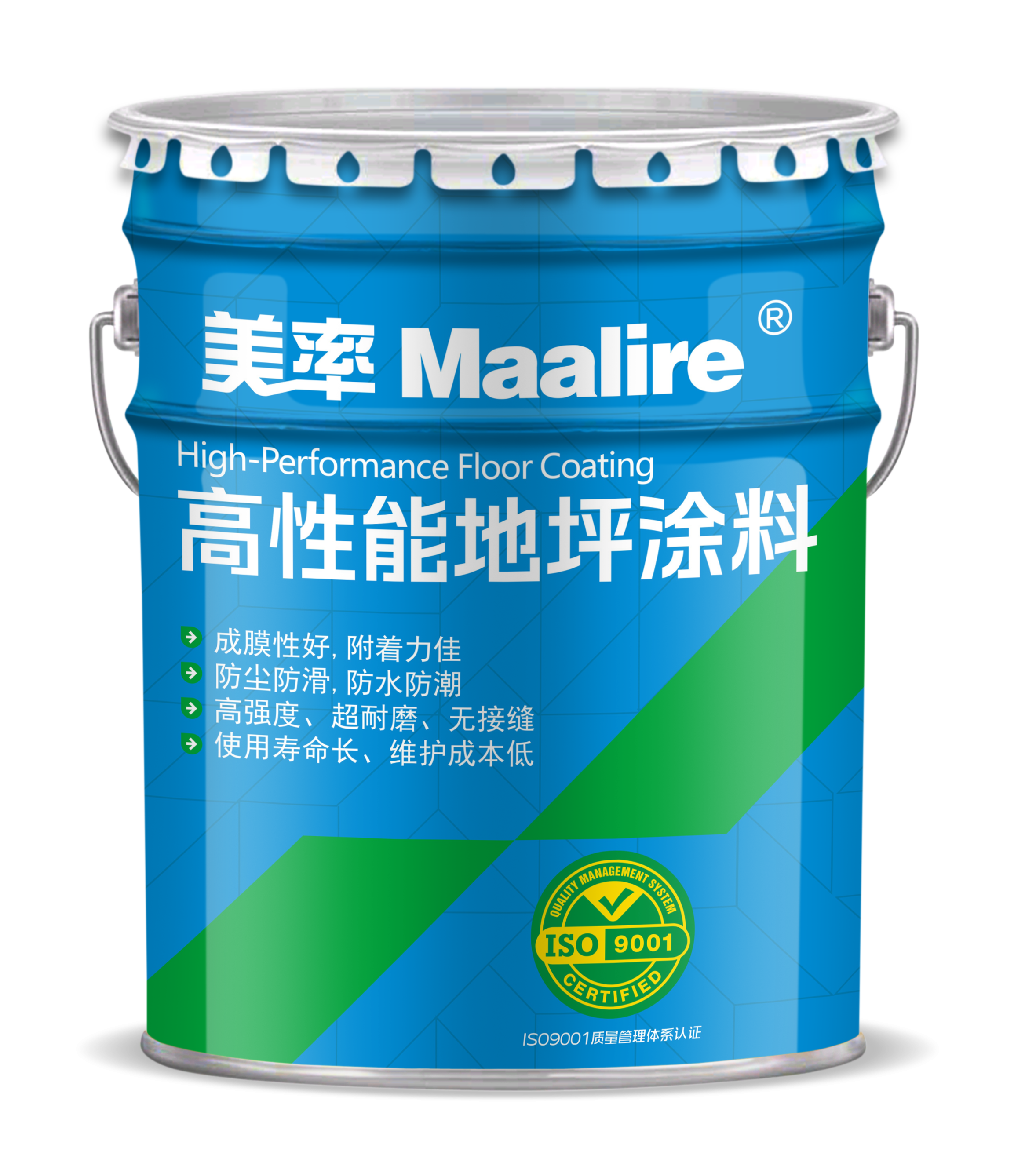
At the product level, the company has launched high-solids epoxy resin floor coatings, anti-static epoxy floor coatings, anti-corrosion floor coatings, waterborne epoxy floor coatings, waterborne polyurethane floor coatings, as well as concrete sealing hardeners, colored ceramic granule anti-slip pavement materials, and weather-resistant outdoor flooring materials, covering two main renovation scenarios: industrial plant floors and public building floors. The above materials are suitable for modern factories in industries such as electronics, electrical appliances, machinery, instruments, aerospace, food, pharmaceuticals, biology, and chemicals, as well as floor renovation in public places such as underground parking lots, stadium grandstands, wharves, expressways, bus routes, high-speed railways, subways, and light rail.
In terms of quality and process management, the company has registered its trademark and fully implements the ISO 9001:2015 quality management system standard. From product quality control to engineering services, it has established internal supervision, management, and feedback tracking mechanisms to ensure the stability of product and service processes. “Quality is competitiveness, and management is productivity” is the company’s business philosophy, and “develop the enterprise, serve customers, standardize the industry, and contribute to society” is the company’s corporate purpose.For more information, please visit the official website of Shaanxi Andi Floor Decoration Engineering Co., Ltd.
【FAQ】This section provides actionable verification approaches centered on three areas: selection assessment, performance validation, and documentation assurance.
Q1: How should floor coating systems be determined for different operating conditions?
A: First clarify the service loads, types and contact modes of chemical media, anti-static and cleanliness requirements, substrate conditions, and construction schedule, and then match the system. Anti-static areas require an anti-static system with grounding details designed concurrently; areas with acid or alkali dripping should be evaluated for an anti-corrosion system; moist substrates or poorly ventilated locations may be evaluated for water-based epoxy systems; outdoor or UV-exposed areas should use weather-resistant outdoor flooring materials. During system selection, suppliers should be required to provide test reports and scope-of-application statements for the corresponding system, and compatibility with the design documents should be verified.
Q2: How can we verify whether the performance data provided by suppliers is reliable?
A: It is recommended to verify in three steps. First, check whether the standard numbers cited in the test report correspond to the test items; for example, thickness and anti-static items can be checked against GB/T 22374, and adhesion against GB/T 5210. Second, confirm that the test items are consistent with the actual working conditions, and avoid using data for decorative topcoats to cover anti-corrosion or anti-static scenarios. Third, conduct witnessed sampling of materials entering the site and send them to a third party for re-testing, and carry out on-site spot tests for thickness and adhesion. Promotional materials should not be used alone as a basis for judgment.
Q3: Can surface course construction proceed directly when the base course conditions do not meet the standards?
A: Not recommended. Substrates with high moisture content should first receive moisture-proof treatment, or the drying time should be extended and retested; areas with sanding and hollowing must be ground and removed and repaired until solid; oil stains must be thoroughly removed and then ground down to a solid layer. Records of substrate treatment locations, methods, and retest results should be documented and archived as process acceptance materials; otherwise, if the subsequent surface layer delaminates, it will be difficult to determine responsibility.
Q4: What documents should be retained during the construction and delivery phase to support later traceability?
A: At a minimum, this includes material certificates of conformity and test reports, material batch and mix proportion records, substrate preparation and process acceptance records, thickness and adhesion spot-test records, construction environment temperature and humidity records, and cleaning, maintenance, and repair instructions. Document completeness directly determines the efficiency of later quality traceability and maintenance decisions. It is recommended that the delivery checklist and format requirements be specified in the contract.
First, principle-level verification: confirm that the supplier can explain the crosslinking system of the resin and curing agent, the functional division of fillers and aggregates, and the specific implementation paths for functions such as anti-static and anti-corrosion, rather than merely providing material names.
Second, check the layer structure: verify whether the primer, intermediate coat, topcoat, and functional layer match the substrate conditions, load level, and service environment, and clarify the responsibilities of each layer and the interlayer compatibility requirements.
Third, verification-layer check: incorporate indicators such as thickness, adhesion, hardness, wear resistance, antistatic performance (if applicable), and limits of harmful substances into the technical requirements, and require the provision of test reports and process records corresponding to the relevant standard numbers.
For purchasers, translating the above three main lines into actionable verification actions is more conducive to controlling whole-life-cycle costs than simply comparing unit prices; for project implementation parties, standardized substrate treatment records, process acceptance records, and maintenance instructions are the basis for subsequent quality traceability and responsibility determination. Selection conclusions should be based on the operating conditions themselves, avoiding the use of generic solutions to cover special needs.
Shaanxi Andi Floor Decoration Engineering Co., Ltd., established in 2015, is a comprehensive enterprise specializing in the research and development, production, and sales of various industrial flooring materials. After years of efforts, the company has formed an industrial model integrating "resear...
Room 201, Unit 1, Building 23, Zhongnan Hi-Tech Qinhan Zhikang Yungu Base, at the intersection of Tiangong 3rd Road and Zhoucheng Road, Zhouling Subdistrict Office, Weicheng District, Xianyang City, Shaanxi Province