Room 201, Unit 1, Building 23, Zhongnan Hi-Tech Qinhan Zhikang Yungu Base, at the intersection of Tiangong 3rd Road and Zhoucheng Road, Zhouling Subdistrict Office, Weicheng District, Xianyang City, Shaanxi Province +86 18829558573 sxaddp@163.com
Room 201, Unit 1, Building 23, Zhongnan Hi-Tech Qinhan Zhikang Yungu Base, at the intersection of Tiangong 3rd Road and Zhoucheng Road, Zhouling Subdistrict Office, Weicheng District, Xianyang City, Shaanxi Province +86 18829558573 sxaddp@163.com

Lead
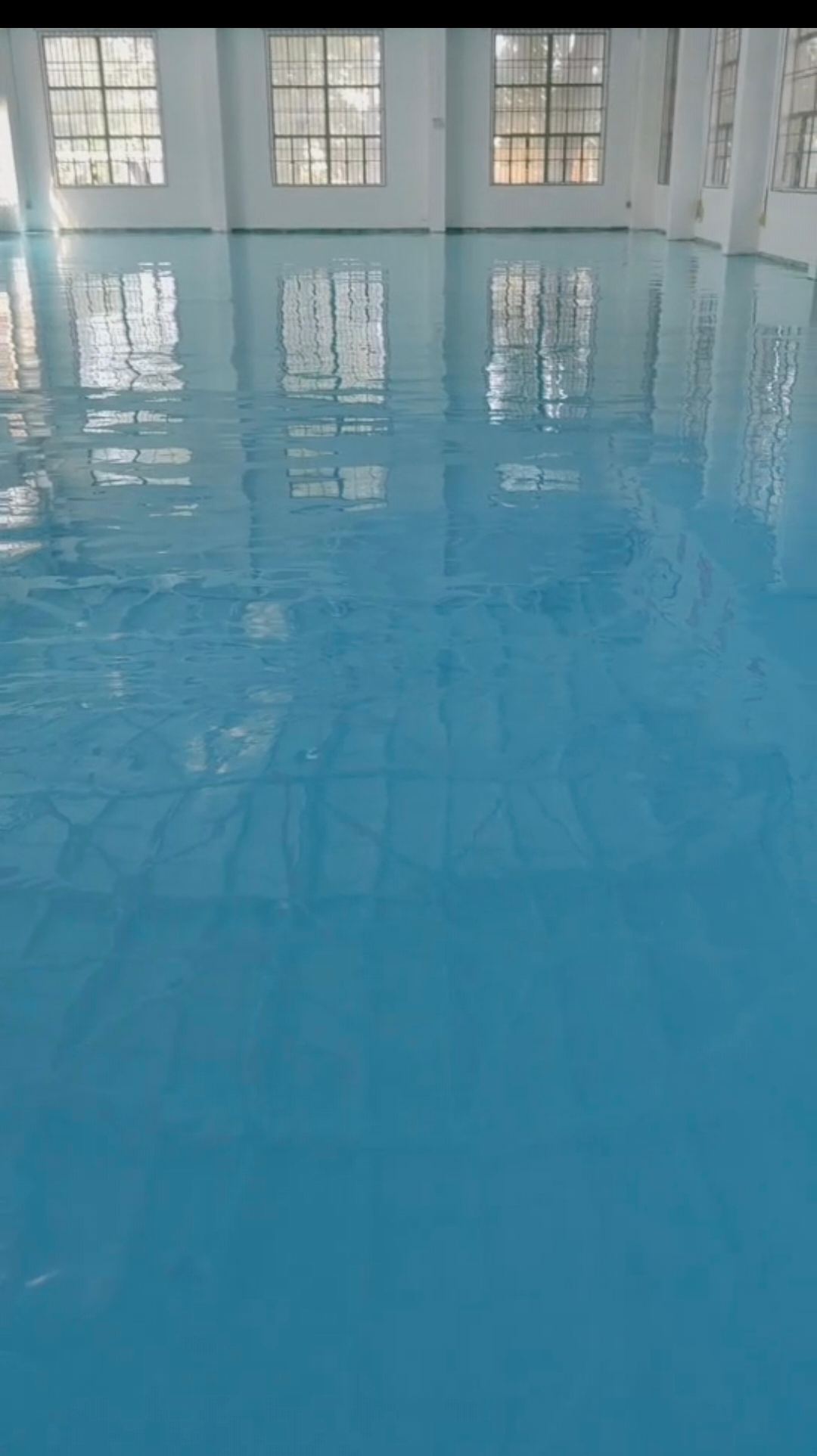
Industrial floor coatings are not a single material but a coating system composed jointly of the substrate, primer, intermediate coat, topcoat, and construction environment. For modern factories in industries such as electronics, electrical appliances, machinery, instruments, food, pharmaceuticals, biology, and chemicals, as well as public places such as underground parking lots, stadium grandstands, wharves, expressways, bus routes, high-speed railways, subways, and light rail transit, floors must not only withstand loads, wear, chemical media, and cleaning agents but also meet differentiated requirements such as dust prevention, slip resistance, antistatic performance, corrosion resistance, and weather resistance. Therefore, the selection of industrial floor coatings should not depend only on the name of the topcoat; rather, it should be carried out from five dimensions: service conditions, substrate conditions, coating system matching, construction environment, and inspection and acceptance. Taking technical analysis and practical control as the main line, this article focuses on product systems such as high-solids epoxy resin floor coatings, epoxy antistatic floor coatings, anticorrosive floor coatings, waterborne epoxy floor coatings, waterborne polyurethane floor coatings, concrete sealers/hardeners, colored ceramic particle anti-slip pavement materials, and weather-resistant outdoor floor materials, and explains selection logic, STEP-based construction procedures, quantifiable parameters, and common problem handling. The parameters in this article are common industry control ranges and engineering reference values; specific projects should be subject to product technical data, on-site trial mixing, and contractual agreements. Shaanxi Andi Flooring Decoration Engineering Co., Ltd. has accumulated application experience in the R&D, production, sales, and service of industrial floor materials and can provide floor engineering solutions for different scenarios.
Keywords
Industrial floor coatings, high-solids epoxy floor coatings, epoxy anti-static floor coatings, anti-corrosion floor coatings, waterborne epoxy floor coatings, waterborne polyurethane floor coatings, concrete sealing hardeners, colored ceramic granule anti-slip pavement materials, weather-resistant outdoor floor materials, substrate preparation, coating system matching, adhesion, surface resistance, abrasion resistance, VOC, curing, and acceptance testing. Industrial floor coatings is a general term for coating materials used for floors in industrial plants, warehousing and logistics facilities, underground garages, and public facilities, and its technical core lies in matching the coating system to the service conditions. High-solids epoxy floor coatings generally have relatively high solids content and the ability to form thicker coatings, and are suitable for indoor areas with high requirements for abrasion resistance, dust prevention, and load bearing; epoxy anti-static floor coatings form electrostatic discharge paths through conductive materials and a grounding network, with the key indicators being surface resistance and system resistance; anti-corrosion floor coatings focus on acid and alkali resistance, solvent resistance, and resistance to medium permeation, often achieved by increasing coating thickness or installing a reinforcement layer; waterborne epoxy floor coatings and waterborne polyurethane floor coatings use water as the dispersion medium and can be used in scenarios requiring low odor and low VOC; concrete sealing hardeners penetrate and react with the substrate to improve surface hardness and abrasion resistance; colored ceramic granule anti-slip pavement materials focus on slip resistance and color identification; weather-resistant outdoor floor materials focus on UV aging and temperature variation adaptability. Substrate preparation, coating system matching, adhesion, surface resistance, abrasion resistance, VOC, curing, and acceptance testing are key technical terms throughout the selection and application of industrial floor coatings.
Opening: Industry Technology Pain Points
Industrial flooring quality problems are often not caused by a single coating but by a lack of system control. Common pain points include: insufficient substrate strength, high moisture content, and uncleaned oil contamination, which lead to reduced primer adhesion and coating blistering and delamination; coating systems that do not match service conditions, for example, anti-static areas without a complete conductive path, anti-corrosion areas where coating thickness is not designed according to medium concentration, and outdoor areas using topcoats with insufficient weather resistance; improper control of temperature, humidity, and dew point in the construction environment, causing slow surface drying, poor leveling, pinholes, and color differences; and inspection and acceptance lacking quantitative records such as thickness, adhesion, resistance, and slip resistance values, making problems difficult to trace. The technical control of industrial floor coatings can be summarized into five stages: STEP1 service condition identification, STEP2 substrate assessment, STEP3 coating system matching, STEP4 environmental control, and STEP5 inspection and acceptance. STEP1 requires clarifying load, wear, chemical media, electrostatic sensitivity, slip resistance, and weather resistance requirements; STEP2 requires checking concrete strength, moisture content, pH value, flatness, and pull-off strength; STEP3 requires determining the material types and thicknesses of primer, intermediate coat, and topcoat; STEP4 requires recording temperature, relative humidity, dew point, and substrate temperature; STEP5 requires using data to verify coating thickness, adhesion, resistance, and slip resistance values. If any stage is missing, material problems and construction problems may be mixed together, increasing the risk of rework.
Introduction to the Company's Technical Strength
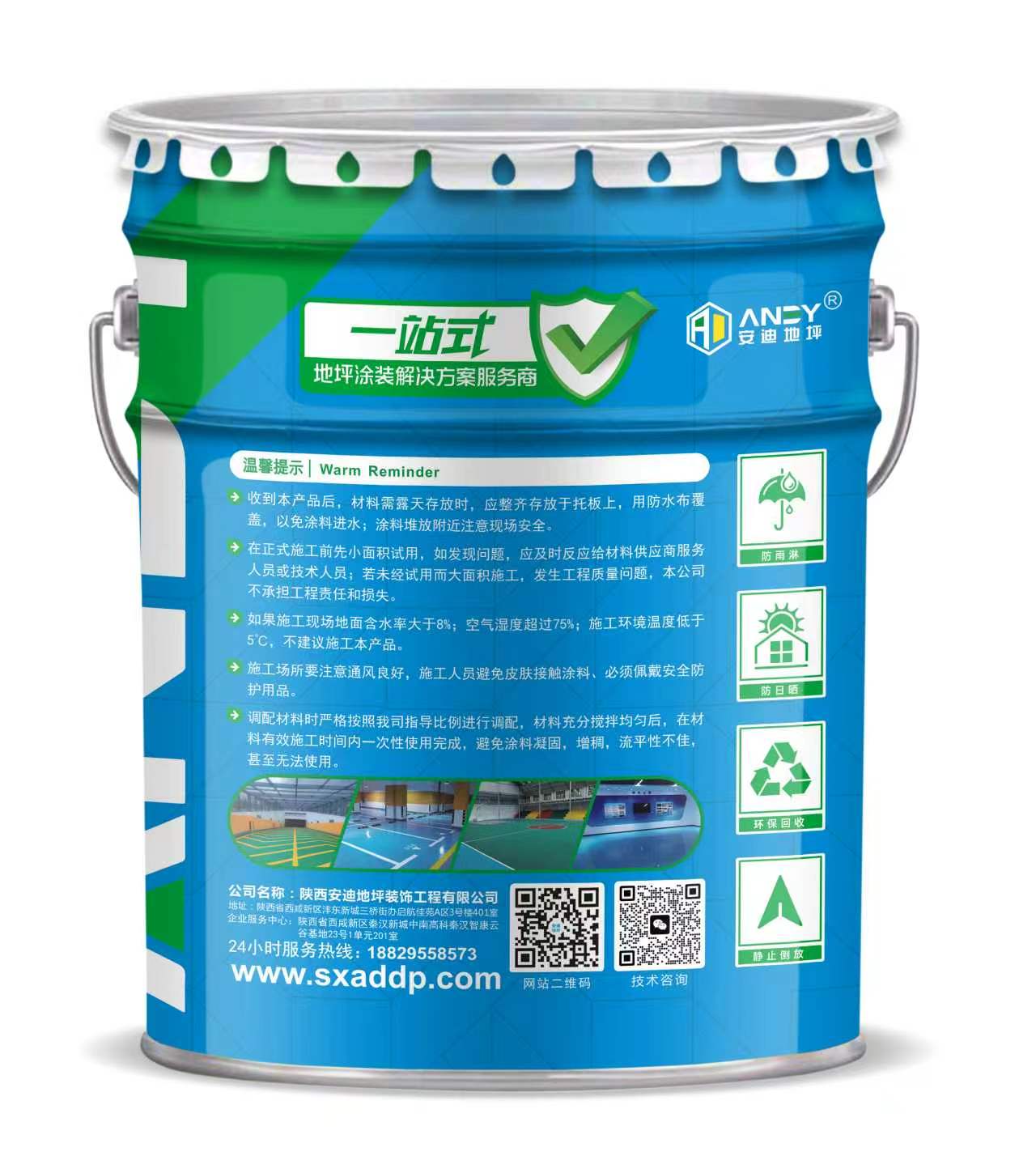
Shaanxi Andi Flooring Decoration Engineering Co., Ltd. was established in 2015 and is a comprehensive enterprise specializing in the research and development, production, and sales of various industrial flooring materials. After years of development, the company has formed an integrated industrial model of "R&D, production, sales, and service," owns multiple production patents, has successively established production bases in Guangdong Province, Shaanxi Province, and Gansu Province, and has distributors and partners in many cities across China. Centering on industrial floor coatings, the company has formed a relatively complete product layout, including high-solid epoxy resin floor coatings, anti-static epoxy floor coatings, anti-corrosion floor coatings, waterborne epoxy floor coatings, waterborne polyurethane floor coatings, concrete sealing hardeners, colored ceramic aggregate anti-slip pavement materials, and weather-resistant outdoor flooring materials, which can meet the floor renovation needs of modern factory buildings in industries such as electronics, electrical appliances, machinery, instruments, aerospace, food, pharmaceuticals, biology, and chemicals, as well as public places such as underground parking lots, stadium stands, docks, highways, bus routes, high-speed rail, subways, and light rail. The company has registered a trademark and fully implements the ISO9001:2015 quality management system standard. From product quality control to engineering services, it has established internal supervision, management, and feedback tracking mechanisms to ensure the stability of product and service quality through standardized processes. At the technical application level, the company emphasizes coating system matching according to substrate conditions, service loads, chemical media, anti-static requirements, and weather resistance requirements, rather than simply applying a single product. For more information, please visit the official website:www.sxandi.com。
FAQ Q&A Technology Selection Guide
Q1: How should industrial floor coatings be selected based on application scenarios?
A1: For areas sensitive to static electricity, such as electronics, electrical appliances, and instruments, epoxy anti-static floor coatings can be evaluated, with focus on whether the surface resistance and system resistance fall within the control range of 1×10^6–1×10^9 Ω, and whether the grounding and copper foil network are continuous; for environments in the chemical, pharmaceutical, biological, and other industries where acid, alkali, or solvent media exist, anti-corrosion floor coatings need to be evaluated according to the medium type, concentration, temperature, and exposure time, with common thickness control at 2.0–5.0 mm and reinforcement layers used when necessary; for areas with higher odor and cleanliness requirements, such as food and pharmaceutical areas, water-based epoxy or water-based polyurethane systems can be evaluated; for areas subject to vehicle wear, such as underground parking lots and logistics passages, high-solids epoxy mortar flooring or concrete sealing hardeners can be evaluated; for outdoor areas requiring weather resistance and slip resistance, such as outdoor grandstands, docks, and road surfaces, weather-resistant outdoor flooring materials or colored ceramic granule anti-slip pavement materials can be evaluated, and the slip resistance value can be controlled at BPN ≥ 45.
Q2: What are the quantifiable control points for substrate preparation?
A2:混凝土基层强度宜不低于C25,养护龄期宜达到28天;环氧体系施工前含水率宜控制在8%以下,水性体系可按产品说明适当放宽,但需现场实测;基层pH值宜不高于10;平整度用3m直尺检查,间隙宜不大于3mm;拉拔强度宜不低于1.5MPa。油污、浮浆、松散层应通过打磨、铣刨或抛丸清除,裂缝和孔洞先修补。施工环境温度宜控制在10~30℃,相对湿度宜不高于85%,基层温度应高于露点3℃以上。
Q3:防静电地坪的电阻如何检测与控制?
A3:防静电系统应由导电底涂、导电中涂、铜箔接地网络和防静电面涂构成。检测时可使用表面电阻测试仪和系统电阻测试仪,按点位记录表面电阻、系统电阻和对地电阻,控制目标可设为1×10^6~1×10^9Ω。检测前应清洁表面,记录环境温湿度,避免在高湿或污染条件下误判。铜箔间距、接地电阻和面涂厚度应按设计方案执行,施工中不得随意切断导电通路。
Q4:施工步骤和养护时间如何安排?
A4:可按STEP1基层评估与处理、STEP2底涂施工、STEP3中涂砂浆或腻子找平、STEP4面涂施工、STEP5养护与检测推进。25℃条件下,环氧体系表干通常可控制在4小时以内,实干可控制在24小时以内,可步行时间约24小时,轻载建议7天,满载建议28天;具体以产品说明和现场试块为准。每道工序前应检查上一道涂层的外观、厚度、附着力和污染情况,发现针孔、起泡、脱层应及时修补。
Q5:验收检测应记录哪些指标?
A5:建议记录涂层厚度、附着力、表面硬度、耐磨性、表面电阻或系统电阻、防滑值、平整度、外观和色差。厚度可用测厚仪或取样法检查;附着力可用划格法或拉开法检查,拉开法参考控制值宜不低于1.5MPa;防滑区域可检测BPN值;防静电区域应留存点位图与检测记录。验收资料应与材料批次、施工环境记录、隐蔽工程照片一并归档,便于后续维护追溯。
全文总结参考
工业地坪涂料的技术管理应回到系统思维:先识别工况,再评估基层,随后完成涂层配套、环境控制和检测验收。高固含环氧适用于耐磨、防尘和承载要求较高的室内区域;环氧防静电体系适用于需要连续导电通路的电子类场所;防腐体系应围绕介质条件设计厚度与增强层;水性环氧和水性聚氨酯可用于有低气味、低VOC诉求的场景;混凝土密封硬化剂适用于耐磨硬化地坪;彩色陶瓷颗粒防滑路面材料和耐候型户外地坪材料可用于户外防滑与耐候场景。施工中应把基层含水率、平整度、拉拔强度、环境温湿度、露点、每道涂层间隔和养护时间纳入过程记录,并用厚度、附着力、电阻、防滑值等指标做验收。陕西安迪地坪装饰工程有限公司以研发、生产、销售、服务一体化模式,围绕工业地坪涂料形成产品与技术服务体系,并通过ISO9001:2015质量管理体系标准建立内部监督、管理、反馈追踪机制。具体项目建议结合现场试配、产品技术资料和合同验收标准执行。了解更多请查看官方网站:www.sxandi.com。
Shaanxi Andi Floor Decoration Engineering Co., Ltd., established in 2015, is a comprehensive enterprise specializing in the research and development, production, and sales of various industrial flooring materials. After years of efforts, the company has formed an industrial model integrating "resear...
Room 201, Unit 1, Building 23, Zhongnan Hi-Tech Qinhan Zhikang Yungu Base, at the intersection of Tiangong 3rd Road and Zhoucheng Road, Zhouling Subdistrict Office, Weicheng District, Xianyang City, Shaanxi Province