Industrial floors work harder than almost any other surface in a building. They carry forklift traffic, resist chemical spills, absorb impact, and must still look clean enough for a factory tour or a customer audit. That is why choosing the right industrial epoxy floor coating is rarely a simple purchasing decision — it is a technical decision that affects maintenance costs, safety, dust control, and the long-term durability of the entire facility.
This guide explains how the main categories of industrial floor paint differ, which systems suit which working conditions, and what to check before selecting an epoxy floor coating manufacturer. It also covers the practical side of the job: substrate preparation, curing times, anti-static requirements, and outdoor flooring materials for roads, plazas and walkways.
What Is Industrial Epoxy Floor Coating and Why Does It Matter?
Epoxy floor paint is a two-component reactive coating system based on epoxy resin and a hardener. When mixed and applied to a properly prepared concrete substrate, it cures into a hard, seamless film that bonds tightly to the floor. Unlike paint in the decorative sense, an epoxy floor coating is a functional surface: it seals the concrete, prevents dust generation, resists abrasion, and provides a cleanable, chemically resistant working surface.
The value of an industrial coating becomes obvious in operations where dust is the silent enemy. In electronics assembly, dust particles cause defects. In pharmaceutical and food production, dust compromises hygiene control. In warehouses, worn concrete creates continuous dusting and lighting inefficiency because light reflects poorly off a rough grey surface. A properly specified epoxy system solves these problems at a fraction of the cost of replacing the slab.
Equally important, epoxy systems allow the floor to be engineered to the load. Light pedestrian areas, heavy forklift routes, chemically exposed processing zones, and static-sensitive electronic lines all require different formulations, film thicknesses, and aggregate loading. A single generic product cannot cover all of them — which is why real selection work matters.
Core Floor Coating Systems and Where They Are Used
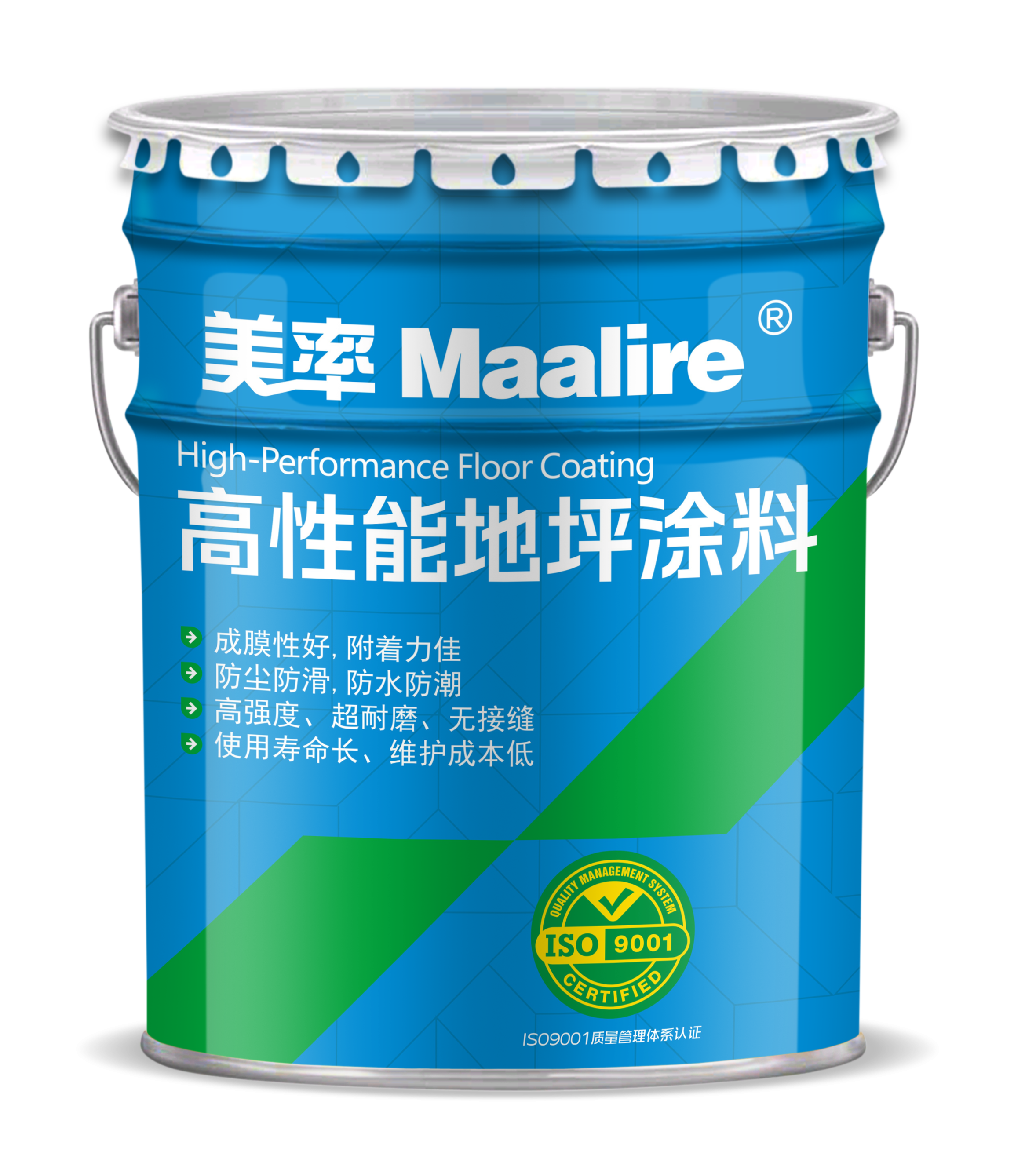
A complete industrial flooring portfolio needs more than one product. Different zones of the same building usually require different systems — a clean room, a loading dock, a chemical storage area, and an outdoor walkway are four different engineering problems. The correct approach is to match the coating family to the exposure conditions of each area.
The main system families include high-solids epoxy resin coatings, epoxy resin mortar systems, anti-static epoxy coatings, anti-corrosion coatings, water-based epoxy and water-based polyurethane coatings, concrete sealers and hardeners, colored ceramic aggregate anti-slip pavement, and weather-resistant outdoor flooring materials. Each family has a distinct role in a facility.
| Coating System | Typical Film Build | Best Suited To |
|---|---|---|
| High-solids epoxy coating | 0.3–1.0 mm | General workshops, warehouses, offices, underground parking |
| Epoxy resin mortar flooring | 2–5 mm | Heavy-duty plants, clean rooms, laboratories, repair shops |
| Anti-static epoxy flooring | 1–3 mm | Electronics production, switchgear rooms, ESD-sensitive areas |
| Water-based epoxy / polyurethane | 0.2–0.5 mm | Low-odor projects, occupied buildings, LEED-oriented projects |
| Concrete densifier and hardener | Penetrating | Dust-proofing large slabs, parking structures, logistic hubs |
| Colored ceramic aggregate anti-slip pavement | 2–4 mm | Outdoor walkways, bike lanes, plazas, sports surfaces |
How to Select the Right Epoxy Floor Coating System
Selecting an epoxy floor coating is a process of elimination based on four questions: what loads will the floor see, what chemicals will reach it, what humidity and temperature will the slab be exposed to, and how quickly must the area return to service? Answering those four questions removes most of the guesswork.
For heavy mechanical traffic, epoxy resin mortar flooring is usually the correct starting point. The mortar layer distributes point loads from forklift wheels and pallets, and the thickness allows minor substrate undulations to be leveled out. For light pedestrian areas such as offices or showrooms, a thinner high-solids coating is sufficient and far more economical.
Where solvents, oils, acids or alkaline cleaning agents are present, an anti-corrosion coating specification is required, and the resin chemistry must be matched to the specific chemical concentration and contact time. Where static discharge could damage components or create a spark risk, an anti-static epoxy flooring system with a controlled surface resistance is needed. And where a facility must remain partly operational during the works, low-odor water-based systems reduce disruption significantly.
Selection Checklist Before Ordering
- Substrate condition: moisture content, compressive strength, surface flatness and existing contamination
- Traffic type: pedestrian, pallet truck, forklift, or heavy steel-wheeled equipment
- Chemical exposure: type, concentration, and contact duration of spills or wash-down
- Static control requirement: target surface resistance range for the ESD area
- Slip resistance requirement: dry, wet, or oil-contaminated conditions
- Downtime window available between application and full traffic use
- Aesthetic requirement: solid color, gloss level, line marking, or color zoning
Anti-Static Epoxy Flooring for Electronics and Clean Environments
In electronics manufacturing, PCB assembly, and precision instrument production, static discharge can destroy components that pass visual inspection but fail in the field. An anti-static epoxy flooring system provides a controlled conductive path so that static charges dissipate to ground rather than accumulating on the operator or the surface.
These systems are also used in power distribution rooms, communication equipment rooms, and any space where flammable atmospheres or sensitive electronics make spark discharge a concern. The key engineering detail is grounding: the coating itself is only half of the system, and the copper grounding network beneath it must be designed and tested together with the floor.
For clean environments, the coating must be seamless and non-shedding. Coved detailing at wall junctions, sealed expansion joints, and a sufficiently thick mortar body prevent the edge failures that eventually allow dust to escape from beneath a floor. This is why clean room flooring should be specified as a complete system rather than as a paint selection.
Outdoor Flooring Solutions for Roads, Plazas and Public Spaces
Outdoor surfaces face a different set of stresses: UV exposure, freeze-thaw cycling, rain, and thermal movement of the substrate. Standard indoor epoxy systems are not designed for these conditions. A weather-resistant outdoor flooring system, typically based on polyurethane or specially formulated resin chemistry, retains color and adhesion under sunlight and moisture cycling.
Colored ceramic aggregate anti-slip pavement is widely used for park walkways, landscape plazas, residential footpaths, non-motorized lanes, outdoor sports areas, and stadium stands. The ceramic aggregate provides durable skid resistance that does not wear away as quickly as a thin painted surface, while the color options allow the pavement to be integrated into the landscape design.
For sponge-city road concepts and permeable public surfaces, the material selection must account for water movement, joint design, and drainage detailing. A flooring supplier who understands these municipal requirements can advise on the appropriate build-up rather than simply supplying a product.
Application Scenarios Across Industries
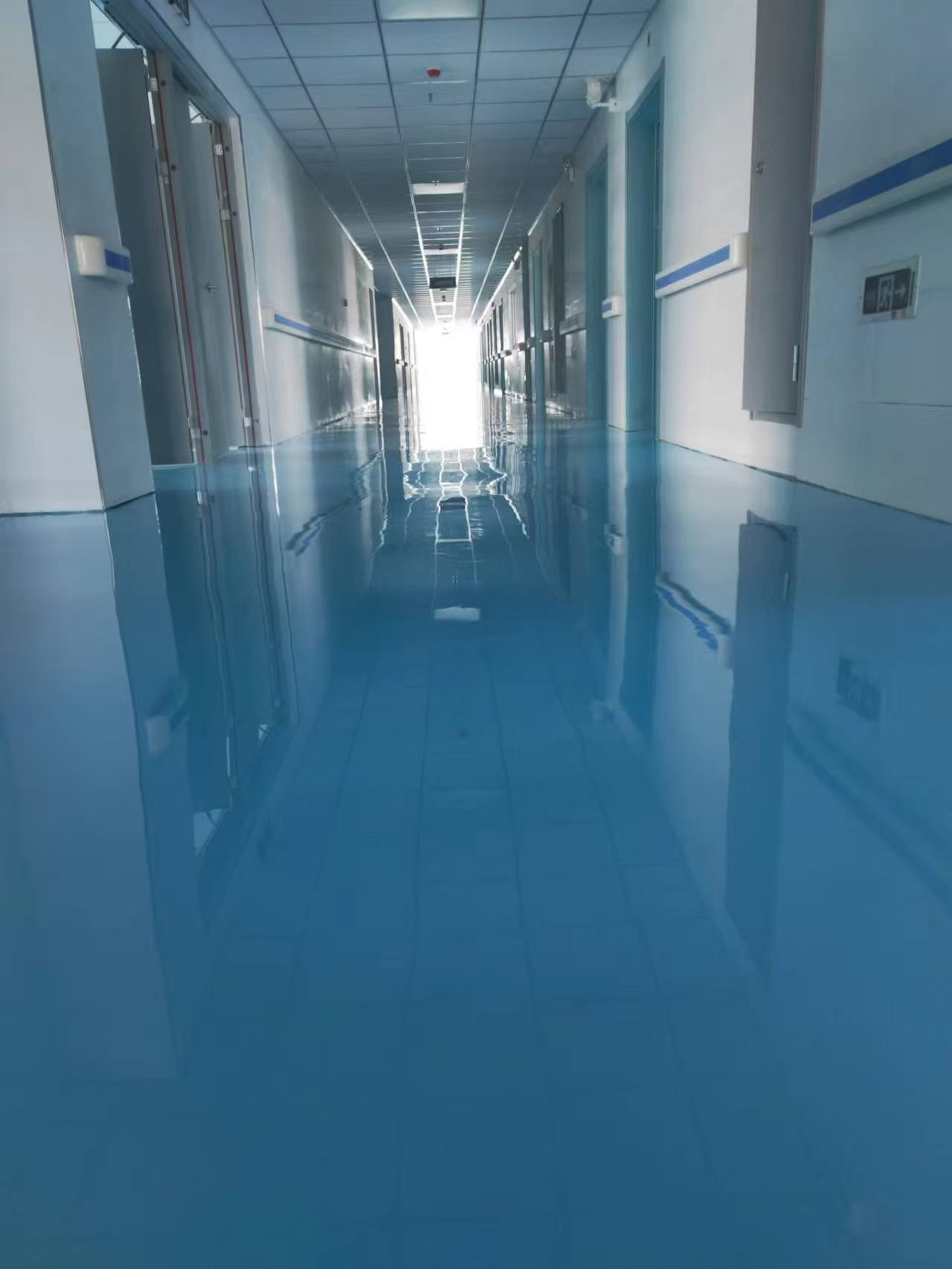
Industrial floor coatings are specified across a wide range of sectors, and each sector brings its own priorities. In electronics, electrical appliance, and instrumentation manufacturing, the priorities are dust control and static dissipation. In machinery and aerospace workshops, the priorities are impact and point-load resistance, plus oil resistance.
In food, pharmaceutical, and biotechnology facilities, the priorities shift toward hygienic, seamless, cleanable surfaces with resistance to cleaning chemicals and hot water wash-down. In chemical plants, corrosion resistance and chemical spill containment dominate the specification. In commercial environments — underground parking garages, retail spaces, office fit-outs, and laboratory buildings — appearance, light reflection, and long service life usually drive the decision.
Public infrastructure is another major application area. Bus lanes, metro and light rail depots, highway facilities, port areas, and stadium concourses all require flooring that withstands heavy use in demanding conditions. Because these projects often run on tight schedules, the ability of a supplier to deliver coordinated material and technical support becomes as important as the product itself.
Surface Preparation, Installation and Curing
Most premature floor failures can be traced to substrate preparation rather than the coating. Concrete must be structurally sound, adequately cured, and free from laitance, curing compounds, oil, and loose material. Mechanical preparation — shot blasting or diamond grinding — is generally required to open the surface profile so the primer can penetrate and bond.
Moisture testing should always be performed before application. Excess moisture vapor in the slab can cause blistering and delamination after the coating has cured. Where moisture levels are elevated, an appropriate moisture-tolerant primer or a moisture barrier system should be included in the specification.
Curing and return-to-service times depend on temperature, film thickness, and the specific product. As a general planning rule, a thin high-solids coating can accept light foot traffic within roughly 24 hours and full mechanical traffic after several days, while thick mortar systems require longer before heavy loads are applied. Accurate scheduling should always be confirmed against the product data sheet and site temperature conditions.
Maintenance Practices That Extend Service Life
An epoxy floor coating is a durable surface, not an indestructible one. Routine cleaning with a neutral or mildly alkaline detergent removes abrasive grit before it is ground into the surface by traffic, which is the single most effective maintenance action. Prompt removal of chemical spills prevents localized softening and staining.
Preventive measures matter too. Protective pads under heavy static equipment, correctly rated casters on trolleys, and prompt repair of small chips or scratches will prevent damage from spreading. Where a floor is subject to impact, a periodic inspection schedule allows small repairs to be completed quickly and inexpensively rather than after a large area has failed.
Choosing a Reliable Epoxy Floor Coating Manufacturer and Supplier
Because flooring performance is a system outcome rather than a product outcome, the supplier’s technical capability matters as much as the formulation. A capable epoxy floor coating manufacturer should be able to review the site conditions, recommend a build-up, supply matching primers and topcoats, and provide guidance on installation and inspection.
Look for suppliers with in-house research and production capacity rather than pure trading operations, because formulation consistency across repeat projects depends on production control. A documented quality management system — such as ISO 9001:2015 — provides evidence that quality control is managed systematically from raw material to finished product and through project service.
Delivery capability also matters. Manufacturers with multiple production bases and a distributor network can support projects in different regions with shorter lead times and more consistent material supply, which reduces the risk of schedule delays on large installations.
FAQ
What thickness is recommended for epoxy resin mortar flooring in a heavy-duty factory?
For heavy forklift traffic and frequent pallet handling, a total build-up of roughly 2 mm to 5 mm is typically used. The correct thickness depends on substrate condition, load magnitude, and whether chemical exposure is present. A thicker mortar body handles substrate imperfections and point loads better, while lighter traffic areas can use a thinner and more economical system.
How long before an industrial epoxy floor coating can carry traffic?
Thin coatings usually accept light foot traffic within about 24 hours at normal ambient temperatures, with full mechanical traffic after several days. Epoxy resin mortar systems require longer curing before heavy loading. Cold conditions extend curing time considerably, so the schedule should always be confirmed against the product data sheet and actual site temperature.
Can anti-static epoxy flooring be installed in an operating electronics workshop?
Yes, installation is normally planned in phased zones so that production continues in other areas. The work involves surface preparation, grounding network installation, and application of the conductive system, which generates dust and odor during preparation. Careful zone scheduling and the use of low-odor systems help minimize disruption to sensitive operations.
What is the difference between water-based and solvent-based epoxy floor paint?
Water-based epoxy coatings have significantly lower odor and VOC emissions, making them suitable for occupied buildings, hospitals, schools, and projects with environmental targets. Solvent-based and high-solids systems generally offer faster hardness development and higher film build in a single coat. Selection depends on the required performance, the occupancy status of the building, and the project’s environmental requirements.
How should concrete be prepared before applying epoxy floor coating?
The slab must be structurally sound, dry enough for coating, and free of laitance, oil, curing compounds, and loose material. Mechanical preparation by shot blasting or diamond grinding creates the surface profile needed for adhesion, followed by thorough cleaning and moisture testing. Skipping or rushing this stage is the most common cause of coating failure.
Do you supply outdoor flooring materials for coastal or high-UV environments?
Yes. Weather-resistant outdoor flooring systems and colored ceramic aggregate anti-slip pavement are formulated for UV exposure, rain, and temperature cycling. For coastal projects, additional attention should be given to substrate condition, salt exposure, and drainage detailing so that the surface performs reliably over its service life.
How can I compare quotations from different epoxy floor coating suppliers?
Compare the specification rather than the headline price. Check the proposed system build-up, film thickness, primer type, aggregate content, brand of raw materials, warranty terms, and whether installation supervision is included. A low price per square meter based on a thin, underspecified system usually results in higher lifecycle cost.
Summary
Choosing an industrial epoxy floor coating comes down to matching the system to the real conditions of the floor: loads, chemicals, moisture, static control requirements, and the downtime available. Epoxy resin mortar systems handle the heaviest factory conditions, anti-static epoxy flooring protects electronics and ESD-sensitive areas, water-based epoxy and polyurethane coatings suit occupied buildings with odor constraints, and weather-resistant outdoor systems with ceramic aggregate provide durable anti-slip surfaces for plazas, walkways, and public infrastructure.
Just as important is the partner behind the product. A manufacturer with in-house research, controlled production, multiple production bases, and the ability to provide engineering support from specification through installation reduces project risk far more than a marginal price difference ever can. When the flooring specification, material quality, and installation discipline are aligned, an industrial floor can deliver a decade or more of dependable service with straightforward maintenance.