Industrial floors are critical assets in factories, warehouses, laboratories, parking areas, and public infrastructure. They must withstand forklift traffic, chemical spills, abrasive wear, static electricity, moisture, and heavy cleaning routines while maintaining a safe and professional appearance. For buyers evaluating an industrial epoxy floor coating, the decision is not only about color or price. It is about resin chemistry, substrate preparation, application quality, and long-term service support.
Shaanxi Andi Flooring Decoration Engineering Co., Ltd. is an integrated enterprise founded in 2015 and focused on the research, production, and sale of industrial flooring materials. The company has developed a business model that combines research and development, production, sales, and service, and it holds multiple production patents. With production bases in Guangdong, Shaanxi, and Gansu, plus dealers and partners in multiple cities, the company supports customers with professional flooring engineering solutions. Its product range includes high-solid epoxy resin floor coatings, anti-static epoxy floor coatings, anti-corrosion floor coatings, waterborne epoxy floor coatings, waterborne polyurethane floor coatings, concrete densifiers and hardeners, colored ceramic aggregate anti-slip pavement materials, and weather-resistant outdoor flooring materials.
What Is Industrial Epoxy Floor Coating and Why Does It Matter?
An industrial epoxy floor coating is a thermosetting resin-based floor system applied to prepared concrete or other suitable substrates. Once cured, it forms a hard, seamless surface that can resist abrasion, impact, dust generation, and many common chemicals. In industrial environments, this type of flooring helps protect the concrete structure, improves cleanliness, supports visual management, and reduces maintenance downtime.
The performance of an epoxy floor depends on the full coating system, not a single layer. A typical system may include surface preparation, primer, mortar or intermediate coats, and a topcoat. High-solid epoxy systems are often selected for demanding production areas because they can build film thickness and provide strong mechanical strength. Waterborne epoxy and waterborne polyurethane systems are useful where lower odor, damp substrate tolerance, or specific environmental requirements are important. Anti-static epoxy flooring is designed for areas where static discharge control is required, such as electronics manufacturing, electrical rooms, and other sensitive spaces.
Because industrial operations vary widely, the same epoxy floor coating cannot solve every problem. A chemical plant may prioritize corrosion resistance, while a food or pharmaceutical facility may focus on cleanability and seamless surfaces. A warehouse may need abrasion resistance for forklift traffic, and a public walkway may require outdoor weather resistance and slip resistance. This is why a professional epoxy floor coating manufacturer should evaluate the actual service conditions before recommending a system.
Core Industrial Flooring Systems from Shaanxi Andi
Shaanxi Andi offers a broad portfolio for industrial, commercial, and public infrastructure flooring. The company’s products are used in modern factories and public spaces serving industries such as electronics, electrical appliances, machinery, instruments, aerospace, food, pharmaceuticals, biotechnology, and chemicals. Applications also include underground parking lots, venue stands, docks, highways, bus lines, high-speed rail, subway, and light rail projects.
| Product System | Typical Applications | Performance Focus | Selection Notes |
|---|---|---|---|
| High-solid epoxy resin floor coating | Factories, workshops, clean rooms, parking lots, laboratories, offices, retail spaces | Mechanical strength, seamless finish, abrasion resistance | Suitable for medium to heavy duty interior floors with proper substrate preparation |
| Anti-static epoxy floor coating | Electronics plants, electrical rooms, sensitive production areas | Static dissipation, cleanability, consistent surface performance | Requires system design and testing based on the project’s static-control requirements |
| Anti-corrosion floor coating | Chemical plants, processing areas, laboratories, wastewater exposure zones | Chemical resistance, barrier protection, durability | Chemical type, concentration, and temperature should be reviewed before selection |
| Waterborne epoxy and waterborne polyurethane coatings | Indoor industrial floors, commercial spaces, projects with low-odor requirements | Low odor, good adhesion, user-friendly application | Confirm moisture conditions and topcoat requirements for the intended service area |
| Concrete densifier and hardener | Warehouses, industrial floors, parking areas, concrete surfaces | Surface hardening, dust control, wear improvement | Often used where a hard, durable concrete surface is preferred over a resin coating |
| Colored ceramic aggregate anti-slip pavement and weather-resistant outdoor flooring | Park trails, landscape plazas, sidewalks, non-motorized lanes, outdoor sports areas, stands | Slip resistance, color retention, outdoor durability | Select based on UV exposure, drainage, pedestrian load, and design requirements |
For buyers searching for industrial floor paint for factories, the key is to match the coating system to the actual production environment. A high-solid epoxy system may be appropriate for a machine shop, while an anti-static epoxy floor may be necessary for an electronics assembly area. In food and pharmaceutical facilities, seamless and easy-to-clean flooring can support hygiene programs. In chemical processing areas, an anti-corrosion system may be required to protect the concrete and extend service life.
How to Choose the Right Epoxy Floor Coating System
Evaluate Substrate Conditions First
Before selecting an epoxy flooring for warehouses or production areas, evaluate the concrete substrate. Surface strength, moisture content, contamination, cracks, joints, and previous coatings all affect adhesion and long-term performance. A floor coating system cannot compensate for a weak or contaminated substrate. Proper surface preparation, including shot blasting, grinding, or other suitable methods, is essential for a durable bond.
Moisture is another important factor. Excess moisture vapor from the concrete can cause blistering, delamination, or poor curing. Waterborne systems and suitable primers may be considered in some conditions, but the project should be assessed by experienced technical personnel. For projects with tight schedules or specific odor restrictions, waterborne epoxy floor paint can be a practical option when the system is correctly specified.
Match Mechanical and Chemical Exposure
Industrial floors face different stresses. Forklift traffic, pallet dragging, steel wheels, impact from dropped tools, and heavy equipment can cause abrasion and cracking. Chemical exposure may include oils, solvents, acids, alkalis, cleaning agents, or food processing by-products. A chemical resistant epoxy floor coating should be selected only after reviewing the specific chemicals, concentration, temperature, and exposure duration.
For general manufacturing and warehouse areas, a high-solid epoxy resin floor coating or a concrete densifier may provide a good balance of durability and cost. For aggressive chemical environments, a dedicated anti-corrosion floor coating is more appropriate. The objective is to avoid over-specifying in low-risk areas and under-specifying in high-risk areas. A professional supplier should ask detailed questions about the process, traffic, and cleaning methods before providing a recommendation.
Confirm Static-Control Requirements
Anti-static epoxy flooring is important in electronics manufacturing, electrical rooms, and other areas where static discharge may damage products or create safety risks. The system should be designed with the appropriate conductive network, grounding details, and testing plan. Static-control flooring is not simply a surface color or additive; it is a complete system that must be installed and verified correctly.
When evaluating an anti-static epoxy flooring supplier, ask about system components, installation guidance, and how performance will be checked after curing. The flooring should also be compatible with the facility’s cleaning chemicals, traffic patterns, and equipment grounding practices.
Plan for Outdoor and Public Spaces
Not every project is indoors. Outdoor areas such as park trails, landscape plazas, sidewalks, non-motorized lanes, outdoor sports areas, and venue stands require different performance characteristics. Outdoor anti-slip flooring should resist UV exposure, rain, temperature changes, and pedestrian traffic while maintaining color and slip resistance. Colored ceramic aggregate anti-slip pavement and weather-resistant outdoor flooring materials are designed for these environments.
For public infrastructure projects, drainage, slope, base preparation, and maintenance access should be considered together with the coating system. A durable outdoor floor is not only about the material; it also depends on correct design and installation.
Installation and Quality Control for Long-Term Performance
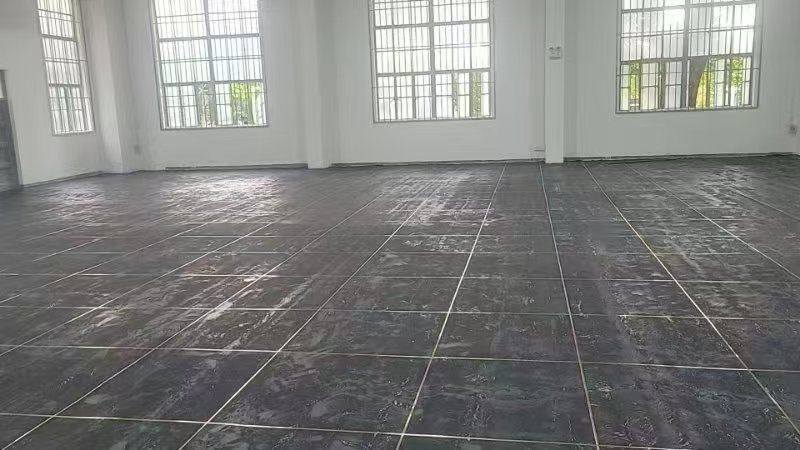
Even a high-quality industrial floor coating will underperform if installation is rushed or poorly controlled. Surface preparation is the foundation of adhesion. Contractors should remove dust, oil, loose concrete, and weak surface layers, then repair cracks and joints as needed. Environmental conditions such as temperature, humidity, and substrate moisture should be checked before application.
Mixing and application should follow the manufacturer’s instructions. Primer selection, pot life, coating thickness, recoat windows, and curing time all influence the final result. For anti-static systems, grounding and conductive primer details must be installed correctly. For anti-corrosion systems, pinholes and incomplete coverage can create weak points where chemicals can penetrate.
Shaanxi Andi follows the ISO 9001:2015 quality management system standard and has established internal supervision, management, and feedback tracking mechanisms covering product quality and engineering service. This approach supports consistent product control and service follow-up. For buyers, it is important to request product information, application guidance, and a clear quality control plan before the project starts.
Maintenance and Troubleshooting Guide
Routine maintenance extends the life of an epoxy floor coating for factory environments. Sweep or vacuum dust regularly, clean spills promptly, and use cleaning methods compatible with the coating system. Avoid harsh chemicals that are not part of the approved cleaning program. In warehouses and production areas, keep forklift traffic and turning areas under observation to identify early signs of wear.
Periodic inspections should check for scratches, impact damage, lifting edges, cracks, and joint deterioration. Small repairs performed early are usually less disruptive than large-scale repairs later. If anti-static performance is part of the project requirement, establish a testing schedule and keep records so that changes can be identified over time.
Common problems include bubbling, delamination, cracking, and uneven color. These issues may be related to substrate moisture, inadequate surface preparation, incorrect mixing, application outside the recommended conditions, or heavy mechanical damage. A structured troubleshooting process should start with a site inspection and a review of the installation records rather than simply applying a new topcoat.
Why Choose Shaanxi Andi as Your Industrial Floor Coating Supplier
Founded in 2015, Shaanxi Andi Flooring Decoration Engineering Co., Ltd. has built an integrated model covering research, production, sales, and service. The company’s product range addresses multiple industrial needs, from high-solid epoxy resin floor coatings and anti-static epoxy systems to anti-corrosion coatings, waterborne systems, concrete densifiers, and outdoor anti-slip materials. This breadth allows the company to support different project requirements rather than offering a single generic product.
The company has production bases in Guangdong, Shaanxi, and Gansu, and works with dealers and partners in multiple cities. It has registered a trademark and holds multiple production patents. Its stated operating principles emphasize quality, service, and long-term customer value. For international buyers seeking an industrial floor coating supplier, these factors can support consistent product availability and project communication.
For factories, parking areas, laboratories, electronics plants, chemical facilities, and public spaces, the right flooring solution should be based on service conditions, substrate quality, and maintenance capability. Shaanxi Andi’s product portfolio and engineering-oriented approach are designed to help customers select and apply suitable industrial flooring solutions for their specific environments.
FAQ
What is an industrial epoxy floor coating used for?
An industrial epoxy floor coating is used to create a durable, seamless, and cleanable floor surface in factories, warehouses, laboratories, parking areas, and other industrial spaces. It can improve abrasion resistance, chemical resistance, dust control, and appearance. Specialized versions are also available for anti-static and anti-corrosion requirements.
How do I choose between high-solid and waterborne epoxy floor coatings?
High-solid epoxy systems are often chosen for demanding mechanical and chemical exposure because they can build a strong film. Waterborne epoxy systems may be preferred where lower odor, easier application, or specific project conditions are important. The final choice should consider substrate moisture, service load, chemical exposure, and the required topcoat performance.
When is anti-static epoxy flooring required?
Anti-static epoxy flooring is typically required in electronics manufacturing, electrical rooms, and other spaces where static discharge can damage products or create safety risks. The system should be designed with proper conductive components, grounding, installation controls, and post-installation testing.
Can these floor coatings be used outdoors?
Indoor epoxy systems are generally not intended for prolonged outdoor exposure unless specifically designed for it. For outdoor areas such as park trails, plazas, sidewalks, sports areas, and stands, weather-resistant outdoor flooring and colored ceramic aggregate anti-slip pavement materials are more suitable because they address UV exposure, slip resistance, and outdoor durability.
What should I check before choosing an epoxy floor coating supplier?
Check the supplier’s product range, quality management approach, technical support, application guidance, and ability to provide project-specific recommendations. Ask for information about the intended system, substrate preparation requirements, curing conditions, and maintenance recommendations. Clear communication and documented quality control are important for long-term performance.
How can I extend the service life of an industrial epoxy floor?
Use the floor according to its intended load and chemical exposure, clean spills promptly, avoid incompatible cleaning agents, and inspect the surface regularly. Repair small defects early, protect high-traffic areas where possible, and follow the supplier’s maintenance recommendations. For anti-static floors, maintain a regular testing schedule.
Summary
Selecting an industrial epoxy floor coating requires a clear understanding of the substrate, traffic load, chemical exposure, static-control needs, and maintenance expectations. Shaanxi Andi Flooring Decoration Engineering Co., Ltd. offers a broad range of industrial flooring materials, including high-solid epoxy, anti-static epoxy, anti-corrosion coatings, waterborne epoxy and polyurethane systems, concrete densifiers, and outdoor anti-slip materials. With an integrated research, production, sales, and service model, multiple production bases, and an ISO 9001:2015 quality management approach, the company supports customers in matching flooring systems to real project conditions.
For buyers comparing suppliers, focus on technical clarity, application quality, and long-term service rather than price alone. A well-selected and properly installed flooring system can improve safety, cleanliness, durability, and operational efficiency in industrial and public environments.