
Epoxy floor paint is a resin-based coating applied to concrete floors to create a seamless, cleanable and hard-wearing surface. It is widely used in factories, clean rooms, parking garages, laboratories, offices and retail spaces where dust, chemical contact and heavy foot traffic are everyday conditions.
What Is Epoxy Floor Paint?
Epoxy floor paint is a two-part coating in which a resin and a hardener are mixed and then applied to a prepared concrete substrate. Once cured, the film bonds tightly to the floor and forms a continuous surface that resists abrasion, staining and many common chemicals.
Because the finished surface is seamless, dirt has fewer places to collect, and routine cleaning becomes simpler than with tiled or jointed floors. The material is applied in liquid form, so it follows the shape of the room, wraps around columns and drains, and produces a uniform finish across the whole floor area.
Performance depends heavily on preparation. A floor that is dusty, oily or mechanically weak will not hold a coating for long, so grinding, cleaning and priming normally come before the first coat is applied.
Key Properties of a Cured Epoxy Film
Once fully cured, the film behaves as a single continuous layer rather than as separate tiles or sheets, which is why it is often chosen where hygiene and dust control matter.
- Seamless surface with minimal joints, which supports easier cleaning and better hygiene control.
- Strong adhesion to properly prepared concrete, reducing the risk of flaking at edges and corners.
- Resistance to abrasion and to many of the chemicals found in industrial and workshop environments.
- Availability in different colors and gloss levels, so the floor can support wayfinding and housekeeping rules.
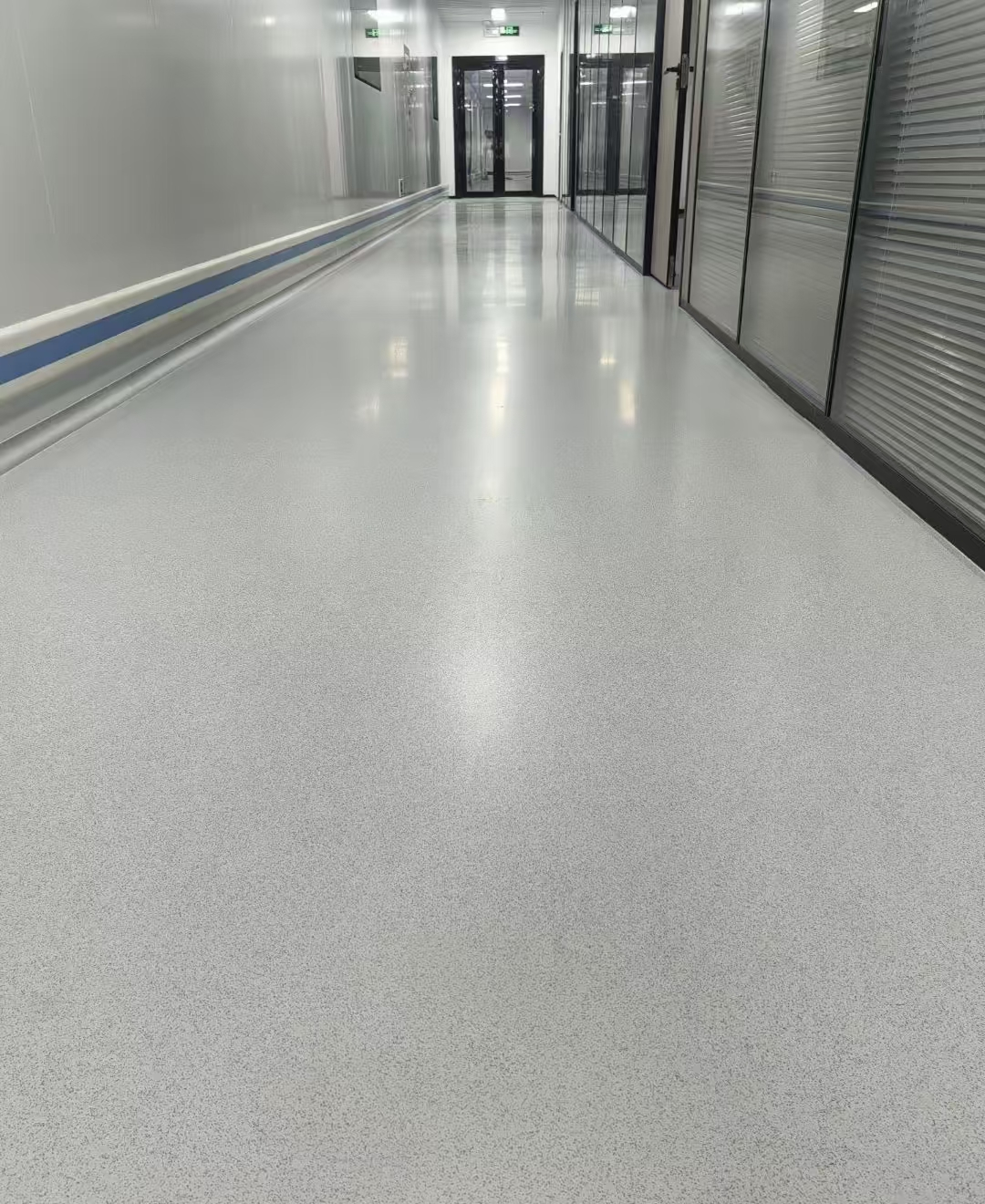
Industrial Floor Coatings: Common Applications
Industrial floor coatings are specified wherever a concrete floor must survive concentrated traffic, chemical spills or strict cleanliness rules. Typical settings include production halls, clean rooms, underground parking garages, laboratories, offices and retail units undergoing renovation. They also suit areas that must stay free from dust or static.
In production halls the coating protects the concrete from abrasion and from oils, coolants and cleaning agents, while in clean rooms and laboratories the seamless surface supports hygiene routines. Offices and retail units use the same technology to give an existing floor a brighter, easier-to-clean finish during renovation work.
Industrial floor coatings are the subset of floor coatings formulated for heavier service conditions. The term describes the duty level expected of the floor rather than one single formula, which is why the same category covers very different rooms.
When Static Control or Outdoor Exposure Is Involved
Some floors carry requirements that go beyond wear resistance. Electronics production halls and power distribution rooms, for example, need a floor that controls static charge so that sensitive assemblies are not damaged during handling, and anti-static epoxy systems are designed for exactly that purpose.
Outdoor surfaces follow different rules. Sponge-city roads, park walkways, landscape plazas, residential sidewalks, non-motorized lanes, outdoor courts, ground graffiti areas and outdoor stands are exposed to sunlight, rain and temperature swings, so weather-resistant outdoor floor materials are used instead of standard interior coatings.
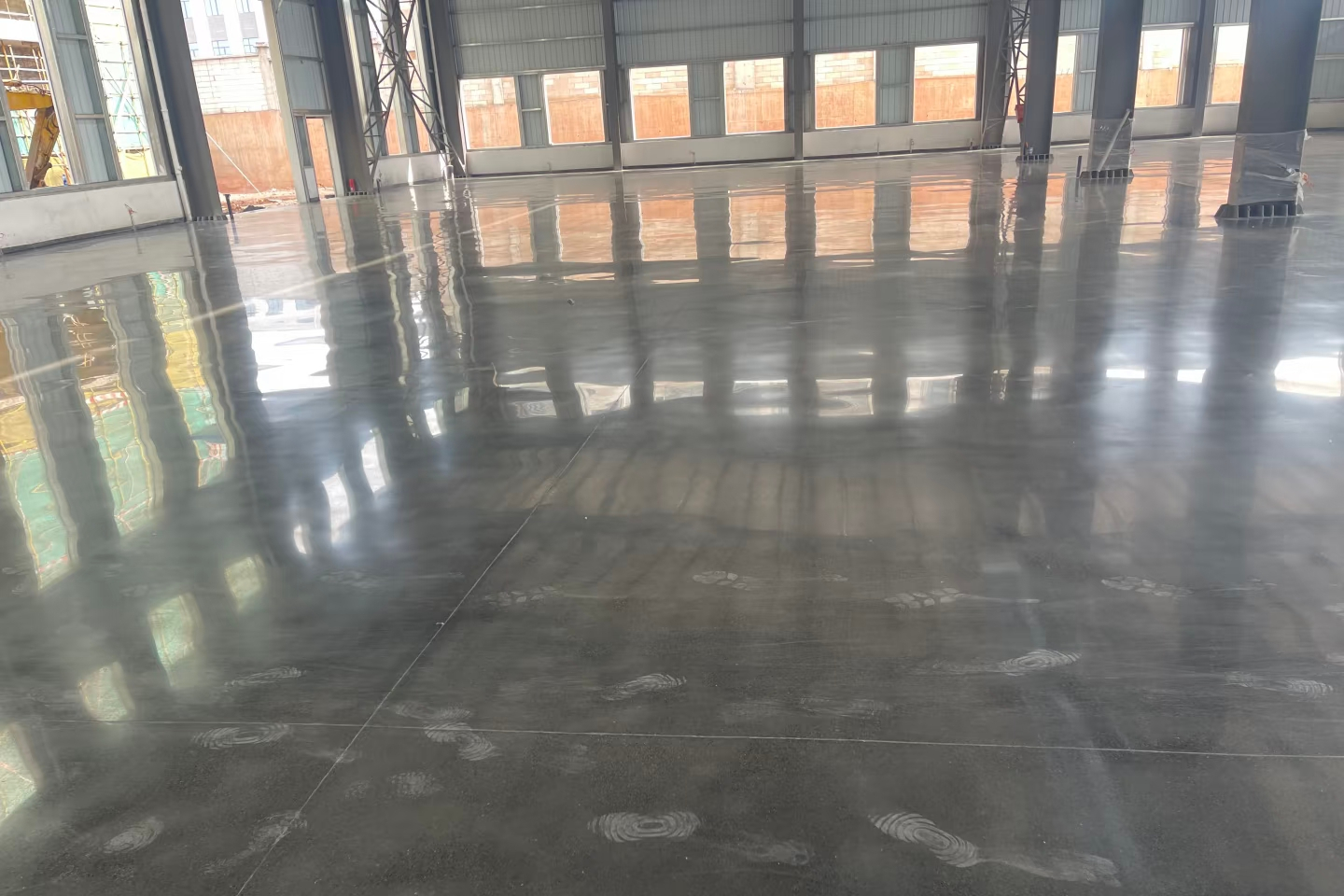
How to Select Floor Coatings for a Project
Selecting floor coatings starts with the service conditions of the space rather than with a product name. Traffic load, chemical exposure, static-control needs, indoor or outdoor location, substrate condition and cleaning routine together determine which coating family and which surface preparation are appropriate.
Floor coatings is the general term for systems applied over a floor to give it a wear-resistant, cleanable surface. Epoxy-based products form one family within that group, and they are usually chosen when a seamless, hard-wearing finish is needed indoors.
Coating Families and Typical Service Conditions
Matching the coating family to the room itself is the step that decides whether the floor performs as expected after handover.
- High-solids epoxy resin floor coating — for demanding interior floors in factories, clean rooms and workshops.
- Anti-static epoxy floor coating — for electronics plants and distribution rooms where static control is required.
- Anti-corrosion floor coating — for areas regularly exposed to chemical contact.
- Waterborne epoxy floor coating — where easier application conditions and lower odor during work are preferred.
- Waterborne polyurethane floor coating — where a different balance of flexibility and appearance is needed.
- Concrete densifier — for hardening and dust-proofing bare concrete surfaces before or instead of a full coating.
- Colored ceramic granule anti-slip material — for outdoor pavement that needs both color and slip resistance.
- Weather-resistant outdoor floor material — for park walkways, landscape plazas, outdoor courts and outdoor stands.
Substrate condition matters as much as the coating itself. Concrete that is weak, contaminated or damp will not hold any coating well, so preparation and, where needed, a suitable primer come before the finish coat. Scheduling also matters, because preparation and curing both affect when the space can be returned to normal use.
FAQ
What is epoxy floor paint?
Epoxy floor paint is a two-part resin coating that cures into a hard, seamless film on a concrete floor, giving the surface good abrasion resistance and making it easier to clean.
What is industrial floor paint used for?
Industrial floor paint is used to protect and finish floors in production halls, clean rooms, underground parking garages, laboratories, offices and retail spaces, where abrasion, dust and chemical contact are part of daily operation.
Are floor coatings and epoxy systems the same thing?
No. Floor coatings is a broad category of surface systems, and epoxy coatings are one type within it, defined by their epoxy resin binder and their seamless, hard-wearing finish.
Can epoxy floor coatings be used outdoors?
Epoxy floor coatings are generally formulated for interior use. Outdoor areas such as park walkways, landscape plazas, outdoor courts and outdoor stands are better served by weather-resistant outdoor floor materials.
How should an epoxy floor be maintained?
Routine sweeping and damp cleaning are usually enough to keep an epoxy floor in good condition. Spills should be removed promptly, and heavy loads should be moved on suitable equipment to avoid point damage.
Summary
Epoxy floor paint remains a practical choice for interior concrete floors that must stay clean, hard-wearing and easy to maintain. The right result depends on matching the coating family to the actual service conditions — traffic, chemical contact, static control and indoor or outdoor exposure — and on careful surface preparation before application. Where outdoor exposure is involved, weather-resistant outdoor floor materials are the more appropriate option.